


FLASH NEWS
DW: Germany in uncertainty, migration and political crisis increase citizens' fears

2025-11-08 16:11:03 / BOTA
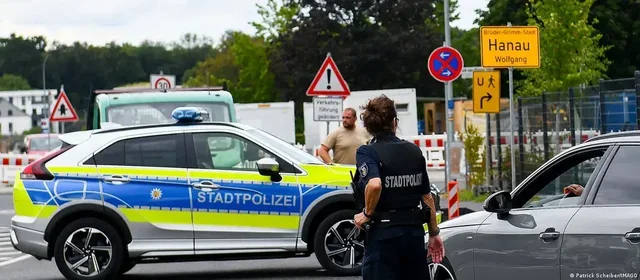
A statement by Chancellor Friedrich Merz regarding migration and public security has polarized Germany for weeks. In mid-October, Merz said that the federal government was correcting past failures in migration policy and making progress, “but of course, we still have this problem in our cities, and that is why the Federal Interior Minister is now working to enable and carry out deportations on a very large scale.”
Just a week after his statement, Merz clarified: Germany needs immigration, especially for the labor market. The problems arise from those migrants who do not have permanent residence status, do not work and do not adhere to the rules. Merz received some support for this, but also faced protests and strong opposition from various political parties and civil society.
What effect does this debate have on citizens? Pollsters at infratest-dimap asked this question. For the ARD-Deutschlandtrend survey, they interviewed 1,300 German voters between November 3 and 5. One in two people report feeling unsafe in public places, on the streets and on public transport. Eight years ago, the corresponding figure was only half of what it is now.
The biggest fears are related to theft and verbal attacks in public. Less common are concerns about becoming a victim of physical or sexual assault or a terrorist attack.
Is the debate about urban design fueling this sense of insecurity? The intersection of migration and public safety? In fact, you are much more likely to be a victim of domestic violence. In 2024, over 265,000 cases of domestic violence were officially registered by the police in Germany – a new record. Almost three quarters of the victims are women. In three out of four cases, the perpetrator is the partner or ex-partner. The Federal Criminal Police Office (BKA) has determined that around 71 percent of serious sexual crimes occur in private homes, and only around 21 percent in public spaces.
What problems does Germany face?
Migration continues to top the list of political problems that German politicians need to address, according to an ARD-Deutschlandtrend poll in November. 32 percent of respondents mentioned the issue, while 28 percent are concerned about the state of the German economy.
Compared to the summer, the importance of economic issues for citizens has increased significantly (+7). Only 18 percent see social justice and poverty as urgent problems in the country. Environmental protection and climate change are mentioned by only 14 percent.
Unstable times – even in foreign policy
The concerns of German citizens reflect a general increase in insecurity. The sense of national stability has wavered. Compared to 2015, only 38 percent of citizens now perceive Germany's foreign policy situation as secure (-36). The decline is even more pronounced with regard to Germany's economic position in the world. Only 29 percent now consider it secure (which is -56%). Social stability is also being called into question. Only 26 percent describe it as secure (-37).
As is often the case, personal circumstances are viewed more positively. Most respondents consider their living environment, their personal standard of living and – if employed – their job to be secure. However, these feelings of security have also fallen significantly within a decade. Only half of German citizens are confident in a stable financial basis in old age. At 27 percent, only about half of Germans are counting on a secure future for their children than they were ten years ago.
Poor marks for the federal government
In this situation, Germans are very dissatisfied with the work of politicians. Citizens are registering the negative atmosphere and the division within the coalition of the conservative CDU/CSU and the SPD. 79 percent of respondents are concerned about the parties' willingness to compromise and doubt that, given their political differences, they can still find common solutions to urgent issues.
According to public opinion, the ruling coalition, after only six months in power, is not doing any better than the so-called “traffic light” coalition of the SPD, the Greens and the FDP, which collapsed a year ago. Only 22 percent of respondents in the current ARD-Deutschlandtrend poll believe that the government is doing a good job. 76 percent are less than satisfied or not at all satisfied.
CDU/CSU and AfD remain in close race
If the elections were held next Sunday, the CDU/CSU would receive 27 percent of the vote, while the SPD would receive 14 percent. This coalition would no longer have a majority in the Bundestag.
The AfD, which is considered far-right in some circles, would again be the second-strongest party with 26 percent of the vote. The Greens (12 percent) and the Left Party (10 percent) remain in similar positions compared to the October poll. Only the AfD shows a slight increase - around three in ten voters would now vote for this party./ DW
-

P. Diddy experiences another scandal in prison: He is caught drunk!
November 8, 16:02 -

Happening now...







Boycotts and controversy, will Eurovision survive its biggest crisis?
Mark Savage dhe Ian Youngs – BBC






Karmën nuk e ndalon dot Sali Berisha!
Nga Bato Kosova
ideas

Will Berisha take stock of the first in his second speech?
Nga Preç Zogaj

First Secretary of the Democratic Party
Nga Indrit Vokshi

"Topple" Edi Rama by lying to yourself...
Nga Patrik Sadikaj
top



Alfa recipes




TRENDING 




services
- POLICE129
- STREET POLICE126
- AMBULANCE112
- FIREFIGHTER128