


FLASH NEWS
The story of Lise Meitner, the brilliant mind, the woman who understood nuclear fission and was unfairly excluded from the Nobel

2025-11-08 19:38:38 / JETË
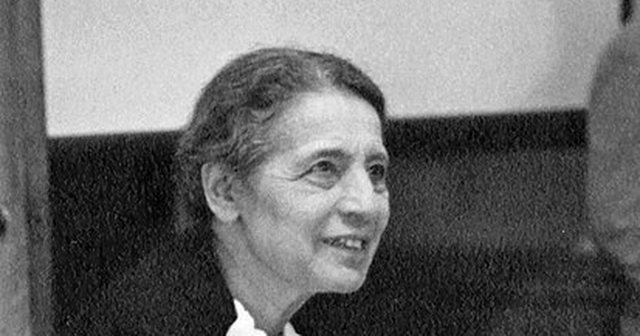
The history of modern physics is filled with surprising sparks. Some shine immediately, others remain hidden behind easier-to-remember names.
Within these shadows moves the figure of Lise Meitner, one of the most brilliant scientists of the 20th century, a mind capable of reading the atom from the inside when no one else was able to do so.
Her name is associated with one of the most crucial discoveries in human history: nuclear fission.
Before atomic experiments, before the energy that would change the world, and before the weapons that would mark history, there was her intuition.
A profound understanding, born in the silence of the laboratory and then obscured by injustices, prejudices and political tensions.
Lise Meitner was born in Vienna in 1878. She studied physics at a time when women were discouraged from pursuing any scientific career. However, she managed to make a name for herself thanks to her extraordinary rigor and rare mental capacity.
He moved to Berlin where he collaborated with chemist Otto Hahn, creating one of the most important scientific partnerships of the century.
Their collaboration lasted thirty years. Hahn dealt with the chemistry of radioactive elements. Meitner was the theoretical mind, the scientist who sought the hidden logic behind those phenomena. Their roles were complementary and perfectly intertwined.
With the rise of Nazism, the situation became unbearable. Lise Meitner was Jewish. In 1938, she was forced to flee Germany to escape.
She suddenly left the laboratory, her research, and the results accumulated together with Hahn over the years of work.
Internment stopped him from continuing his experiments, but it didn't stop him from thinking. He was far away, almost underground, when something epochal happened.
Otto Hahn conducted an experiment with uranium nuclei and noticed that he had obtained barium, a lighter element.
The data made no sense to the chemistry of the time. No theory could explain this result. Hahn did not understand what had happened.
Fleeing to Sweden, she received the results by letter. She analyzed them with shocking clarity. She realized that the nucleus had been split. She wrote a basic explanation, this process was not an anomaly. It was a new physical phenomenon.
It was nuclear fission. He calculated the energy released using Einstein's formula. He proved that this process could generate unprecedented power.
He understood the revolutionary dimension of what had happened. The most important theory was born from an exiled mind, without a laboratory and without tools.
In 1944, the Nobel Prize in Chemistry was awarded solely to Otto Hahn. Although the scientific community knew that Meitner had been the true theoretical interpreter of fission, her name was ignored.
Many and tragic reasons. There was a climate of discrimination against women. There was a political climate where the mention of a Jewish scientist, a refugee from Nazism, was unpleasant.
There was (and perhaps still is) an academic mechanism that often rewards those with more power and more visibility.
Lise Meitner did not protest. She continued to work with dignity. When the press began calling her the “mother of the atomic bomb,” she responded with determination. She rejected any connection with the weapon that was later developed, stating that she had contributed only to scientific knowledge, not to destruction.
Time has righted where history has gone wrong. Modern scholars recognize Lise Meitner as one of the most important figures in 20th-century physics.
Her understanding of nuclear fission was crucial, and without it, the discovery would not have been possible. Today, her name is associated with an element of the periodic table, meitnerium, named in her honor.
Max Planck Institute for the History of Science, archives on Lise Meitner
Nobel Prize Official Archives, documentation on the 1944 Nobel Prize
Encyclopaedia Britannica, voice "Lise Meitner"
Smithsonian Institution, collection of documents on nuclear fission
American Physical Society, historical profile for Meitner and Hahn
Deutsches Museum in Munich, nuclear physics collection and Meitner's original materials.


Happening now...




Boycotts and controversy, will Eurovision survive its biggest crisis?
Mark Savage dhe Ian Youngs – BBC











Karmën nuk e ndalon dot Sali Berisha!
Nga Bato Kosova
ideas

Will Berisha take stock of the first in his second speech?
Nga Preç Zogaj

First Secretary of the Democratic Party
Nga Indrit Vokshi

"Topple" Edi Rama by lying to yourself...
Nga Patrik Sadikaj
top



Alfa recipes




TRENDING 




services
- POLICE129
- STREET POLICE126
- AMBULANCE112
- FIREFIGHTER128