


FLASH NEWS
Boycotts and controversy, will Eurovision survive its biggest crisis?
Mark Savage dhe Ian Youngs – BBC
The clocks will change from Sunday, how will the clocks be arranged?

2025-10-21 11:17:52 / MISTERE&KURIOZITETE
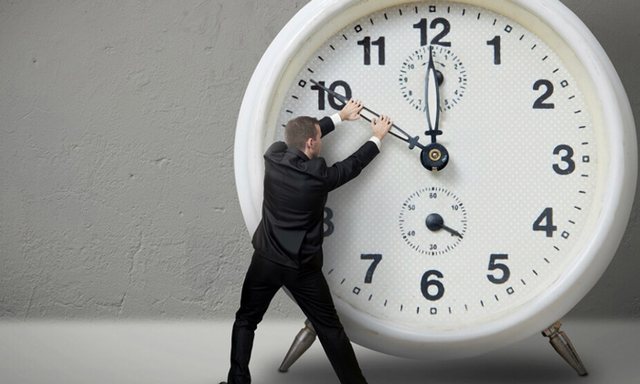
On Sunday this week, October 26th, the clocks go back 60 minutes.
They move back at 03:00, on the night between Saturday and Sunday, October 25 and 26, repositioning themselves at 02:00. Thus, we can sleep one hour more, but in the afternoons we will have one hour less natural light. We will only move the hands on analog clocks, while as is known, all other digital devices connected to the Internet are automatically updated with the new time.
Daylight saving time will remain in effect until March 29, 2026, when, as always, at 03:00 in the morning, legal time, otherwise known as summer time, will come into effect. The determination of the time change never has a fixed date, in both cases, but is always applied on the night between the last Saturday and Sunday of October and March. Despite the controversies that have accompanied the seasonal time change for several years, nothing has yet been decided by the EU.
The discussion was about keeping only one legal hour in force, to save electricity, the reason why it was adopted for the first time, or the solar hour regime. But precisely for energy saving, the impact on the economy or even on the environment, as it brings a reduction in CO2, has influenced the discontinuation of discussions to remove the legal hour, as it should be a unanimous decision for all countries of the Bloc.
In 2018, the European Parliament voted in favor of abolishing the standard time by 84% of votes. The final decision was left to each EU member state.
In Europe, the time change has not been uniform. It began to become more widespread in 1974, after the first oil crisis and when some countries decided to move their clocks forward in order to make more use of sunlight and consume less electricity.
It was established as a European law in 1981 and is renewed every four years. In a stable manner, the European norm determines the dates of the beginning of the summer time period (when the clocks go forward 60 minutes) and its end (when they go back one hour). End: the last Sunday in March and the last Sunday in October.
Happening now...













Karmën nuk e ndalon dot Sali Berisha!
Nga Bato Kosova
ideas

Will Berisha take stock of the first in his second speech?
Nga Preç Zogaj

First Secretary of the Democratic Party
Nga Indrit Vokshi

"Topple" Edi Rama by lying to yourself...
Nga Patrik Sadikaj
top



Alfa recipes




TRENDING 




services
- POLICE129
- STREET POLICE126
- AMBULANCE112
- FIREFIGHTER128