


FLASH NEWS
How did the Albanian mafia conquer Sardinia and all of Europe?

2026-03-17 20:07:07 / AKTUALITET
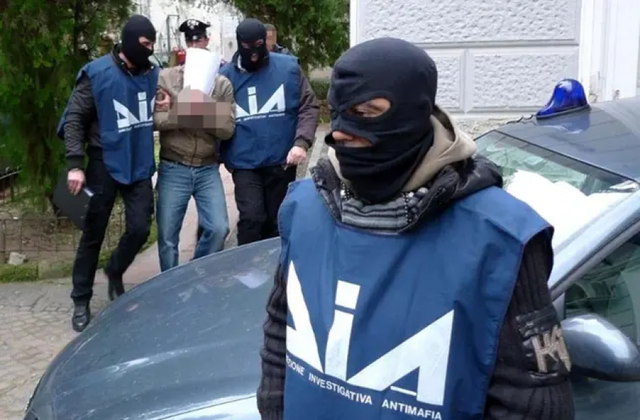
The history of Albanian organized crime begins with a power vacuum. We are in the early 1990s: Enver Hoxha's communist regime has just fallen and Albania finds itself without strong economic structures, with fragile institutions and unprepared law enforcement agencies.
The turning point comes in 1997. The failure of pyramid schemes wipes out the savings of hundreds of thousands of families. Revolts break out, military depots are looted, and millions of weapons spiral out of control.
In that chaos, criminal groups emerge and strengthen, capable of occupying the spaces left empty by the state.
In the same years, thousands of Albanian citizens crossed the Adriatic. The image of the ship Vlora, filled with immigrants in the port of Bari, remains a symbol of that exodus. Within these immigrant flows, in addition to those seeking work and stability, criminal networks were also forming.
Geographical proximity and short sea routes make Italy the ideal platform. At first, it was a question of widespread crimes: theft, robbery, exploitation of prostitution. But since the mid-1990s, Albanian groups have acquired a strategic role in heroin trafficking along the Balkan route.
Over time, qualitative growth comes: direct management of cannabis shipments cultivated in the Balkans, entry into the cocaine market, sustainable cooperation with Italian organizations. They are no longer just manual workers, but reliable partners in logistics and distribution.
Flexible structure, family ties
Unlike traditional Italian mafias, Albanian criminality does not have a unique and distinct structure. There is no centralized "dome". It is about family clans, linked by blood and territory.
Their strength lies in their internal compactness and the ability to move quickly between different countries. Networks in Italy and the rest of Europe provide logistical support, contacts and coverage. Each group operates relatively autonomously, but maintains links with its country of origin.
Another distinguishing feature, especially in the 1990s, has been direct and demonstrative violence: settling scores, kidnappings, armed clashes. Over time, many organizations have chosen a lower profile, focusing on profitable trafficking and money laundering.
A stable actor in European drug trafficking
Today, Albanian organized crime is considered one of the most dynamic in Europe. International investigations show the ability to control entire segments of the cannabis chain in the Balkans and to negotiate directly with Latin American suppliers for cocaine.
The main characteristic is the network: fast-moving groups, without a single brand, but with a strong community identity. A phenomenon born from the institutional collapse of the 1990s that, within a generation, has become a silent but central protagonist of international criminality.
Drug trafficking and links to Albanian environments: the three mega-investigations in Sardinia
In the last ten years, Sardinia has appeared several times in the files of the Anti-Mafia Prosecutor's Office of Cagliari for drug trafficking with links to the Balkan area.
There is no evidence of an "Albanian mafia" rooted in the island with territorial control, but three operations show a common thread: operational groups in Sardinia involved in wider networks with links to Albanian criminal environments.
2016 – Operation “Polo Est”
It is the first structured case. The investigation leads to the arrest of 30 people, Italians and Albanians, for organizing international drug trafficking. An Albanian fugitive, wanted by international warrant, is also arrested. The picture that emerges is that of an international trafficking operation also based on the island.
2023 - "Family & Friends"
The Antimafia Prosecutor's Office coordinates 40 security measures (22 in prison and 18 under house arrest) against an organization defined as Italian-Albanian. According to investigators, the cocaine also came from Albania, while the hashish came from Spain. The money circulation is estimated at around 15 million euros. The activity was concentrated between Cagliari, Quartu and the north of Sardinia, with an extension to several Italian regions.
2025 – Operation “Termine”
It is the latest and most extensive investigation: 71 security measures in a case of international drug trafficking. Sources speak of two organizations rooted in Sardinia, linked to Albanian criminal environments active in Tuscany and Veneto. The operation also led to the seizure of over 50 kilograms of hashish.
Happening now...











ideas
Blaming Gaz Bardhi for the statutory changes
Nga Namir Lapardhaja

The Statute Review and Berisha's Sinking Boat
Nga Alesia Balliu

Will the new justice system unite the SP and the DP?
Nga Arbër Hitaj
top





TRENDING 



services
- POLICE129
- STREET POLICE126
- AMBULANCE112
- FIREFIGHTER128