


FLASH NEWS
RCC report: Albania "lags" in public sector management, science and innovation

2025-04-09 13:58:44 / EKONOMI&SOCIALE
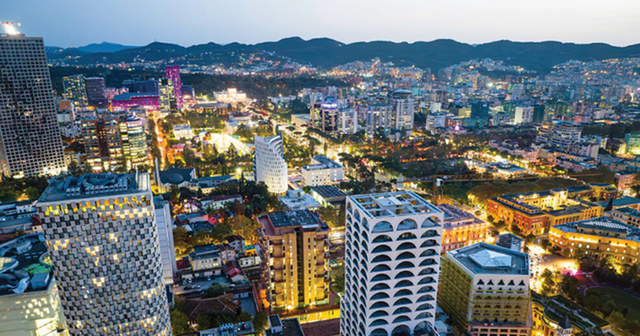
A recent report by the Regional Cooperation Council (RCC) sheds light on the industrial performance of six Western Balkan countries, including Albania.
At a time when industrial development has become a cornerstone for economic growth and regional integration, the report provides important data on the achievements, challenges and opportunities of each country. Albania performs better than the regional average in most indicators, but it faces complex challenges, from weak innovation to poor management of state-owned enterprises.
The report, titled “Monitoring and Assessing Industrial Performance and Policy Impact in Six Western Balkan Countries,” provides an analysis of industrial developments in the region, including Albania, Bosnia and Herzegovina, Kosovo, Montenegro, North Macedonia, and Serbia.
This report uses different methodologies, such as EQuIP and UNIDO tools, to assess industrial performance in economic, social and environmental aspects, with the aim of supporting inclusive and sustainable development in line with the objectives of the Regional Common Market (CRM).
According to the report, Albania has made significant progress in several key areas:
Fight against corruption: Albania has strengthened the legal and institutional framework against corruption, increasing human and financial resources for relevant institutions. This has led to a significant increase in convictions for high-level corruption cases since 2018.
Agriculture: Investments in rural infrastructure and information systems have improved productivity in the agricultural sector. Irrigation capacity has doubled between 2013 and 2023, reaching 265,000 hectares of irrigated land.
Employment: In 2022, Albania recorded the highest activity rate (73.2%) and employment rate (65.0%) in the Western Balkans, approaching the European Union averages.
However, the report also identifies areas where Albania needs to improve:
State-owned enterprises (SOEs): The management of state-owned enterprises remains decentralized, without a clear ownership policy by the government, which increases corruption risks and hinders their performance.
Science, technology and innovation (STI): Investment in scientific research and development is low, resulting in a limited number of patents and innovations.
Energy diversification: Heavy dependence on hydropower makes Albania's energy sector vulnerable to climate change, highlighting the need for diversification of energy sources.
Compared to its neighbors, Albania performed above the regional average in 13 out of 15 dimensions assessed, leading in areas such as anti-corruption, education, and employment policies.
However, in areas such as management of state-owned enterprises and science and innovation, Albania lags behind the regional average, indicating the need for further improvements.
The report suggests several measures to further improve Albania's industrial competitiveness:
Strengthening the governance of state-owned enterprises: Developing a clear ownership policy and professionalizing management practices to reduce corruption risks and increase efficiency.
Increasing investment in research and development: Fostering innovation through increased public funding and improved data collection to support technological development.
Diversification of energy sources: Development of projects for diversification of energy sources and improvement of infrastructure to reduce dependence on hydropower and increase energy security. / Monitor
Happening now...













83 mandates are not immunity for Rama's friends
Nga Gentian Gaba
ideas

Teatri që fsheh prapaskenën
Nga Patrik Sadikaj

Berisha's red line and the black line of democracy in the DP
Besmir Semanaj

top



Alfa recipes




TRENDING 




services
- POLICE129
- STREET POLICE126
- AMBULANCE112
- FIREFIGHTER128