


FLASH NEWS
At what age does a child become conscious?

2024-05-15 09:15:32 / JETË
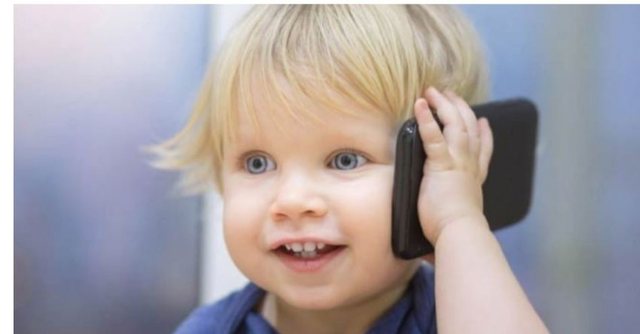
When you look at a baby's twinkling eyes, you might wonder what's going on in their curious little mind. Fortunately, science can now shed light on questions about the developmental stages of a child's consciousness.
Consciousness is a fundamental question in psychology, especially from a developmental perspective. At what point do children become aware of themselves? How and when do they become aware? In reality, there are five levels of consciousness in children, from birth to about 4-5 years of age. Stages of consciousness development:
Level 0 – Lack of Self-Awareness
It's about newborn babies who are completely unaware of their reflection in the mirror. The reflection is perceived as an extension of the environment and is confused with the surrounding reality. Babies at this level show no conscious response to their image.
Level 1 – Differentiation of Self-Produced Movements
Usually observed around 6 to 9 months of age, the individual begins to distinguish a difference between movements reflected in a mirror and other movements in the environment. It marks an initial step in differentiating oneself from the rest of the world.
Level 2 – Exploring Intermodal Connectivity
Around 9 to 12 months of age, the individual progresses to actively exploring the connection between movements seen in the mirror and movements felt. They develop a contemplative posture, demonstrating a heightened awareness of the interaction between their body and its reflection in the mirror.
Level 3 – Self-knowledge
Usually reached around one year of age, children begin to recognize the reflection as "their own".
Level 4 – Self-identification beyond the present
Between 18 months and 2 years, children reach this level. This corresponds to the ability to identify their image in photos and videos from the past. This shows that consciousness is no longer limited to temporal simultaneity and spatial randomness, but continues through time.
Level 5 – Knowing an outside perspective
At the age of 2 to 3, children begin to recognize not only their own point of view, but also to consider how they are perceived by others. This is often manifested by behaviors of embarrassment or pride in front of the mirror, showing a mental simulation of public scrutiny of oneself.
For decades, neuroscientists have searched for a clear signal of consciousness in the brain's electrical activity. This signal determines whether minimally conscious or anesthetized adults are conscious and when consciousness begins in infants. Studies on adults have shown a distinct pattern of brain activity in two phases. The question was whether such a pattern could be present in infants.
The team used caps fitted with electrodes to monitor the brain activity of 80 infants aged 5, 12 or 15 months. Infants were exposed to an image of a face on a screen for a fraction of a second. Researcher Sid Kouider observed oscillations in the brain's electrical activity, known as event-related potentials (ERPs), in the brains of infants. Even 5-month-old infants showed a late slow wave, although weaker and more extended than in older infants.
This late slow wave may indicate conscious thought, suggesting that the image is briefly stored in the infant's temporary 'working memory'. According to Kouider, consciousness consists of this working memory.
While the results are promising, further research is needed to explore how these signals of consciousness are related to learning, especially language development in infants.
The researchers admit that comparing the brain waves of babies with those of adults is tricky. The components of event-related potentials (ERPs) change significantly during the first years of life.
Happening now...













ideas

Renaissance is Disaster Capitalism
Nga Klodian Tomorri

Pse tifozeria e Kosovës ishte aq e vdekur dhe mungonin simbolet kuqezi?
Nga Kreshnik Spahiu

top



Alfa recipes



TRENDING 




services
- POLICE129
- STREET POLICE126
- AMBULANCE112
- FIREFIGHTER128