


FLASH NEWS
Researcher Paul Heggarty: Languages have no birth dates! Albanian among Indo-European languages, origin and antiquity

2024-11-04 16:31:52 / JETË
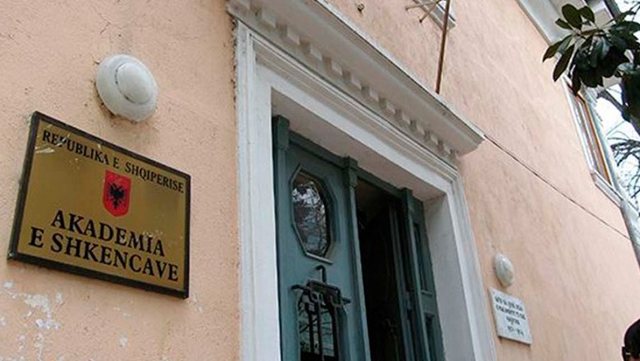
The Albanian language does not yet have a confirmed birth date, but what is known is that this language was separated 6 thousand years ago from the Indo-European trunk!
This was the essence of the discussions at the international scientific conference "Albanian among Indo-European languages, origin and antiquity" held this Tuesday in Tirana, which brought together researchers from the country and the world. Among them, the authors of the study on the antiquity of Albanian in the magazine "Science".
The study carried out by Professor Paul Heggarty and 33 other co-authors, recognizing Albanian as a common origin and starting point of its identification, a relative earlyness of 6-8 thousand years, aroused attention not only among Albanian scholars, but also in the media and to the general mass of people.
According to Paul Heggarty, Indo-European is dated to about 8100 years ago, as a central estimate of when it began to spread and split. He explains that, fundamentally, this family is divided very quickly - since about 7000 years ago from the present time - into several early branches, among which is the predecessor branch of modern Albanian.
"These dates and the structure of the genealogical tree do not match either the steppe hypothesis or the agricultural hypothesis for the origin of Indo-European languages. Instead, separate aspects of each are combined into a new 'hybrid' hypothesis: Indo-European did not originate in the steppe, but in the northern arc of the Fertile Crescent, and only a few of its main branches in Europe passed through steppe, as a secondary crossing point; Albanian, and some others, probably have not passed this way.", - notes Heggarty.
Heggarty's paper presents all aspects of this extensive interdisciplinary research. She explains why these new Bayesian phylogenetic analyzes were necessary, based on our new linguistic database, which includes three varieties of Albanian. It reviews the range of analyzes used, presents the results, and compares them to the archaeological record, as well as competing interpretations of the revolutionary findings from ancient DNA.
"Obviously, languages are stages in continuous succession in time, they do not have a date of birth, and therefore there is no 'oldest language'. However, what emerges from our data and results is how much Albanian has diverged from other surviving branches of Indo-European – so the focus here is on what that does and does not mean. the researcher.
According to the president of the Academy of Sciences, Skënder Gjinushi, this table is an innovation in the development of such activities, "since a completely new direction of scientific research of historical linguistics, with the help of artificial intelligence, becomes the pivot of this activity."
"The peoples are sensitive to their origin and their language. The fact that what is being confirmed with new studies does not go against the achievements of Indo-European studies, but rather reinforces, corrects and enriches them, increases the interest. "Scientific truth needs to be recognized and affirmed. Science, unlike others, does not order to declare, or even worse, to distort and vulgarize a hypothesis," says
Gjinushi Giulio Imberciadori states that most scholars agree that among the other Indo-European languages, Albanian shows the closest relationship to Ancient Greek and Armenian (as well as Phrygian) and is therefore part of the so-called "Balkan Indo-European".
For his part, the President of the Academy of Sciences, Skëndër Gjinushi, while referring to the "Science" article, notes that, unfortunately, new technologies, as they have enabled and enable scientists to study the evolution of the universe, of man, species and languages from the very beginning, they have also caused that false facts are often believed more than the truth and that abusive and amateurish statements prevail over the opinion of scientific evidence; that even scientific-based thesis and hypothesis turn into vulgar and ridiculous.
The scientific conference was organized by the Academy of Sciences of Albania in cooperation with the Institute of Comparative and Indo-European Linguistics, as well as of Albanology at the "Ludwig Maximilian" University of Munich. It is a continuation of the work that was presented at the Second Assembly of Albanological Studies, organized in Tirana in November 2022, and is triggered by the latest achievements in the field of Indo-European linguistics, based on combined interdisciplinary methods.


Happening now...









83 mandates are not immunity for Rama's friends
Nga Gentian Gaba
ideas



top


Alfa recipes


TRENDING 




services
- POLICE129
- STREET POLICE126
- AMBULANCE112
- FIREFIGHTER128