Teatri që fsheh prapaskenën
Nga Patrik Sadikaj


The Electoral Complaints and Appeals Panel (ECAP) on Wednesday rejected four complaints from political entities in Kosovo regarding the final results of the February 9 parliamentary elections.
The Central Election Commission (CEC) published the final results on March 15, and with the new Election Law, political entities had the opportunity to complain within 48 hours if they believed that any of their rights had been violated.
The Vetevendosje Movement (LVV), the ruling party and winner of the February 9 elections, has submitted two complaints, the Democratic Party of Kosovo one, and the coalition between the Democratic Party of Ashkali of Kosovo and the Movement for Cooperation (PDAK-LPB) one.
The rejected complaints of the LVV requested that the results of the postal voting for the Democratic League of Kosovo (LDK) and its candidates be annulled, and that a recount of votes be held in several polling centers in Skenderaj, due to suspicions of vote manipulation.
The Democratic League of Kosovo (LDK) welcomed the ECAP's decision, saying that "the attempts of the Vetëvendosje Movement to manipulate and delegitimize the electoral process were unfounded and reveal their unwillingness to accept the will of our diaspora."
"The Democratic League of Kosovo will not tolerate Vetevendosje continuing to use slander and manipulation to subvert the will of citizens and create a false electoral reality," the party said in a Facebook post.
In the rejected appeal of the Democratic Party of Kosovo, a review of the ECAP decision to impose a fine of 4,000 euros on this party was requested.
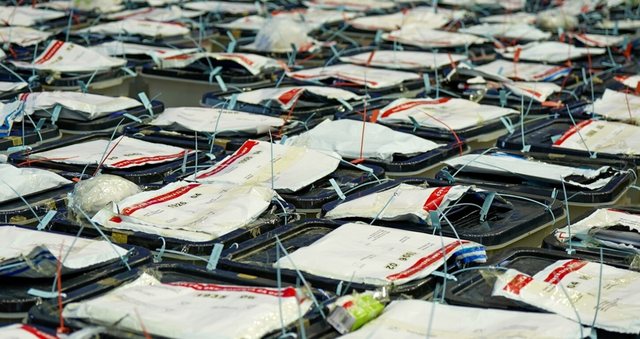
The appeal of the coalition between the Democratic Party of Ashkali of Kosovo and the Movement for Cooperation (PDAK-LPB) requested that 211 votes of the political party Ashkali Party for Integration (PAI), sent by mail, be annulled and that the votes be recounted, then that several votes in municipalities that have no Ashkali community residents at all be annulled, that the results of the votes in several schools be annulled, and that the CEC be ordered to repeat the counting of the diaspora votes.
According to the final CEC data, the Vetëvendosje Movement (LVV) leads with over 390,000 votes or 42.30 percent.
The Democratic Party of Kosovo (PDK) came in second with over 190,000 votes, or 20.95 percent, followed by the Democratic League of Kosovo (LDK) with over 170,000 votes, or 18.27 percent.
In fourth place is the coalition between the Alliance for the Future of Kosovo (AAK) and the Social Democratic Initiative with over 66,000 votes or 7.06 percent.
The Serbian List – the largest Serb party in Kosovo – secured over 39,000 votes or 4.26 percent.
With these percentages, LVV has secured 48 seats in the Kosovo Assembly, PDK, 24, LDK, 20 seats, Serbian Lista nine seats, and the AAK-Nisma coalition, eight seats.
Over 2 million citizens of Kosovo had the right to vote in this electoral process, while the participation was 46.54 percent.
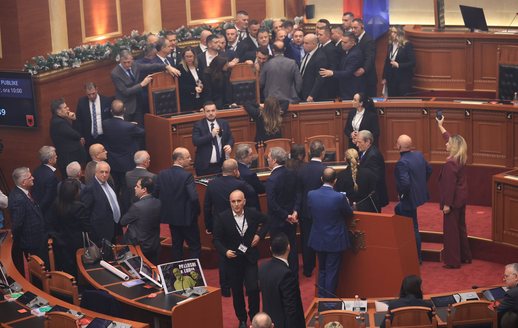
Within 30 days of the certification of the results by the CEC, the President of Kosovo, Vjosa Osmani, must convene the constitutive meeting of the Assembly of Kosovo.
This meeting is considered closed only after the President and Vice-Presidents of the Assembly have been elected.
The Speaker of the Assembly will go to the Vetevendosje Movement (LVV), which won the most votes. But if this party does not propose someone for Speaker, the process will freeze in place.
If the Speaker of the Assembly is elected, then the clock starts ticking for the next terms.
The country's president is obliged to nominate the winning party of the elections as the candidate to form the Government.
Although there is no exact deadline here either, the decisions in force stipulate that the process should take place "as soon as possible".
The cabinet must secure the votes of 61 MPs within this deadline. However, if this does not happen, the president is obliged to invite the political parties to consultations once again within 10 days, and to decide, at her discretion, on the new prime minister, if she proves to him that she has the numbers to form the Government.
The next prime minister should also have 15 days to present the composition of the government cabinet to the Assembly.
If the Government is not formed even after 40 days, the president must announce the decree for new elections, which must be held forty days from the announcement of the decision./ REL