


FLASH NEWS
500-year-old shipwreck discovered off Barcelona coast

2025-05-01 08:57:30 / MISTERE&KURIOZITETE
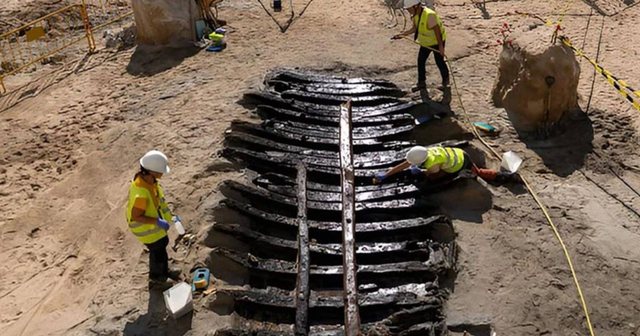
A sunken medieval ship has been discovered beneath the bustling streets of Barcelona, revealing extraordinary details about the city’s maritime heritage. Buried 4.5 metres underground near the Ciutadella Park, the ship – nicknamed Ciutadella I – was discovered during reconstruction works on the former Mercat de Peix site, which is being transformed into a centre for scientific innovation. The discovery, announced by the Archaeological Service of Barcelona City Council, adds a rare and valuable chapter to the region’s maritime history.
Estimated to date from the 15th or early 16th century, the ship is approximately 10 meters long and 3 meters wide. Its frame, consisting of over thirty curved ribs and at least seven planks, is an excellent example of skeleton construction – a common method used in shipbuilding in the Mediterranean during the late Middle Ages.
This technique, in which the structural frame of a ship is assembled before its outer hull is added, helped define a generation of ships that sailed during a period of massive change in Barcelona. The city's first artificial docks, completed in 1439, marked a turning point in coastal engineering and maritime trade, and Ciutadella I likely belonged to this transformative era.
The presence of the ship inland raised interesting questions. According to lead archaeologist Santiago Palacios, Ciutadella I probably did not sink in a storm. Instead, it appears to have been gradually displaced and buried by shifting sands and coastal changes, reflecting centuries of transformation along Barcelona's once-fluid coastline.
Although the site is now far from the sea, it was flooded centuries ago. Palacios described the discovery as "extraordinary" not only for its preservation but also for the unexpected context of its burial.
The fragile remains of Ciutadella I, protected for centuries under layers of sediment, are now undergoing careful conservation. Archaeologists are using 3D photogrammetry to document every detail before dismantling the ship's parts.
To prevent rapid decay, some parts remain covered in sand, while others will be treated with polyethylene glycol, a waxy substance used to stabilize ancient wood by replacing moisture. This delicate preservation process will allow researchers to study the ship's wood types, resins, and construction techniques to trace its origins and craftsmanship.
The shipwreck is not the only historical structure discovered in the area. The excavations also uncovered remains from other time periods, including a Spanish Civil War air raid shelter, 18th-century fortifications at Ciutadella, and the 19th-century fish market that gave the area its name. Together, these layers of material culture sketch a living chronology of Barcelona's evolving identity.
Surprisingly, this is only the second time a naval ship has been discovered in the city. The first, Barceloneta I, was discovered in 2008 near Estació de França, making Ciutadella I a rare and valuable piece in the maritime puzzle.
The research team plans to delve further into the origins of the ship by analyzing its materials. Studies of wood species, tool marks and resin residues could provide clues about the shipyard it came from, the trade routes it sailed and the type of cargo it carried.
As Barcelona rises into a new era of science and innovation above, its buried past is coming to the fore below. Ciutadella I may have been forgotten for centuries underground, but now it’s ready to sail again – this time through the laboratories, museums and imagination of a city rediscovering its maritime spirit.
Happening now...
















83 mandates are not immunity for Rama's friends
Nga Gentian Gaba
ideas



top



Alfa recipes



TRENDING 




services
- POLICE129
- STREET POLICE126
- AMBULANCE112
- FIREFIGHTER128