


FLASH NEWS
Lapaj's request, Hasimja: He is right, party leaders should not be part of the discussion table

2026-02-04 22:33:44 / POLITIKË
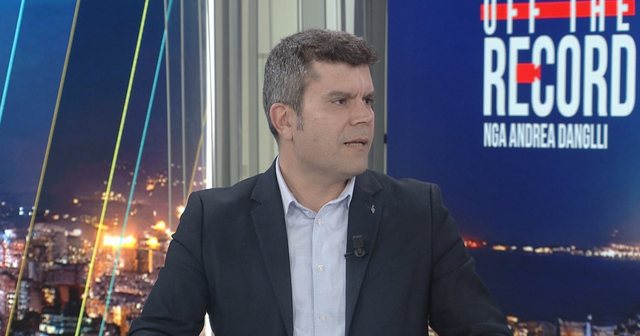
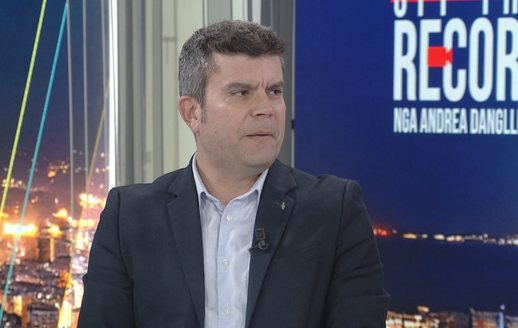
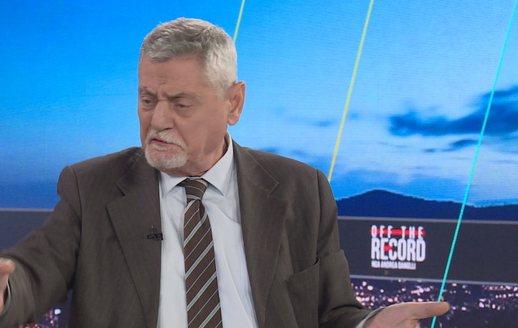
Lapaj's request to exclude party leaders from the discussion table for the unification of the opposition is right, emphasizing that this helps avoid tensions between political leaders. This is what political scientist Ermal Hasimja stated on Off the Record with Andrea Dangli on A2 CNN when asked what the red lines are. According to him, the table should be held at the level of senior leaders, but not at the level of chairmen, while the decisions that will be taken will officially represent the respective parties.
"Red lines is perhaps a bit harsh a term, but there have been requests. You heard the request, there was a request from Mr. Lapaj as well. He requested that the round table be held at the level of senior leaders, but not of the mayors, quite rightly in fact, also to avoid any kind of animosity there, considering that from time to time even the mayors have exchanged some attacks, small accusations with each other, so it is still meaningful for the round table to be held at that level of leadership, but at the lower level of the mayor. This is the idea because what will be taken as a decision will be taken there, representing the respective party, each then is a matter of topics that will be discussed and then that is another matter. We are working specifically on the topics and how it will function," he stated on Off the Record with Andrea Dangli on A2 CNN.
Hasimja underlined that the goal of the first roundtable is to reach an agreement in principle on some basic principles, while more technical issues can be discussed later.
"It will be a round table in which we are practically doing the main work before the table. When we go to the table, the agreement will have been reached in principle in advance. So the parties will have done the vast majority of the work in advance, because it will go with an agreement in principle on those issues. There will also be discussions inside about something, but in principle this will be the work we are doing. In a way, it is also an ambulatory round table that we are doing all the time between the parties," he stated on Off the Record with Andrea Dangli on A2 CNN.
According to him, there is a positive will for dialogue, although the parties have strong demands and positions, especially on justice and political representation. The table, he said, is a process of compromise, where each party also assumes the political cost vis-à-vis its supporters.
"The will is positive. Justice, the leaders of political parties are several lines. Each party has one, it is a compromise table. It is not a table where you sit there and share merits or I don't know what. It is a compromise table. Each of the parties that sits there will release something in the sense that in fact it is not that they will release something concrete, but they will take on the risk that some of their supporters will eventually not agree due to the conflicts that have existed within the parties themselves. In fact, we have heard the accusations constantly, so this risk exists," he said on Off the Record with Andrea Dangli on A2 CNN.
Hasimja stressed that the cooperation between the opposition and civil society aims to inspire the electorate disappointed by the division, with common objectives such as free and fair elections, a more representative electoral code and a functional justice system. He added that political pluralism remains essential and cooperation does not mean merging parties, but coordination on key issues of public interest.
"On the other hand, each of these parties benefits the entire opposition, as an institution, but undefined in the sense that if we manage to do something in cooperation between the parties and with the cooperation of civil society, then we hope to achieve a kind of inspiration of the electorate, of the entire electorate that wants, the same changes that the opposition also wants. Because until today we have a part of the electorate that when it sees that the opposition is divided, there is no kind of inspiration, not to go out in protest, but not even to vote, because it says what will I vote for when my vote will be distributed here and there and will take on its own value. If we see everyone collaborating in the same place with the same principles, with the same framework, then we hope precisely that we will achieve openness."
Happening now...


ideas
Where are we going?
Nga Sidi Hasanaj

They did not hinder Basha, but the political rotation
Nga Ermal Peçi
Hasimja kërkon të
Nga Neritan Vladi
top


Alfa recipes

TRENDING 




services
- POLICE129
- STREET POLICE126
- AMBULANCE112
- FIREFIGHTER128