


Lajme flash
Scandal/ Pesticide-laced peppers seized in Slovenia were certified safe by Albanian authorities

2025-09-07 12:19:18 / AKTUALITET
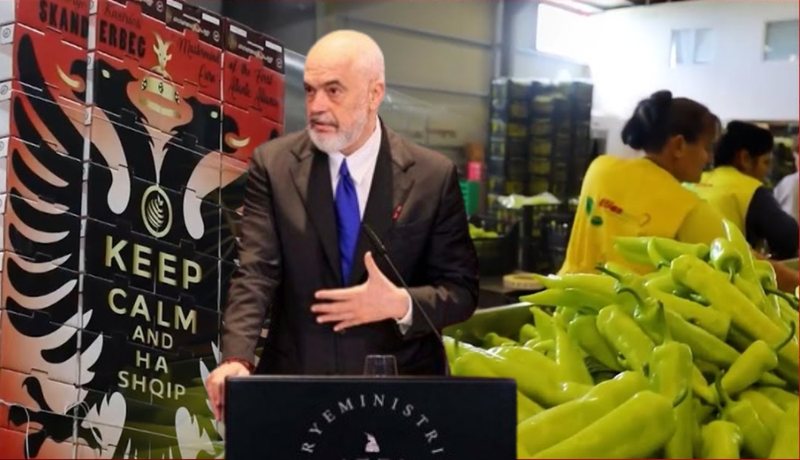
In Slovenia, food safety authorities there withdrew the product from the market and urged citizens not to consume peppers supplied from Albania.
Analyses conducted on August 26, after the pepper exported from Albania was released onto the Slovenian market, revealed the presence of 3 dangerous types of pesticides.
In the European food safety system, RASFF, an 'alert notification' has been issued by the Slovenian state for this case. Also during July, Slovenia withdrew from the market 1 shipment of peppers that tests revealed pesticides above the norms.
But what goes wrong? How does Albanian produce end up abroad, with banned pesticides?
The first link, farmer control
Peppers produced by Albanian farmers must first be checked by agronomists from the National Veterinary and Plant Protection Authority (AKVMB) for the pesticides they use while growing the product.
This same institution, together with the National Food Authority (AKU), should also check agricultural pharmacies to see if the pesticides they sell are approved by the Ministry of Agriculture, or if they may have been smuggled in, as experts have often raised concerns about and as resulted in the case of pesticides in 20 tons of mandarins seized at the end of December 2024 in Croatia.
Pharmacies must also inform farmers about the method of use and the amount of pesticides they should dispose of depending on the products.
The second link, exporter control
The second stage of the domestic product's journey for export is the collector, who takes the product collected from farmers to a company for export.
The collector must issue an invoice so that, if later claims arise regarding the product, the origin can be quickly discovered. In many cases, the collectors themselves are also the exporters. This increases their responsibility.
The exporter must notify the AKVMB about the product they have prepared for export, for example, pepper to Slovenia. The agronomist of this authority performs the final inspection; issues the phytosanitary certificate, which states whether the product is controlled and clean, or not.
In addition, the exporting company itself must analyze the product it exports for its quality and whether or not it contains dangerous pesticides. Without these security seals, at the farmer's, and twice at the exporter's, the product cannot be exported.
We are left with the pepper that Slovenian authorities discovered contained dangerous pesticides. If the agronomist's analysis was done, and the exporter did his own checks, then how did the pepper end up with pesticides in the Slovenian state? This is a question that the authorities must answer, on the suspicions that remain that the analyses are with fictitious data, or were not done at all.
The third link, AKU reveals the "chain"
To find this answer, this is where the role of the AKU comes in. After discovering a shipment of pesticides leaving Albania, this authority must find the initial origin; that is, the farmer, did he use permitted pesticides and did he use them in the right quantity; and then to the agricultural pharmacy that sold the pesticides.
If they are prohibited, how do these substances end up in our agricultural pharmacies when they are not on the Ministry of Agriculture's list? And what is the chain of their smuggling?
The NFA must also find out whether the farmer whose product was found to be contaminated with pesticides has distributed the entire quantity of pepper produced abroad, or has also released it on the domestic market, or if he still has stock.
In this case, the product should be blocked, or when it is indicated, customers should be notified not to consume it, as Slovenia has actually done.
But Slovenia is not the first case. From January of this year until the latest notification of the peppers, there are 21 shipments of Albanian products for export that have been found by foreign authorities to have high pesticide content or the presence of salmonella in fish fillets. The vast majority of shipments containing pesticides were reported by Croatia.
There are only a few cases where Albanian authorities have publicly reacted after the discovery of these cases. The discovery of those responsible and their criminal liability is the duty of the AKU, which so far has not had many cases referred for investigation, at least not made public.
Even for the peppers discovered in Slovenia with pesticides, the institutions have not yet made an official reaction./ Shqiptarja.com
Po ndodh...


"Albania Mirror", or Rama's "magic" to sell the truth that is sinking him!
Nga Indrit Gjyzeli
ide

Edi Rama, Harari and the algorithm!
Nga Ermal Peçi

Edi Rama, the time of reckoning has come!
Nga Eva Idrizllari

Have a safe trip to America, Dr. Berisha. But that's all!
Nga Mentor Kikia
top


receta Alfa


TRENDING 


shërbime
- POLICIA129
- POLICIA RRUGORE126
- URGJENCA112
- ZJARRFIKESJA128