


FLASH NEWS
Former security chief: Enemy powers are sending spies to Western universities

2025-12-07 14:50:07 / BOTA
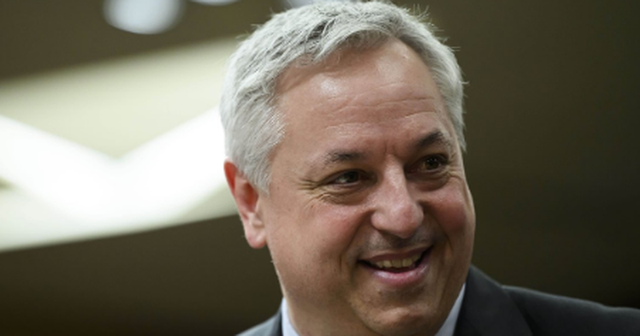
Hostile spy agencies are now as focused on infiltrating Western universities and companies as they are on interfering with governments, according to the former head of Canada's intelligence service.
David Vigneault warned that a recent “industrial-scale” attempt by China to steal new technologies showed the need for increased vigilance by academics.
“The front line has shifted, from a focus on government information to private sector innovation, research innovation and universities,” he told the Guardian in his first interview since leaving the Canadian Security Intelligence Service (CSIS), which is part of the “Five Eyes” intelligence-sharing alliance with the US, UK, Australia and New Zealand.
Vigneault singled out Beijing as the main culprit, saying it was using a combination of cyberattacks, undercover agents and the recruitment of university staff to acquire sensitive technology.
“The system is built to… in a very systematic way remove the military applications of these new innovations to then put them into production for the People’s Liberation Army,” he said in the interview on the sidelines of an intelligence conference in The Hague this week.
Vigneault said China's leadership had been on a long program of military regeneration after being horrified by the speed with which the US military invaded Iraq in 2003.
Beijing decided to invest in "asymmetric capabilities" and steal as much technical knowledge as possible from the West.
"Being an organization that doesn't have to worry about the election cycle every four years, they had the opportunity to look at it from a very long-term perspective," he said.
CSIS concluded that China interfered in two Canadian elections, in 2019 and 2021, findings that led to a political scandal over whether the agency had adequately warned politicians. But when it came to research theft, Vigneault said the whole of society, not just politicians, needed to come together to combat the threat.
Vigneault left CSIS in July last year after seven years there and now works for the American company Strider, which advises organizations on potential espionage threats.
He said he has seen the "full spectrum" of approaches from cyberattacks to "people who have infiltrated programs, taken the information and put it back."
University staff were recruited by foreign powers based on naivety, ideology or greed, he said.
He claimed that these threats justified the decision to require national security assessments for university programs in sensitive areas that received government funding.
He rejected criticism from some researchers that the rules were too restrictive and could hinder academic excellence and transparency.
"You can't imagine working in isolation. You don't live on an island and do simple research for the benefit of humanity," he said.
Vigneault acknowledged that the focus on China could lead to a problematic sense of racial profiling among students and faculty in universities and other sectors.
"It's an absolutely critical point; we're not far from potentially being accused, wrongly or rightly, of racism," he said.
"What I've tried to do is always make the distinction that the problem is not China or the Chinese people, but the Chinese Communist Party."
He added that some espionage cases linked to China involved people without Chinese ancestry.
Vigneault said his seven years at the helm of Canada's intelligence service had been marked by an "evolution from a focus on terrorism to great power politics."
He was in charge during the period before Russia's invasion of Ukraine in 2022, when Canada had access to almost everything gathered by American and British agencies on Vladimir Putin's plans.
Vigneault described that intelligence as “brilliant” and said there had been little doubt that Russia would invade for weeks before it did.
He suggested that, in addition to the lack of the same detailed intelligence, the failure of European security services to anticipate the attack was at least partly due to their dependence on Russian oil and gas. Fear of “the political cost or the economic cost of trying to diversify before an invasion” made it easier to hope that the invasion would not happen.
"We saw it with Germany, which later had to redirect a lot of its energy," he said. "It has an impact on decision-making, it has an impact on how you evaluate information."
Even as Canada faces hostile rhetoric and high tariffs imposed by its former closest ally, the United States, Vigneault called for a pragmatic approach. That meant identifying areas where cooperation was essential and “building sovereign capabilities” where it might be preferable to not rely on an increasingly erratic ally.
He added: "In the world we're in now and the world we envision for the future, data is going to be absolutely critical. So how do you make sure that you know you have a level of sovereignty over your data to protect your citizens, your national security?"
“Developing sovereign cloud capabilities… allows you to control your information and not be at the mercy of a company that may have legal requirements to share that information back in the US.”/The Guardian
Happening now...













Karmën nuk e ndalon dot Sali Berisha!
Nga Bato Kosova
ideas

Will Berisha take stock of the first in his second speech?
Nga Preç Zogaj

First Secretary of the Democratic Party
Nga Indrit Vokshi

"Topple" Edi Rama by lying to yourself...
Nga Patrik Sadikaj
top



Alfa recipes



TRENDING 




services
- POLICE129
- STREET POLICE126
- AMBULANCE112
- FIREFIGHTER128