


FLASH NEWS
Billions of euros after Ukraine-Russia "peace"/ Analysis: Is Trump bargaining with the oligarchs?

2025-12-16 22:51:53 / BOTA
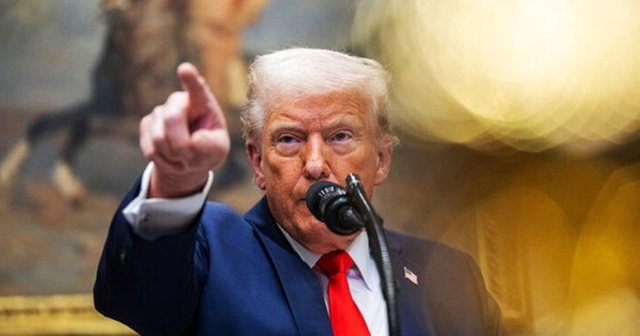
By Federico Fubini – Corriere.it
Some of the latest diplomatic twists and turns of Donald Trump's America in relations with Russia are beginning to be outlined in some of the US government's justifications.
Two of them are particularly significant: the management of oil sanctions and the United States' openness to recognizing for Russia some Ukrainian territories taken by force over the years.
On both of these fronts, the interests of a number of large American investors, in close cooperation with the White House and in coordination with the Kremlin, are becoming increasingly visible. Thus, behind the scenes of the war negotiations, an oligarchic business system is taking shape, in which Trumpian America seems to be inspired almost directly by the Russian model.
Let's examine these two developments, one at a time. The sale of Lukoil (and its fields). The sign that something is happening in business between Russians and Americans, not just in politics, came late last week with an announcement that was kept as discreet as possible. For the second time, the Trump administration has pushed back the deadline for the sale of the foreign operations of the Russian private group Lukoil, from December 13 to January 17. The first deadline was set in October, on November 21, but was pushed back at the last minute.
What is at stake is anything but insignificant. In addition to a few trading offices in Switzerland and Singapore, Lukoil owns significant stakes in large oil fields in Iraq (West Qurna 2), Kazakhstan, Uzbekistan and Mexico, as well as a refinery in Bulgaria and a distribution network in Finland, among other properties. The market value of this portfolio is estimated at around $22 billion, under normal conditions.
Low property prices
But these are not normal conditions at all. The US sanctions system practically forces Lukoil to sell its activities outside Russia within very tight deadlines, and the lack of time forces the group to accept offers at prices much lower than the real value.
Assets worth $22 billion could be transferred to other hands for much smaller sums: essentially, a kind of wartime expropriation, similar to what the Kremlin imposed on Western companies that left Russia in 2022. From the McDonald's restaurant chain to Volkswagen plants to beer brands under the InBev umbrella, the properties of Americans and Europeans were forcibly transferred to oligarchs favored by the Kremlin for half or even less than their real value.
Today, something similar is happening in the opposite direction. A number of large American groups – and not only – all with strong ties to the Trump White House, are circling around the “prey” of Lukoil’s foreign assets. Among the claimants are American energy giants, primarily Exxon Mobil and Chevron, but also the energy group MOL, the national champion in Viktor Orbán’s Hungary, which simultaneously holds the role of a close ally of both Trump and Vladimir Putin.
A significant twist came about two weeks ago with a dinner between Trump himself and David Rubenstein, founder and CEO of the giant American private equity fund Carlyle. Rubenstein, who worked in Jimmy Carter’s Democratic administration but has long cultivated close relationships with Republican leaders through Carlyle, has expressed interest in Lukoil’s assets. It therefore seems highly likely that Trump has “stopped the clock” on the sale to give Carlyle time to prepare its offer.
It doesn't matter that conflicts of interest are visible everywhere: in addition to being an investor, Rubenstein is also an influential commentator on American politics and economics for Bloomberg. But now, "Russian-style" oligarchic relationships seem to be increasingly prevalent in the business world around Donald Trump.
Zaporizhia nuclear power plant and data centers in the US
The same logic applies to another issue, that of the Zaporizhia nuclear power plant. It is currently under the control of the occupying Russian army, with a 50 percent share of electricity production with the free part of Ukraine. Trump’s envoys, Steven Witkoff and Jared Kushner, have already signaled to Putin that the US administration would be willing to formally recognize Moscow’s sovereignty over the occupied part of Zaporizhia, including the nuclear power plant. This would constitute a radical departure from a century of US foreign policy doctrine, which refuses to recognize territories seized by force from other states.
But in the case of Zaporizhzhia, there seems to be a business reason: the construction of a US data center for artificial intelligence in the Russian-controlled part of the area is being studied, supplied precisely by the plant's low-cost electricity. And for this reason, America today seems ready to bury the principles that it itself helped establish for the creation of the United Nations eighty years ago.
Happening now...





83 mandates are not immunity for Rama's friends
Nga Gentian Gaba
ideas

top



Alfa recipes



TRENDING 




services
- POLICE129
- STREET POLICE126
- AMBULANCE112
- FIREFIGHTER128