


FLASH NEWS
Prices and types of cars/ Why does the rise in oil prices hurt us more than the rest of Europe?

2026-04-08 10:26:22 / EKONOMI&SOCIALE
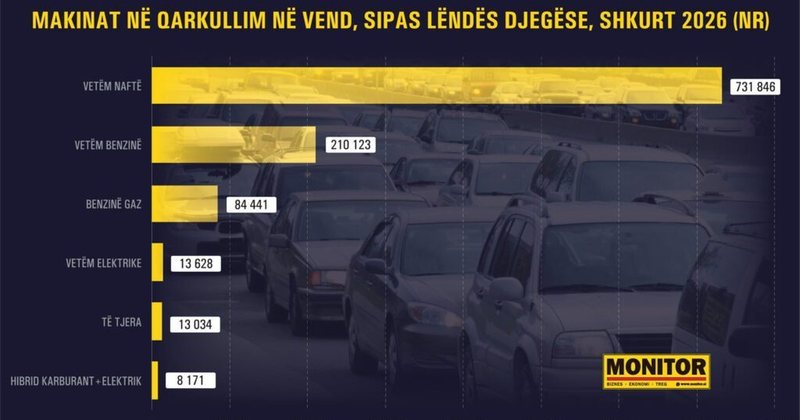
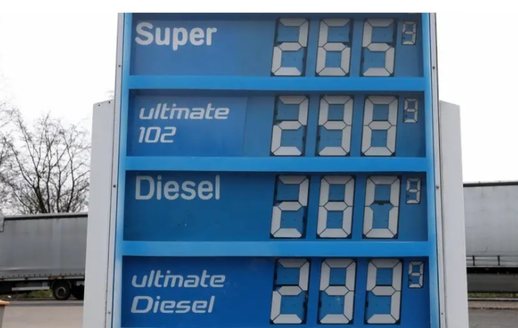
The price of oil in the country increased by about 30% in March, trading at 224 lek per liter, up from 170-175 lek per liter at the end of February.
The increase came after the start of the Middle East crisis, which pushed the benchmark Brent from $65-70 per barrel to over $100 per barrel. The future remains entirely uncertain, with European Union authorities warning that Europe must prepare for a long-term energy shock.
Albania is expected to be hit harder than all of Europe for two main reasons:
The first reason, high prices in value and very expensive in relation to purchasing power
First, oil prices in absolute terms are among the most expensive in the world. According to the Global Petrol Price update of March 30, oil in Albania is the 11th most expensive in the world, almost the same as countries like Switzerland, Denmark, and the Netherlands. In terms of purchasing power, oil is twice as expensive as the region and 7 times more expensive than the Netherlands, which has oil in value almost the same as us.
The main reason for the difference with the region is the tax burden, which is twice as high in our country. On average, an Albanian pays 1.16 euros in taxes on a liter of diesel (53% of the final price); a Macedonian citizen pays 0.58 euros per liter (36% of the final price); a Montenegrin pays 0.55 euros (35% of the final price); a Kosovo citizen pays 0.67 euros, or 38.5% of the final price.
Second reason: 70% of the cars circulating in the country are diesel, among the highest in Europe.
The second and equally, if not more important, reason is the high number of vehicles in the country that are supplied with diesel. According to data from the General Directorate of Road Transport Services (DPSHTRR), by the end of February, there were 1.06 million vehicles active in the country. Of these, about 732 thousand, or almost 70% of the total, use diesel as fuel.
About 210 thousand vehicles, or almost 20%, use only gasoline, which has experienced a minimal increase in price compared to diesel, trading at 181 lek per liter, from 173-175 before the crisis, with an increase of 3-5%.
About 84 thousand users have gas-powered vehicles, or 8% of the total. Gas for vehicles also increased in price twice in March, by a total of 20 lek per liter, reaching from 55-60 lek before the crisis to 75 lek currently (an increase of over 30%).
Although the registration of electric cars is increasing, especially in March, after the increase in oil prices, their weight in the total remains minimal, at only 1.3%, with around 15 thousand electric vehicles circulating in the country, out of over 1 million in total, and another 8 thousand that are hybrids (fuel + electric).
The share of diesel-powered vehicles in circulation in Albania is among the highest in Europe, with the latter having for years been oriented towards gasoline and electric vehicles.
According to Eurostat data, available for 2024, around 40% of the vehicle fleet in the EU and other developed countries outside the EU was still diesel, while their share is rapidly decreasing. In Europe, around 54% of active cars use petrol as fuel and around 6% are electric or hybrid.
Albania ranks third in Europe, after Montenegro and Bosnia and Herzegovina, for the high proportion of vehicles that use diesel (see graph at the bottom).
Unlike other countries that are reducing the share of diesel vehicles, in Albania it remains high. In 2024, in the country, 66% of new registrations were diesel, the highest in Europe. That same year, in the European Union, on average, about 15% of new registrations were diesel cars. The countries in the ranking after Albania, Moldova and Bosnia and Herzegovina, had this share of 47% and 44%, respectively. Montenegro reduced new registrations of diesel cars to 27%.
The trend continued in the first quarter of 2026, where 60% of new registrations in the country were diesel, according to DPSHTRR.
Fuel is one of the main components of transport and logistics costs in the economy. In countries where its share in income and use is high, the impact spreads further to commodity prices, the cost of transporting goods, and everyday household expenses.
The only measure that the Albanian government has taken at the moment was the 20% excise tax reduction when oil exceeded 220 lek/liter, but this only reduced the price by 9.4 lek, which still increased to 224 lek. The government also reactivated the Transparency Board, but it is "fighting" with importers for only 5-6 lek per liter, while it is expected to review the methodology, but with an increase! For its part, the government is expected to enjoy higher revenues in March, as a result of the effect of price increases on the Value Added Tax, which is paid by consumers in the final price./Monitor.al
Happening now...











Denouncing Berishism is a prerequisite for denouncing the government
Nga Blendi Kajsiu
ideas
Cycle: Jobs for Albania! What did time prove to us for Air Albania?
Nga Irena Beqiraj

When cardboard and arrogance become law.
Nga Gjergji Nika

Renaissance is Disaster Capitalism
Nga Klodian Tomorri
top


Alfa recipes


TRENDING 




services
- POLICE129
- STREET POLICE126
- AMBULANCE112
- FIREFIGHTER128