


FLASH NEWS
Albanians lead Europe in the number of luxury cars with over 2,000 cubic meters

2025-08-01 09:04:04 / EKONOMI&SOCIALE
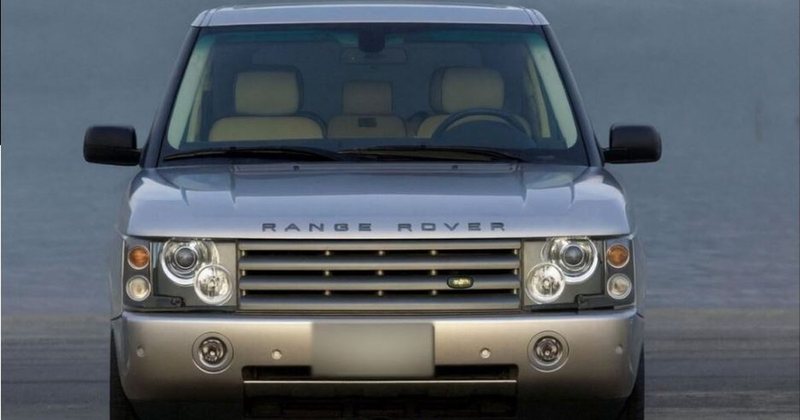
In general, in rankings where it is compared to European countries, Albania is always at the bottom. But there is one indicator where it finally leads.
It is about the preference for having cars with powerful engines. According to Eurostat data, processed by "Monitor", in Albania, 27.8% of the total number of passenger vehicles in the country are over 2 thousand cubic meters, for the year 2024, where only diesel-powered cars are counted by power. This is the highest share of cars with this engine power in Europe, in relation to the total number of passenger vehicles.
In addition to Albania, the share of diesel cars over 2 thousand cubic meters/total number of vehicles in circulation is also in Latvia (25.7%) and Lithuania (20.9%), driven by harsh climatic conditions and large distances between cities. Estonia ranks next (18.6%).
Even in Kosovo, the preference is for large cars, with engines over 2,000 cubic meters accounting for 16.6% of the total. The opposite is observed in Serbia, with only 3.8%, or in Turkey with 1.3%.
In Albania, out of 567 thousand diesel vehicles, 215 thousand are over 2 thousand cubic meters (cm3); 308 thousand or 40% of the total number of vehicles are 1400 cm3 - 1999 cm3 and 5.5% are under 1399 cm3.
Albania's "leadership" is also influenced by the fact that the majority of vehicles in the country are diesel-powered, with 74% of the total, one of the highest in Europe. In Europe, gasoline-powered cars, which pollute less, and electric cars predominate.
For example, the Netherlands has only 0.6% of passenger vehicles with a capacity of over 2,000 cubic meters and only 7.4% of total vehicles with diesel, while 65.5% have gasoline and the rest with alternative energy. While in Albania, only 16.5% of vehicles are gasoline-powered.
Why do Albanians love cars over 2,000 cubic meters?
This preference of Albanian vehicle owners for cars with powerful engines is not simply a technical issue, but reflects a combination of economic, cultural and practical factors that have shaped the used car market in Albania.
First, Albania has a market almost entirely based on imported used vehicles, mainly from Germany, Switzerland and Italy. In these countries, cars with large engines face very high tax and insurance costs, making them unaffordable for local owners – but affordable for import into Albania, where until recently the level of taxation on engine capacity has been lower.
Another driver is the perception of the car as a status symbol. In a society where a vehicle is not only a means of transportation but also a reflection of social standing, choosing a car with a powerful engine is often linked to the desire to “look good.”
Luxury brands like Mercedes-Benz, BMW and Audi are more present on Albanian roads than in many EU countries with higher per capita incomes. Even cars manufactured before 2010 with engines over 2.0 liters are in demand, thanks to their cheap price and the image they convey.
The geographical conditions and difficult infrastructure in many areas of the country are another practical reason for this choice. The rugged terrain, lack of maintenance of secondary roads, and harsh winters in mountainous areas make a car with a powerful engine a reasonable choice for many families outside of large cities.
However, the situation in Albania is changing. Rising fuel prices, pressure to reduce pollution, and the gradual introduction of hybrid and electric cars are pushing many consumers to rethink their choices.
New tax policies that penalize vehicles over 2,000 cc and environmental taxes for cars that pollute the most are having an effect on the new segment of buyers, especially in large cities./Monitor
Happening now...
















America may withdraw from Europe, but not from SPAK
Nga Gentian Gaba
ideas



top



Alfa recipes



TRENDING 




services
- POLICE129
- STREET POLICE126
- AMBULANCE112
- FIREFIGHTER128