


FLASH NEWS
McAllister's message to Rama and the lack of meeting with Berisha

2026-02-18 21:24:33 / IDE

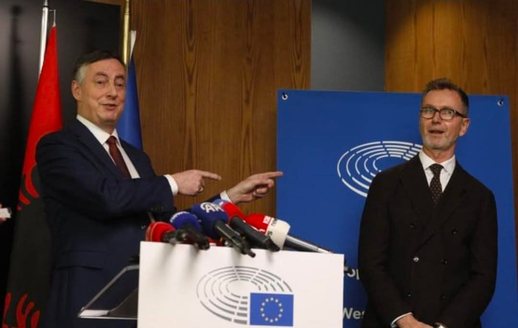
David McAllister's visit to Tirana was not a passing stop on the diplomatic agenda but a visit with essential political messages. As chairman of the Foreign Affairs Committee in the European Parliament, he spoke in the language of European institutions, calm, measured, but firm.
His three messages were essential and concrete: the fight against corruption must be truly deepened; electoral reform must be comprehensive and in line with the OSCE-ODIHR recommendations; freedom of expression and media pluralism require more transparency and protection for journalists. These are not simply technical points in a progress report, they are the real wounds that the country faces today.
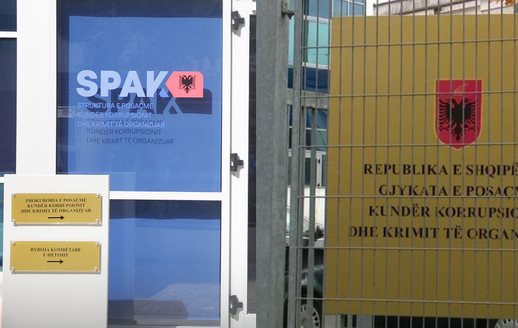
McAllister also spoke clearly about Edi Rama's government. When he described the "Balluku" case as a "critical test", he gave a direct message: corruption is not fought with press conferences or procedural changes of the moment, but with justice that works and a political class that does not intervene to save its people.
As Montesquieu would say, “Anyone who has power is prone to abuse it.” Therefore, democracy is not based on trust, but on checks and balances. This is precisely what Europe requires: institutions that resist the temptation of power or even its attacks.
But the message of this visit was not given only in words, it was also given by the meetings that did not take place.
Not meeting with Sali Berisha, who leads the Democratic Party of Albania, is a weighty political signal. In any functional democracy, the opposition is an essential part of the dialogue with international partners. The fact that an opposition leader is not included in the agenda of a senior European official is not simply a matter of protocol. It is a message.
A figure declared “non grata” by the US carries a burden that goes beyond domestic politics. When even senior EU representatives keep their distance, a diplomatic reality is created: the opposition exists institutionally, but its leader remains internationally contested.
In diplomacy, the door does not slam shut with a bang; it simply does not open. But what happens when the US and the European Union keep the door closed? What happens in international relations is called gradual isolation: trust fades, political weight decreases, the space of influence narrows. For a country like Albania, Western orientation is not a luxury, not even in politics, but is the strategic axis of security and development.
As Niccolo Machiavelli would say, in politics perception is as important as reality. When international perception creates distance, that distance quickly turns into a political fact, which after the US and the EU has closed its doors to Berisha. McAllister's visit was a mirror for everyone, for the government that is tested by justice, and for the opposition that is tested by international credibility. In the end, Albania is not judged only by what is said in Tirana, but by how it is seen in Washington and Brussels.
Happening now...



ideas
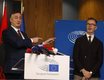
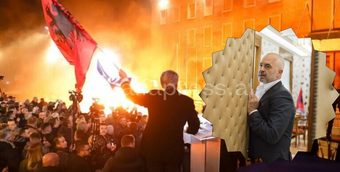
Messages for Rama&Berisha and a McAllister act in Tirana
Nga Roland Lami


Why should MEPs meet Berisha?
Nga Mero Baze
top



Alfa recipes








services
- POLICE129
- STREET POLICE126
- AMBULANCE112
- FIREFIGHTER128