


FLASH NEWS
How far will Europe go to protect Greenland from Trump?

2026-01-15 21:24:35 / IDE
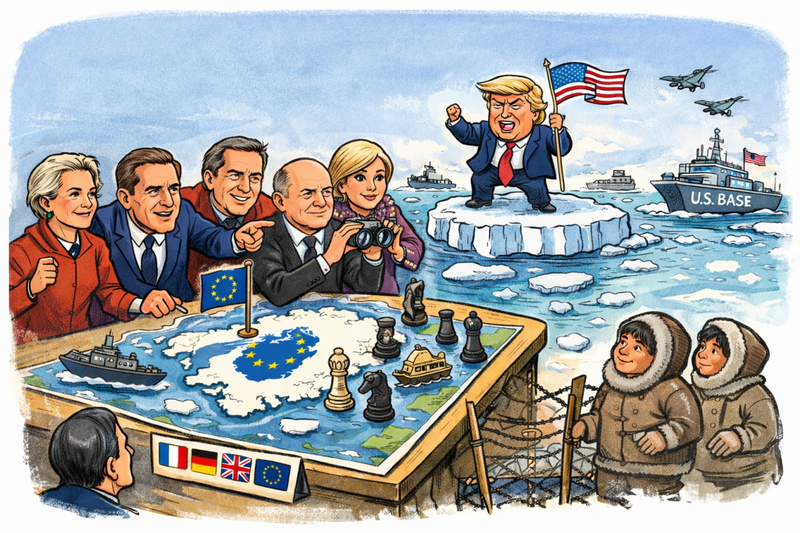
Donald Trump's threat to take control of Greenland "one way or another" has sent shockwaves through its sovereign power Denmark, while the rest of Europe is scrambling to find ways to stop him.
After the shock caused by the US military attack on Venezuela, Trump's ambition to have Greenland as the next target is no longer seen in Europe as boasting or fantasy, but as a serious goal, driven by ideology, neo-imperialism, the US thirst for critical minerals, or all of these together.
Trump’s open disregard for international law is once again highlighting the painful dilemma stemming from Europe’s crippling dependence on the US for military security: should they confront it or mitigate it, even when the “mad state” actions mirror Russia’s invasion of Ukraine, which they consider illegal?
Shortly after the attack on Venezuela, which was accompanied by a deafening silence from Europe, Trump adviser Stephen Miller boasted in an interview with CNN that "nobody is going to fight the United States" over Greenland.
Is Miller right? There has been a shift in tone in recent days. The leaders of six European powers — France, Germany, Spain, Italy, Poland and the United Kingdom — issued a rare joint statement, reaffirming their support for Danish sovereignty and essentially sending a warning to Trump to keep his hands off Greenland. Greenland belongs to its own people, they said: “Only Denmark and Greenland should decide on matters concerning Denmark and Greenland.”
But what kind of "war" these European powers are willing to undertake for Greenland, if diplomacy fails, remains unclear.
At a meeting in Washington, Denmark was trying to defuse the crisis with promises of security, insisting that Greenland is not for sale. Many Greenlanders have mixed feelings about Denmark because of its colonial heritage, but for now the two governments are on the same page. US Vice President JD Vance was expected to revive more typical 19th-century ideas, such as “buying” the territory.
Trump's justification for threatening a loyal NATO ally, supposedly to protect Greenland from possible future Russian or Chinese aggression, does not hold water, analysts say. U.S. security concerns can be addressed without annexing Greenland.
Greenland has been a semi-autonomous territory since 1979, but as part of Denmark it is protected by NATO. Trump could demand that NATO allies strengthen the defense of the strategic territory's external borders.
Traktatet ekzistuese të epokës së Luftës së Ftohtë mes Danimarkës dhe SHBA-së për mbrojtjen e përbashkët të Groenlandës i japin Uashingtonit dorë të lirë për të dislokuar më shumë trupa. Ai mund të rihapë 16 nga 17 bazat ushtarake amerikane që kishin operuar më parë, por që më pas i kishte mbyllur.
Teksa alarmi rritet në Danimarkë dhe në vetë Groenlandën, – prej ku raportimet përshkruajnë një atmosferë frike, me shumë njerëz që pyesin veten nëse duhet të largohen, mund të shohim Mbretërinë e Bashkuar të luajë një rol më aktiv për të zbutur krizën. Qeveria e Keir Starmerit shpreson të ndërmjetësojë një modus vivendi me Uashingtonin. Pasi mbajti një profil të ulët për Venezuelën, Starmer shpreson se shqetësimet amerikane për sigurinë e gjithë rajonit Arktik mund të adresohen brenda traktateve ekzistuese, duke qetësuar njëkohësisht frikën daneze për “pronësinë”.
Starmer dhe Trump kanë folur dy herë gjatë javës së fundit për të bërë më shumë për të mbrojtur “veriun e lartë” nga një inkursion i mundshëm rus. “Qëndrimi në Londër është se ka një marrëveshje të mundshme për Groenlandën,” tha Patrick. “Vështirësia me këtë administratë amerikane, megjithatë, është të identifikosh saktësisht se cilat janë motivet e presidentit kur flet për ‘pronësinë’.”
“Groenlanda duket se ka një cilësi pothuajse mistike për Trumpin, por a do të thotë kjo se ai thjesht dëshiron të jetë në gjendje të tregojë me gisht në hartën e SHBA-së dhe të thotë se territori i saj është zgjeruar duke përfshirë Groenlandën? Kjo mbetet e paqartë.”
Starmer ka dërguar sekretaren e jashtme, Yvette Cooper, në Finlandë dhe Norvegji. Përpara vizitës së saj, ajo nuk përmendi drejtpërdrejt Groenlandën apo nevojën për t’u përballur me kërcënimet e Trumpit, por i bëri thirrje “NATO-s të intensifikojë punën e saj në Arktik për të mbrojtur interesat euro-atlantike në rajon”. Deklarata e Cooper shtoi gjithashtu: “Me ndryshimet klimatike që hapin Arktikun, rajoni do të bëhet një front gjithnjë e më kritik për NATO-n.”
“Duke iu referuar ndryshimeve klimatike, shkrirjes së akullit arktik dhe rrjedhimisht rritjes së kërcënimit të paraqitur nga Rusia,” thotë Patrick, “Mbretëria e Bashkuar po pranon vlefshmërinë e shqetësimeve të Trumpit, por sigurisht jo zgjidhjen e tij, pra pushtimin amerikan.”
Megjithatë, me Trumpin që duket i gatshëm të shkatërrojë NATO-n për hir të kontrollit të Groenlandës, pavarësisht motiveve të tij, opsionet e Europës duken të mbushura me rrezik.
But there are also strategic cards that Europe can play. Robert Habeck, Germany’s former vice-chancellor, argued in the Guardian on Monday that Europe should show some of its machtpolitik (power politics) and offer Greenland a return to EU membership, along with a massive investment package, to protect itself from American threats. Greenland left the European Communities in 1985 to regain control over its fisheries. But if the EU were to match Denmark’s annual grant with billions in new investment, the calculus could change in a radically transformed world.
Fabian Zuleeg, executive director of the European Policy Center in Brussels, said that Europe, if it stands united, can show Trump that his predatory tightening has a cost. He stressed that Europe must take “not symbolic gestures, but measures that resonate within the US and hurt Trump and his political choices where it matters most: his electoral base. Trade, market access, regulatory cooperation and industrial partnerships all offer leverage.”
For Paris-based analyst Alexander Hurst, the best course of action for Europe is to force “a rift” with the US, including demanding that the US remove its military bases from Europe. “Everything short of direct combat should be considered,” Hurst wrote. / The Guardian – Bota.al
Happening now...



Blaming Gaz Bardhi for the statutory changes
Nga Namir Lapardhaja
ideas

The Statute Review and Berisha's Sinking Boat
Nga Alesia Balliu

Will the new justice system unite the SP and the DP?
Nga Arbër Hitaj

Sovereignty as a fig leaf
Nga Namir Lapardhaja
top




TRENDING 




services
- POLICE129
- STREET POLICE126
- AMBULANCE112
- FIREFIGHTER128