


FLASH NEWS
On Earth they are worth billions, but on the planet Uranus and Neptune diamonds fall like rain!

2022-09-22 15:15:19 / MISTERE&KURIOZITETE
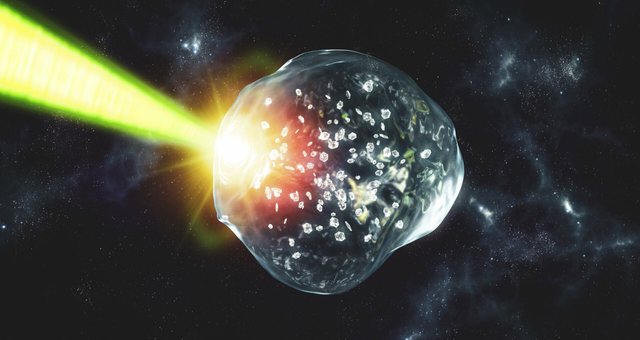
Diamonds are one of the most sought after products on Earth, due to their beauty, utility in industrial processes and of course their scarcity. It takes millions or even billions of years to form deep within the Earth, as we only have diamonds on the surface of the planet due to volcanic eruptions.
A new scientific study has revealed that while diamonds are scarce on our planet, they may be abundant elsewhere in the universe. Previous hypotheses and experiments have raised the possibility that ice giant planets could literally rain diamonds, a special type of precipitation caused by incredible pressure levels.
Now scientists from the US Department of Energy's SLAC National Accelerator Laboratory have found that the presence of oxygen makes diamond formation more likely – meaning they can form under a wider range of conditions.
This means that diamond rain may be a phenomenon on more planets than previously thought. The diamond rain phenomenon is believed by some scientists to occur on Uranus and Neptune in our solar system. It is thought to exist about 8,000km below the surface of our ice giant neighbours, created from ordinary mixtures of hydrogen and carbon, squeezed together at incredible pressure.
And an experiment, conducted in 2017, simulated the environment found inside our solar system's two ice giants. Scientists, again at the US Department of Energy's SLAC National Accelerator Laboratory, were able to create and observe diamond rain for the first time.
Studiuesit simuluan mjedisin e gjetur brenda planetëve duke krijuar valë goditëse në plastikë me një lazer optik intensiv. Ata ishin në gjendje të shihnin se pothuajse çdo atom karboni i plastikës origjinale ishte përfshirë në struktura të vogla diamanti deri në disa nanometra të gjerë.
Ndërsa diamantet e krijuara në eksperiment janë të vogla, pikat e shiut të vërtetë të diamantit në Uran dhe Neptun parashikohen të jenë shumë më të mëdha sa miliona karat. Studimi i ri përfshiu një material të ri që i ngjan më shumë përbërjes kimike të Neptunit dhe Uranit, sipas studiuesve.
Ndërsa këta dy planetë përmbajnë karbon dhe hidrogjen, ato kanë edhe elementë të tjerë, si sasi të mëdha oksigjeni. Ata zbuluan se prania e oksigjenit e bën më të mundshëm formimin e diamantit, gjë që ka implikime se sa i përhapur mund të jetë fenomeni në të gjithë universin.
Like the previous experiment, the researchers shone a laser on a certain type of plastic to see how it affected the atoms. However, this plastic was a PET plastic and has a good balance between carbon, hydrogen and oxygen to simulate activity on ice planets.
The authors say the new findings could also lead to a new way to make nanodiamonds, which could be put to a number of practical uses on Earth. They include drug delivery, medical sensors, non-invasive surgery, sustainable manufacturing and quantum electronics.
Happening now...















What did he say that didn't work out?
Nga Alfapress
ideas

The rise and fall of comrade Edi
Nga Demush Shasha

The Alliance of Seals and Towers, facing the New Republic
Nga Azgan Haklaj

The beginning of the end of power in Albania...
Nga Veton Surroi
top



Alfa recipes



TRENDING 




services
- POLICE129
- STREET POLICE126
- AMBULANCE112
- FIREFIGHTER128