


FLASH NEWS
EU Ambassador Gonzato on negotiations: There are speculations, I don't think we can talk about a deadlock

2026-04-09 20:44:23 / POLITIKË
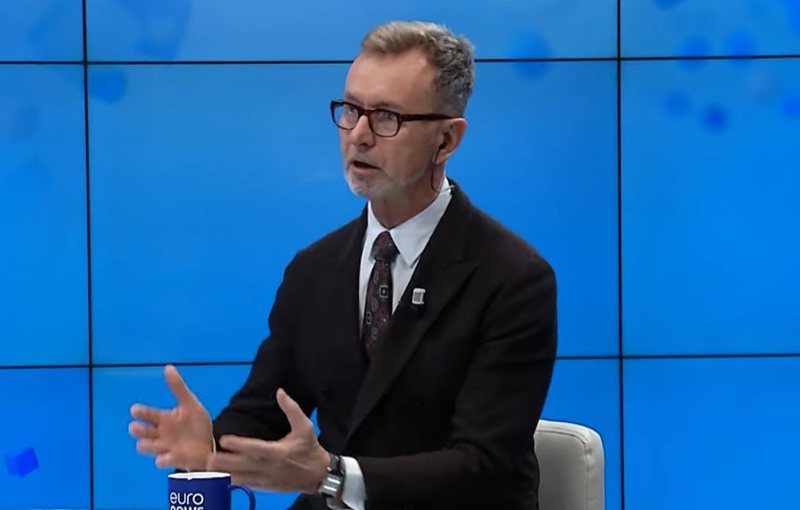
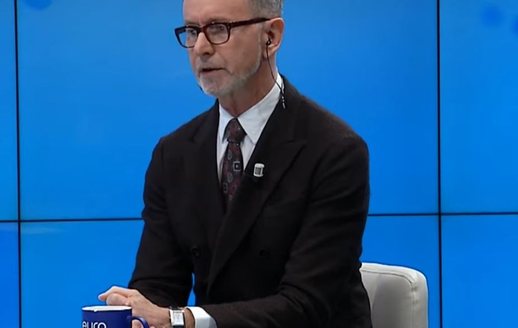
This Thursday, EU Ambassador to Albania Silvio Gonzato spoke to Euronews Albania in an interview with moderator Mirela Milori. Gonzato spoke about Albania's integration process and said that there is no blockage in the process. On the other hand, Gonzato said that these are confidential talks based on the procedures of the process. Gonzato said that there is a lot of speculation according to him with the talks with COELA, the Council's Working Group on Enlargement.
Journalist: I understand, however, the media has reported that there are nine European Union member states that have blocked the progress of the process called IBAR, a process that looks at Albania's progress so far. The media even mentions the names of these countries, which are Germany, Luxembourg, the Netherlands, Sweden, Austria, Finland, Poland, Greece and Bulgaria, countries that according to the media are not yet convinced that it is time to give the green light to Albania. What is the relationship between these countries, how much influence do these countries have, and is it true that all nine of these countries are skeptical about the further progress of the process?
Ambassador: First of all, this is a process where we need to reach consensus. The sequence of meetings aims to build consensus among Member States. And the Commission is there to answer questions, to respond to critical points that Member States may raise and to provide the information that they want, in order to confirm or perhaps correct their perception of things. There is a lot of speculation about what is happening now in the so-called COELA, the Council Working Group on Enlargement. And I honestly don't want to get into that. These are confidential negotiations and we have to allow this space to be respected. What is certain is that the meetings are continuing. Another one is planned, so that means that the negotiations are continuing. So I don't think we can talk about deadlocks. There is certainly a discussion going on. Member States reviewed the technical assessment by the Commission, but they also want to see the overall political context in which these reforms have been developed. So, it is not a question of some Member States blocking others, or having a different opinion. It is simply a question of them discussing the situation, assessing the situation, asking questions to the Commission and then deciding what will be included in the common position. And the common position is about the final standards. So discussion does not mean that the Commission comes with a report and they decide yes or no. No, it takes time because they have to decide what kind of requirements we want to put in place at the end of the process, to make sure that these reforms are anchored in the Albanian system and are sustainable, they cannot be reversed.
Journalist: And you say there can be no blockage there, but can there be a division of the process, for example, with Montenegro, can there be a division of the process for Albania, so that it is in a different category in the progress of the integration process?
Ambassador: To be honest, I haven't heard that there has been a connection between Montenegro and Albania. Both countries have been described as frontrunners, because Albania has made a lot of progress last year in opening chapters and in reaching Montenegro. So, in fact, if you look at the situation now, the different candidate countries are indeed frontrunners. But I don't think there has ever been any discussion about linking them together. And you know, we keep repeating that the process is based on merit. So each country is assessed based on its own performance.
Happening now...

Denouncing Berishism is a prerequisite for denouncing the government
Nga Blendi Kajsiu
ideas


top


Alfa recipes

TRENDING 




services
- POLICE129
- STREET POLICE126
- AMBULANCE112
- FIREFIGHTER128