


FLASH NEWS
"Why did you disappoint us who trusted you?"/ Mevlan Shanaj's open letter to Rama: There is a distance between the Ed I knew and the one I see today! It is enough to see the anger and distrust...

2026-06-06 16:47:25 / POLITIKË
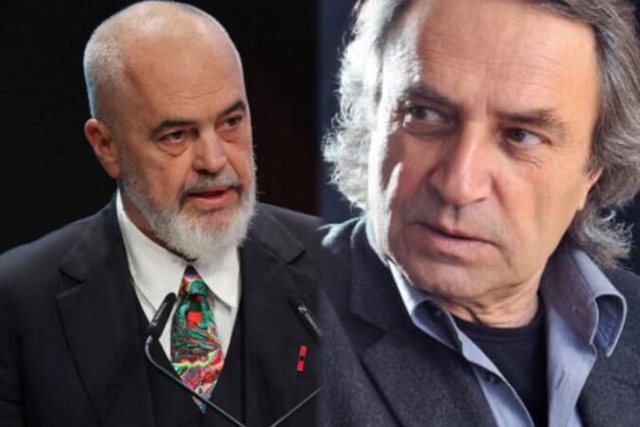
The Albanian director, actor and producer has addressed an open letter to Prime Minister Edi Rama, through which he mentions the beginnings of his political engagement and expresses disappointment with his journey to power.
In his long writing, he recalls his acquaintance with Rama in the early 1990s, his engagement in the student movement and his critical stances towards the communist regime.
He says that he knew Rama as a man who valued freedom and was hesitant to take on high-ranking government positions, but adds that "between the Ed I knew and the Ed I see today, there is a distance that cannot help but make me reflect."
FULL REACTION:
REQUIEM FOR A FAITH
Edi Rama,
Today I am writing to you not as a political opponent, but as someone who knew you before power became part of your life.
I'm writing to you because I feel that between the Edit I knew and the Edit I see today, there is a distance that cannot help but make me reflect.
I remember December 1990. You returned from Corfu and headed towards Student City, what had become the Mecca of Albanian Freedom. You came from the art world, from “Reflections”, with the conviction that you had to be part of that movement that was changing history.
That same night you came to my house. You told me that Gramos Pashko and Arben Imami had proposed that you go to Shkodra to organize the first structures of the Democratic Party. You had not accepted. With your characteristic irony you said that you were not Vasil Shanto to roam around on a motorbike to create a party.
There was something in that response that I liked: The refusal to become anyone's blind soldier.
A little while later, at the big rally in front of the “Qemal Stafa” Stadium, you asked me to intervene so that you could speak. The list of speakers was closed. When I finished my speech, I invited you to the front of the crowd.
And finally, he said the sentence that caused a stir at the time:
"He made us blush like Russians, he made us yellow like Chinese, he made us black like Albanians. Enver Hitler."
It was one of the strongest statements I had heard up to that point. Someone next to me said, "Do you see how radical that is?"
Yes, you were radical. But it was the radicalism of the man who demanded change.
Later I saw you wounded, brutally beaten, and many of us were by your side.
I also saw you when you agreed to become a minister. I remember your concern at that time.
I remember when, locked in a room, overwhelmed by responsibility, you told me:
"How did I agree to become a minister? Where can I do this job?"
And that's exactly the man we believed.
We believed the man who seemed to fear power more than thirst for it.
When you later rose to the top of Albanian politics, I supported you. I thought and said that Albania needed more emancipation, more spiritual and civic freedom, than provincial moralism.
And with them, accusations of corruption against ministers, MPs, mayors, and senior officials of your government were piled up.
Two deputy prime ministers became symbols of a serious crisis of confidence. The impression was created that the government was becoming increasingly closed in on itself and that political protection was often stronger than public accountability.
Maybe some of these perceptions are right, maybe some are not.
But one thing is certain: they exist.
And when a perception occupies the minds of a large part of society, it becomes political reality.
You only need to see the anger, disbelief, and public reaction to understand.
That's why I'm not writing a political indictment today.
I am writing a requiem for a belief.
Because I knew you when they wouldn't let you speak.
I met you when you doubted whether you could shoulder the weight of a task.
I knew you when freedom seemed more important than power.
And that's exactly why my question is simple:
Happening now...

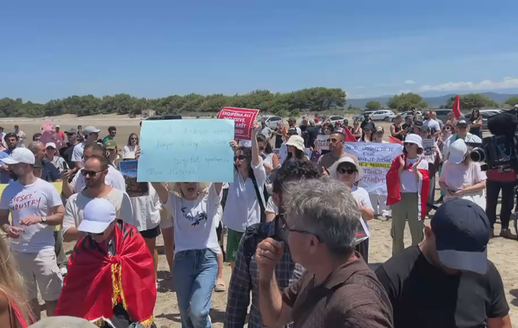



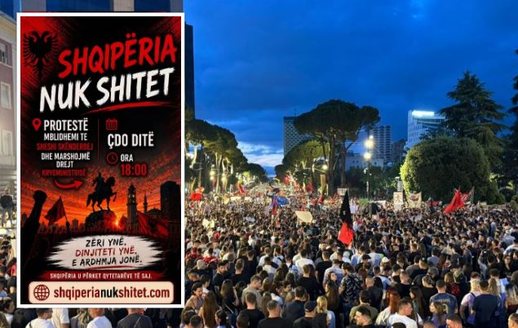

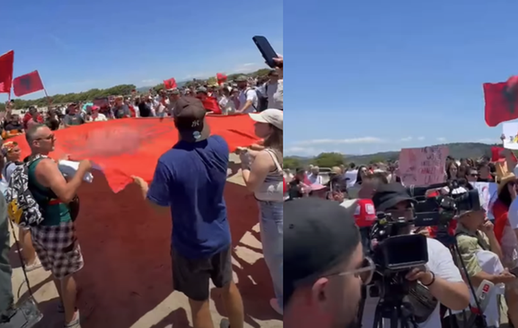

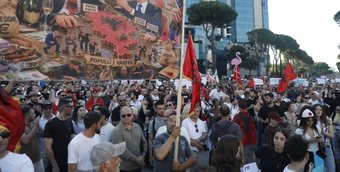
Protests and the crackdown on the Rama-Berisha system
Nga Erl Kodra
ideas


top



Alfa recipes
TRENDING 



services
- POLICE129
- STREET POLICE126
- AMBULANCE112
- FIREFIGHTER128