


FLASH NEWS
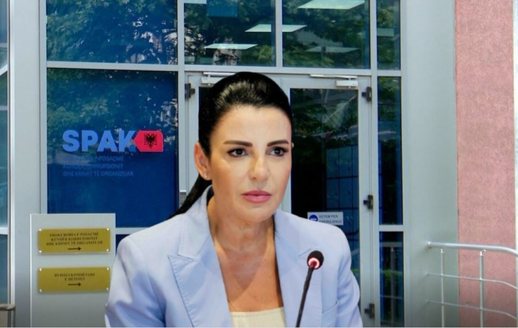
Reducing the level of corruption in Albania/ "Transparency International": SPAK, the main reason for the improvement in the global index

2025-02-11 19:43:52 / AKTUALITET
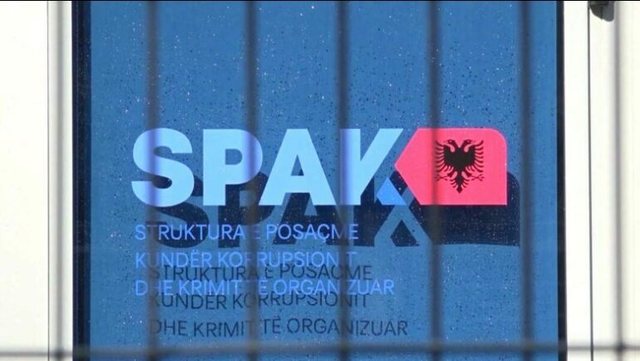
The organization "Transparency International" says that unfortunately, this year's "Corruption Perceptions Index", an annual report published by the organization, does not present a good picture worldwide.
Of the 190 countries where it collected data, only 19 countries have recorded improvements or only 10% of the world's countries.
Artan Haraqija spoke with Transparency International expert Lidija Prokiç, who says that in the Balkans, while Serbia, Bosnia and North Macedonia have deteriorated, Albania and Kosovo, according to her, have improved.
Voice of America: Albania was rated 42 points this year, an increase of five points from 2023. This is the best rating Albania has received since 2012. What is the context of this rating, how did you arrive at this rating?
Lidija Prokiç: In the case of Albania, it is important to mention that the Corruption Perceptions Index is based on eight independent assessments, on which the index is calculated, as a value that summarizes these assessments into a single result. This improvement is visible in some of these sources. But I would like to say that there is a source, a database from the World Economic Forum that has driven this improvement. Regarding developments in Albania and the fight against corruption, I would say that we are seeing a slightly delayed effect of the reform in the justice sector and, in our assessment, it is mostly reflected in the improved independence and integrity of the justice institutions, in particular the SPAK and the special anti-corruption court.
Albania has also taken some steps in the past year to prioritize preventive measures against corruption. The new anti-corruption strategy sets very ambitious goals, but it emphasizes all the key issues to adopt a systematic approach and an effective approach to fighting corruption. What we would like to see is that these ambitious goals are met and we hope that in particular the legislation in the field of prevention is put into force and the existing laws are made stronger. And then the most important issue is that this framework is effectively implemented.
Voice of America: Ms. Prokic, in your report you mention the positive impact of SPAK. Is SPAK the main reason for the improvement, or have you noticed other improvements as well?
Lidija Prokiç: The work of SPAK has been the main driver. In terms of punishing corruption, it is very important to emphasize that Albania is also leading in the regional context in terms of independent investigations, including cases where high-ranking officials are implicated, and we have started to see some results. It is important that this trend continues and that we can see decisions. One area that I think deserves special attention is also that, now that these institutions are functioning and are showing that they can deal with corruption, to their full capacity, it is very important that they continue to work independently and freely. It is important that they are able to handle every case with complete independence, impartially and in accordance with the law.
Voice of America: However, Albania ranks 80th on the list of 190 countries. Where do you see the challenges that Albania still faces?
Lidija Prokic: One of the areas that is particularly concerning is that we are still seeing high-value public contracts being negotiated directly and without any competitive process and without sufficient transparency. This is particularly important because of the exact value of these contracts and also the fact that in this way, the public interest is often overlooked.
Voice of America: Can you give us a general assessment of the Western Balkan countries, how are they doing overall?
Lidija Prokiç: The average in the region is still quite low, 50 points or below, if we compare it to the average of the European Union member states, which is 64. So even the best-ranked country and the highest-rated country in the Western Balkans are still behind. According to our assessment, the reason for this is the systemic nature of corruption in the region as well as the lack of commitment of governments to confront corruption in a comprehensive manner. We are seeing some improvements as I mentioned in the case of Albania, but in many countries this improvement is still insufficient. When I talk about systemic corruption and the need for a comprehensive approach, I want to emphasize the need for transparency, the review of the financing of political parties and election campaigns, in order to have credible election processes, then the integrity and independence of the judiciary and the prosecution, which is probably the biggest challenge in most countries in the region. I would also add the need to support and create an environment where civil society and independent media can play their role in the fight against corruption, which is also very important and unfortunately still remains a challenge throughout the region./VOA

Happening now...








83 mandates are not immunity for Rama's friends
Nga Gentian Gaba
ideas



top



Alfa recipes



TRENDING 




services
- POLICE129
- STREET POLICE126
- AMBULANCE112
- FIREFIGHTER128