


FLASH NEWS
The EU demands urgent normalization of relations in the region as a condition for the economic plan

2023-12-07 12:30:45 / BOTA
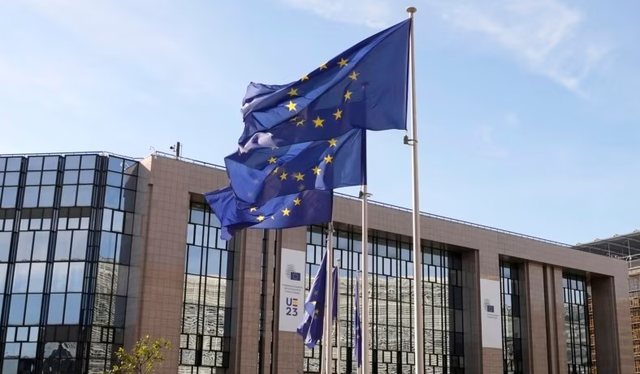
The European Union ordered the countries of the Western Balkans that there is no more time to wait for them to normalize relations between them, but this must be done quickly, as a condition to use the funds from the plan for economic growth approved on November 8 by the European Commission. This was said during a debate in Brussels dedicated to the enlargement process organized by "Friends of Europe".
The plan for economic growth for the countries of the Western Balkans foresees a large package of financial assistance of 6 billion euros for the period from 2024 to 2027. According to the plan, of this amount, up to 2 billion euros would go as assistance without return , while 4 billion in the form of favorable loans or capital investments. A part of these financial means could go through direct payments to the budgets of the countries of the region to be used for these purposes.
Miroslav Lajçak, the EU's special envoy for the dialogue between Kosovo and Serbia, the American ambassador in Belgrade, Christopher Hill, the general director for enlargement at the European Commission, Jan Coopman, and many other participants took part in the debate.
Coopman said that the goal of the EU is to integrate the countries of the region as much as possible even before they become members of the EU, including integration into the internal market of the European Union.
Ministers from several countries of the region also participated in the meeting. They supported the idea of gradual integration before formal integration into the EU, but not to see it as an alternative to membership.
"To realize this, the region must overcome the open problems. We cannot accept countries that have poisoned reports," Coopman said, citing open border issues.
These conditions, according to diplomats in the EU, are primarily related to Kosovo and Serbia, which are included in the dialogue process facilitated by the European Union.
"We will make the growth plan conditional on the normalization of ratios. This should There should be progress in this [aspect]. We don't have time to wait anymore", stated Coopman. He said that the value of the funds from this plan is great and if the states do not use them, the citizens will lose.
The Minister for European Affairs of the Czech Republic, Martin Dvorak, recalled that there will be no opportunity for any candidate country to avoid fulfilling the criteria in the process of advancing towards the EU.
Meanwhile, the American ambassador to Serbia, Christopher Hill, called for the EU to prove that this time the possibility of integration in the EU is really real. He said that Serbia is doing a lot in the reform process as well as in helping Ukraine.
"Serbia is doing a lot for Ukraine, but please don't make a big deal out of it, because it wouldn't be in everyone's interest in Serbia," Hill said.
What is the plan for economic growth in the Western Balkans?
The new plan for economic growth in the countries of the Western Balkans, approved by the European Commission on November 8 of this year, is based on four pillars.
The first pillar is "strengthening economic integration in the EU single market". This will depend on the adaptation of the countries of the region to the rules of the single market and, in parallel, the opening of their market in the relevant sectors to the neighboring countries.
The second pillar of this plan is "strengthening economic integration within the Western Balkans through the common regional market". This, according to the experience of the EU, will affect a potential economic growth of 10 percent.
The third pillar of this plan is "acceleration of fundamental reforms". This also means the rule of law, which also helps attract foreign direct investment and strengthens regional stability.
The fourth pillar of the European Commission's new plan for economic growth in the Western Balkans is "increasing financial assistance to support reforms". This includes the proposal for 6 billion euros in aid.
Since the countries of the region in their trade relations with the European Union also benefit from the relevant Stabilization-Association Agreements, the EC proposes to go beyond this, making changes to these agreements to enable equal conditions in the market and between the countries in the enlargement process and EU member countries.
All these goals are also in line with the ideas that are being realized through the Berlin Process, as well as the creation of the "common regional market"./ REL
Happening now...







83 mandates are not immunity for Rama's friends
Nga Gentian Gaba
ideas

"Preliminary sentence for Belinda Balluku", response to Baton Haxhiu
Nga Blendi Kajsiu

Teatri që fsheh prapaskenën
Nga Patrik Sadikaj

Berisha's red line and the black line of democracy in the DP
Besmir Semanaj
top



Alfa recipes




TRENDING 




services
- POLICE129
- STREET POLICE126
- AMBULANCE112
- FIREFIGHTER128