


FLASH NEWS
Europeans reject Trump's request, won't send any warships to Strait of Hormuz

2026-03-16 18:19:11 / BOTA
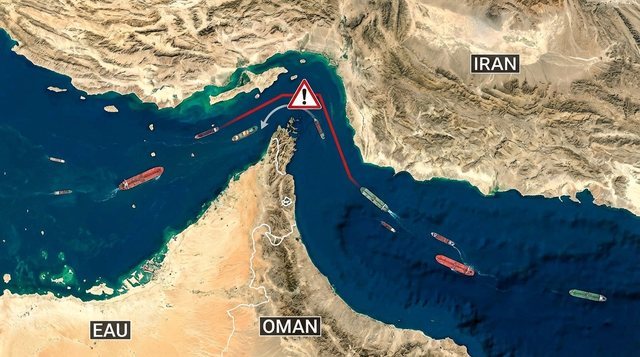
Top European leaders have rejected calls from US President Donald Trump to get militarily involved in reopening the Strait of Hormuz. The governments of Britain, Germany and Italy signaled on Monday that they have no intention of sending warships to the region, highlighting the risk of being drawn into a wider war and demanding more clarity on the aims of the US-Israeli coalition.
The United Kingdom seeks solutions with drones
British Prime Minister Keir Starmer stated at a press conference that work is being done with allies on "a workable collective plan" to reopen the strait, but ruled out the possibility of extensive military involvement.
Instead of sending warships, London is considering using mine-hunting drones that the UK already has in the region. The cautious stance comes after tensions with President Trump, who had earlier rebuked Starmer after the latter refused to give the US permission to use British bases to attack Iran.
Germany: "It's not NATO's war"
Official Berlin has taken the toughest stance against involvement. A spokesman for Chancellor Friedrich Merz's government responded to Trump's veiled threats to NATO by stating bluntly: "This war has nothing to do with NATO."
The German government recalled that European assistance had not been requested before the conflict began by the US or Israel. German Foreign Minister Johann Wadephul, present in Brussels, stressed the urgent need for the US and Israel to clarify “when they consider their military goals achieved” and what the plan is to end the war. However, Wadephul acknowledged the risk that Iran poses to the global economy and confirmed Berlin's support for sanctions against those blocking the strait.
Italy reluctant to expand current missions
Italy has also been hesitant about the US request. Italian Foreign Minister Antonio Tajani expressed support for strengthening the European Union's naval missions in the Red Sea. However, he closed the door on an extension of these operations to the Strait of Hormuz, arguing that their current nature is strictly defensive and focused on counter-piracy.
These developments come at a time when freedom of navigation and oil are facing significant risks, and the war shows no signs of abating. While Trump warned NATO of a “very bad future” if it does not cooperate, Europeans are demanding more guarantees. German Chancellor Merz is expected to deepen discussions on this diplomatic rift in a meeting scheduled for today in Berlin with Dutch Prime Minister Rob Jetten. As German diplomacy suggested, the next step, after clarifying military objectives, should be to build a “new security architecture” through dialogue.
Happening now...












ideas

The Statute Review and Berisha's Sinking Boat
Nga Alesia Balliu

Will the new justice system unite the SP and the DP?
Nga Arbër Hitaj

Sovereignty as a fig leaf
Nga Namir Lapardhaja
top






TRENDING 




services
- POLICE129
- STREET POLICE126
- AMBULANCE112
- FIREFIGHTER128