


Lajme flash
How the authoritarian Rama was tolerated by the socialists, to capture and destroy the SP

2026-03-10 20:47:09 / EDITORIAL
On March 23, 1933, inside a dimly lit room filled with the stale smell of cigar smoke, Ludwig Kaas was trying to convince himself that he was making the right decision. Kaas, a Catholic priest and leader of the Center Party, was at a crossroads. For years, his party had tried to block the rise of Adolf Hitler. But in 1932, Hitler’s National Socialists became the largest force in parliament, and in January 1933, Hitler became chancellor. As Hitler sought to consolidate power, the Center Party was the last obstacle to his taking complete control of Germany.
Hitler had introduced the Enabling Act, an act that would allow him and his cabinet the ability to rule by normative acts, dismantling democracy at its core. Only if the Center Party resisted could the act be blocked. Kaas and his fellow Center Party leaders debated for hours, torn between defending principle and self-defense. Some urged resistance, warning that Hitler's power must be checked. But most feared the consequences of defiance. Others still clung to the hope that by cooperating with Hitler, they could influence Hitler.
In the end, Kaas convinced himself that his best option was to cooperate within the new reality, so as not to be crushed by it. “We must preserve our spirit, but a rejection of the Enabling Act will result in unpleasant consequences for our party,” he told his colleagues. The act was passed, paving the way for Hitler’s dictatorship.
There was nothing strategic about the support for the act. It did not moderate Hitler's positions, but rather gave him complete control.
This episode illustrates the dangerous logic of abdication or the belief that, in the face of a growing threat to democracy, surrender is strategy and cooperation with an autocrat is survival.
Every time I have the opportunity to speak with old or new socialists, members or former members of the leadership of this party, I feel the same logic of abdication. Yes, the main members of the socialist party have abdicated, and this did not happen today, but since 2005.
Democracy within it slowly eroded, at first through the gradual surrender of those who had built it and were supposed to protect it. With every concession the party made to the autocratic president, he became bolder, and his overthrow today, to everyone old and young, seems more difficult. The answers that at first seemed pragmatic to the socialists - waiting, keeping quiet, reaching an agreement - only encouraged the autocratic president, leading the situation to the point of gesticulating orders.
The collapse of the Socialist Party was not inevitable, as the main political leaders had many opportunities to respond. But some in 2005 believed that only with Rama could they defeat Berisha, some that they could use Rama to ensure their dominance. Some believed that they could control Rama, even after he became Prime Minister. All were wrong.
Democracy within a party rarely dies in a single moment. It is destroyed through abdication: rationalizations and compromises. The Socialist Party died when influential members within it told themselves that if they gave up just a little ground they would be safer, or that finding common ground with a divisive figure was more practical than standing against him.
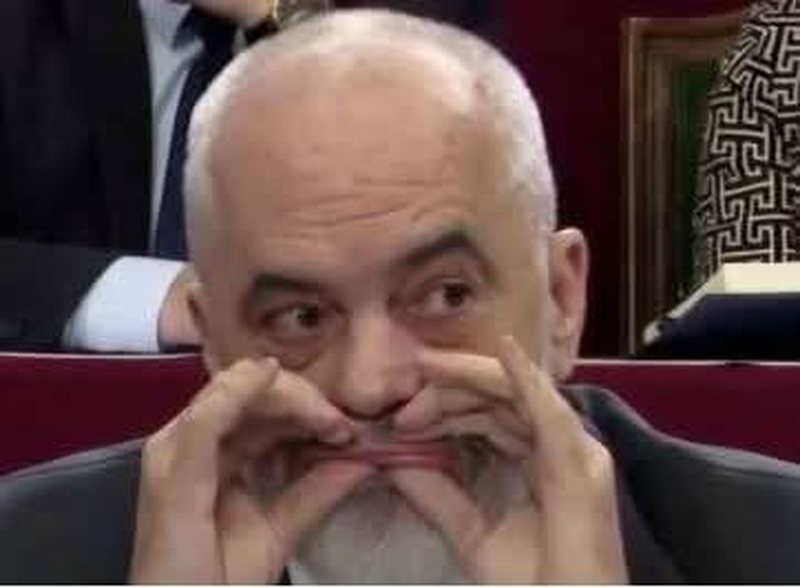
The authoritarian president who no longer deigns to "order" with words but with gestures, "shut up," never triumphed on his own. He succeeded because others made it possible, because of their ambition, because of their fear, or because they misjudged the risks of small concessions.
Po ndodh...


Basha, Berisha and a meeting with parents in the USA!
Nga Ermal Peçi
ide

Edi Rama, kujt i ankohesh? Ti ke qenë problemi!
Nga Gjergji Nika


The SP and the DP have created an unshakable Nash equilibrium.
Nga Fitim Zekthi
top


receta Alfa


TRENDING 


shërbime
- POLICIA129
- POLICIA RRUGORE126
- URGJENCA112
- ZJARRFIKESJA128