


FLASH NEWS
Henry Kissinger, the disruptive diplomat who shaped world affairs

2023-11-30 11:41:32 / BOTA
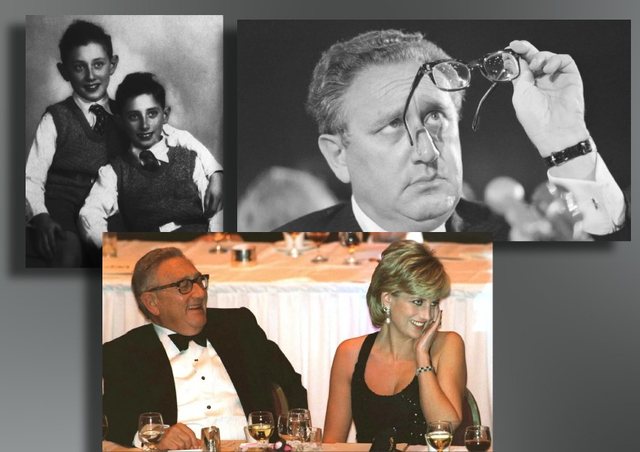
Henry Kissinger passed away, at the age of 100, at his home in Connecticut.
A dedicated practitioner of "realism" in foreign relations, he was awarded the Nobel Peace Prize but was harshly condemned as a war criminal.
As US National Security Advisor and Secretary of State, he vigorously pursued a policy of detente – which thawed relations with the Soviet Union and China.
His ship diplomacy helped end the Arab-Israeli conflict of 1973; and the negotiations of the Paris Peace Accords lifted America out of its long nightmare in Vietnam.
But what his supporters described as "Realpolitik", his critics condemned as immoral.
He was accused of - at the very least - tacit support for the bloody coup that overthrew a leftist government in Chile and turning a blind eye to the Argentine military's "dirty war" against its own people.
When he heard that Kissinger had been awarded the Nobel Prize, comedian Tom Lehrer declared: "political satire is obsolete."
Heinz Alfred Kissinger was born into a middle-class Jewish family in Bavaria on May 27, 1923.
"Henry" was a naturally shy teenager who never lost his accent or his love of football.
He attended high school at night while working in a shaving brush factory during the day; and planned to study accounting but was drafted into the army.
Assigned to the infantry, his brain and language skills were used by military intelligence.
Kissinger saw action in the Battle of the Bulge and found himself commanding an occupied German city - despite only holding the rank of Private.
Towards the end of the war, he joined Counterintelligence.
The 23-year-old was given a team to hunt down former Gestapo officers, with absolute powers to arrest and detain suspects.
Small nuclear wars
After his return to the United States, he studied political science at Harvard - climbing the academic ladder.
In 1957, he published a book, Nuclear War and Foreign Policy - which argued that a limited atomic war could be won.
Coated in anti-skeptical language, he claimed that the "tactical" and "strategic" use of a new breed of smaller missiles could be rational.
Kissinger's long march to fame and influence had begun; and the "small nuclear war" theory is still influential.
He became an aide to New York governor and presidential candidate Nelson Rockefeller.
And when Richard Nixon won the White House in 1968, Kissinger was offered a post: National Security Advisor.
It was a complex relationship. The president felt supported by Kissinger's advice on international relations, but was prone to anti-Semitic outbursts and suspicions of American Jews.
The Cold War was at its height: Armageddon had just been averted over Cuba, American troops were still in Vietnam, and Russia had recently occupied Prague.
Kissinger's Policy of Detente (an improvement in relations between two countries that in the past were unfriendly and mistrustful of each other)
Nixon and Kissinger tried to reduce tension with the Soviet Union: by reviving talks to reduce the size of their arsenal relevant nuclear.
At the same time, a dialogue was opened with the Chinese government, through Prime Minister Zhou Enlai.
This improved Sino-American relations and put diplomatic pressure on the Soviet leadership - who feared their big neighbor.
Kissinger's efforts led directly to Nixon's historic trip to China in 1972, when he met Zhou and Mao Zedong—and ended 23 years of isolation and diplomatic hostility.
Vietnam
Meanwhile, the US was trying to withdraw from Vietnam.
"Peace with honor" was a key election promise of Nixon; and Kissinger had long since concluded that any American military victories were meaningless—since they could not "achieve a political reality that could survive our ultimate withdrawal."
He entered into negotiations with North Vietnam, but agreed with Nixon to covert bombing raids on neutral Cambodia - in an effort to deprive the Communists of troops and supplies.
The policy resulted in the deaths of at least 50,000 civilians; and the country's destabilization led to the Cambodian civil war and the brutal Pol Pot regime.
During a difficult series of negotiations with the Viet Cong in Paris, Kissinger - now secretary of state - negotiated the US military withdrawal from South Vietnam.
It awarded him the Nobel Peace Prize - along with North Vietnam's Le Duc Tho - a decision fiercely attacked by peace activists.
Kissinger accepted the award "with humility" and presented the award to the children of American servicemen killed in the conflict.
Two years later, when communist forces occupied South Vietnam, he tried to take it back.
Realpolitik
His ship diplomacy brought about a cease-fire after the Arab-Israeli war of 1973.
Nixon's secret White House recording system captured Israeli Prime Minister Golda Meir's high praise for the way he and Kissinger had handled the country. her.
But after she left, the tapes revealed a darker Realpolitik. Neither Kissinger nor Nixon had any intention of pressuring the Soviet Union to allow Russian Jews to seek a new life in Israel.
"Jewish emigration from the Soviet Union is not an objective of American foreign policy," Kissinger said.
"And if they put Jews in gas chambers in the Soviet Union, it's not an American concern. Maybe a humanitarian concern."
However, the election of Marxist Salvador Allende as president of Chile worried the United States.
The new government was pro-Cuban and nationalized American companies.
The CIA conducted covert operations in Chile in an attempt to help opposition groups overthrow the new government.
Kissinger chaired the committee that authorized the action.
"I don't understand why we have to stand by and watch a country go communist because of the irresponsibility of its people," he said.
"The issues are too important to be left to the Chilean voters to decide for themselves."
Eventually, the military intervened; and Allende died in a violent coup that saw General Pinochet seize power.
Many of his soldiers turned out to have been paid by the CIA.
In later years, Kissinger himself would be prosecuted by a number of tribunals investigating human rights abuses and the deaths of foreign nationals under the military regime.
A year later, Kissinger watched as a tearful Richard Nixon left the White House - overwhelmed by the Watergate scandal. His successor, Gerald Ford, retained him as secretary of state.
He pressured Rhodesia's white minority government to relinquish power, but was accused of ignoring the "disappearances" of its critics by the Argentine junta.
Power: the ultimate aphrodisiac
Controversy ousted Kissinger from office in 1977 after an offer for a chair at Columbia University was withdrawn after student protests.
He became a strong critic of the foreign policies of Jimmy Carter and Bill Clinton, arguing that the presidents wanted to move too quickly toward peace in the Middle East.
After 9/11, George W Bush asked him to lead the investigation into the attacks on New York and Washington, but he was forced to withdraw within weeks - after refusing to reveal his consultancy's client list and answer questions about conflicts of interest.
He held meetings with President Bush and Vice President Dick Cheney to advise them on Iraq policy after the 2003 invasion.
"Winning the insurgency," he told them, "is the only exit strategy."
Always influential, he briefed Donald Trump on foreign affairs after his election in 2017 - suggesting, among other things, accepting Vladimir Putin's annexation of Crimea.
Although, by the time he reached the age of 100 in 2023, he had changed his view of Ukraine.
After the Russian invasion, he argued that President Zelensky's country should join NATO once peace is secured.
Henry Kissinger had an extensive list of contacts and a ready wit. "Power", he wanted to say, "is the last aphrodisiac".
A larger than life character, he found himself at the center of power during the most important events of the last century.
To many, he remained unforgivable for his single-minded pursuit of US interests and the defense of his adopted county's way of life.
"A country that seeks moral perfection in its foreign policy," he once declared, "will achieve neither perfection nor security."
Happening now...





Molotov cocktail on Saturday, shopping on Thursday!
Nga Bato Kosova
ideas

top

Alfa recipes





services
- POLICE129
- STREET POLICE126
- AMBULANCE112
- FIREFIGHTER128