


FLASH NEWS
The quadruple attack, how Israel plans to eliminate Hezbollah forever

2026-03-09 21:12:06 / BOTA
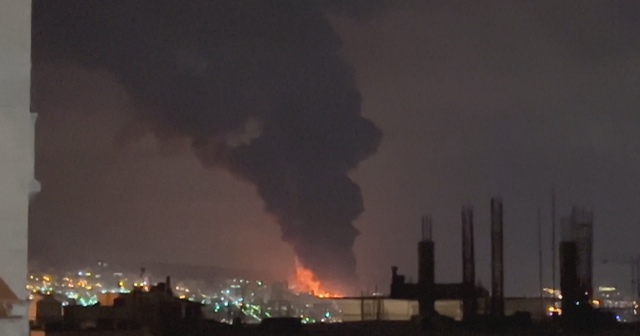
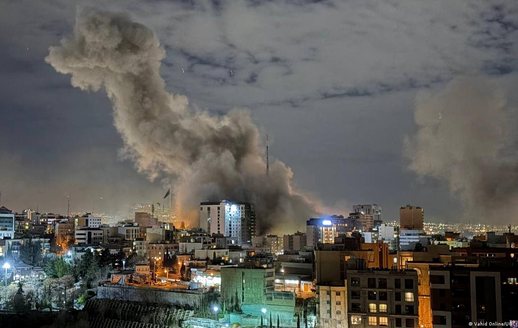
After days of fierce fighting, nerves are tense in the Hezbollah stronghold of Beirut. In the Shiite neighborhood of Dahieh, where dark clouds of smoke constantly rise after Israeli airstrikes, masked members of the pro-Iranian militia patrolled Sunday afternoon.
Since entering the war in early March - along with their Iranian patron - Hezbollah has waged a two-front fight for survival. Against Israel, whose generals have announced the elimination of the militia. And against their opponents in Lebanon, who are pushing for Hezbollah's dissolution. "We will not surrender, no matter the cost," leader Naim Qassem vowed to his fighters in a video address.
Hezbollah is not only a heavily armed militia but also a Shiite political party in Lebanon. It effectively controls several regions of the country, particularly in the south, and is deeply entrenched within the security apparatus. It also operates its own banks and provides support to hundreds of thousands of supporters.
The army, made up of around 80,000 soldiers of various religious affiliations, claims it is not seeking confrontation. Its commander-in-chief, General Rodolph Haykal, said on Saturday that they wanted to avoid a military escalation, as the country's stability and unity were at risk. While the Lebanese army hesitates, Israel has launched a major offensive against the militia. Israeli Finance Minister Bezalel Smotrich threatened to destroy Hezbollah's stronghold, Dahieh, in Beirut - "like Khan Younis", a bombed area in the Gaza Strip.
But Israel’s war plans extend far beyond Dahieh. With Iran now weakened, the IDF sees an opportunity to deal “a devastating blow” to Hezbollah, said Israeli Army Chief of Staff Eyal Zamir. The goal is to “eliminate” the threat from Lebanon. According to the Israeli military, more than 500 Hezbollah targets were attacked across the country in the first week of the war, dozens of fighters were killed, and 26 airstrikes were carried out in Beirut. Israel is not only attacking the militia’s command posts and weapons depots, but also the heart of its financial system. On Monday, the Israeli Air Force again bombed buildings belonging to Al-Qard al-Hassan (AQAH), Hezbollah’s financial wing.
Hezbollah is also under logistical pressure. Anyone traveling through southern Lebanon these days can see how badly it has been hit since October 2023. Entire towns near the border with Israel, once Shiite strongholds, seem literally flattened after years of war.
Israel is also eliminating commanders and key figures of pro-Iranian militias across Lebanon. On Sunday evening, an Israeli drone struck a room in a hotel in central Beirut where, according to the IDF, several commanders of the Iranian Revolutionary Guard Corps were staying.
Photos and satellite images show the Israeli military massing tanks on the border with southern Lebanon. Since early March, IDF troops have advanced several kilometers into Lebanon on the ground. As in 2024, a larger ground offensive could follow in the coming months.
In recent days, Israel has called for the evacuation of everyone south of the Litani River, as well as hundreds of thousands of Beirut residents around Dahieh. These measures are intended to protect lives, but at the same time, they increase pressure on Hezbollah at home.
Calls for evacuation have caused chaos and panic, with hundreds of thousands of people fleeing. The Lebanese people, especially those from Hezbollah's Shiite strongholds, are under particular pressure, as some communities refuse to accept them. There is great concern that Hezbollah fighters will infiltrate civilian populations and target these areas as well. (A2 Television)
Happening now...





Germany, the "curse" of Rama and Berisha
Nga Bato Kosova
ideas

We are witnesses to the atrocity that is taking place in Vlora!
Nga Gjergj Nika


When crisis becomes a system: Dilemmas of the Republic of Kosovo
Nga Sokol Neçaj
top



Alfa recipes



TRENDING 




services
- POLICE129
- STREET POLICE126
- AMBULANCE112
- FIREFIGHTER128