


FLASH NEWS
When Russia sold Alaska to America...

2025-08-14 09:38:00 / BOTA
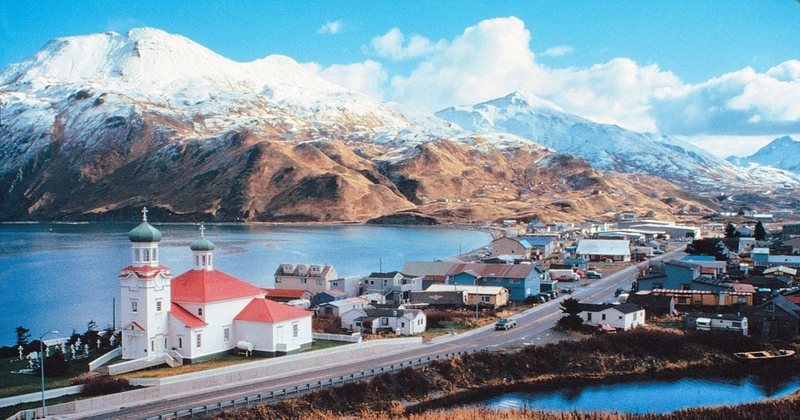
In 1867, an extraordinary transaction changed the map of North America: Russia sold the territory of Alaska to the United States for $7.2 million.
Beyond being involved in many myths, legends, or rumors across generations, this was an agreement from which both parties benefited.
The so-called “Russian America” began to take shape long before 1867. Russian explorers and fur traders reached Alaska in the early 18th century – mainly during the Second Kamchatka Expedition in 1741, led by Vitus Bering and Alexei Chirikov.
Their travels paved the way for traders, especially those in search of expensive otter skins, who dared to visit the Pacific coast of North America.
In the 1760s and 1770s, the Russian presence was quite noticeable. A series of events – from the establishment of trading posts at places like Unalaska and Kodiak to clashes between indigenous groups, such as those between the Aleuts and Tlingits – shed more light on the harsh reality of colonial expansion.
Grigory Shelikhov was a key figure in these early Russian settlements and trading expeditions.
Later, under the leadership of Alexander Baranov, the Russian-American Company assumed control of Alaska from Sitka (then known as Novo-Arkhangelsk), and established trade routes, built fortified posts, and sent Orthodox priests there, who built churches and began missions among the local communities.
In the mid-19th century, the Russian Empire did not see Alaska as a strategic asset, but rather as a growing liability. The cost of maintaining such a remote territory, especially after the heavy defeat in the Crimean War, was a heavy burden for the government.
Moreover, the presence of British ships in the Pacific has increased concerns that defending "Russian America" in any future conflict will become mission impossible.
What added even more fuel to the fire were the financial difficulties, which the then Minister of Finance, Mikhail Reutern, raised the alarm about.
He warned that the maintenance of the Russian-American Company, which managed the colony, meant the allocation of many subsidies – funds that the then Government did not have the capacity to allocate.
Discussions about the fate of Alaska have not been long in coming. In 1853, the governor-general of Eastern Siberia, Nikolay Muravyov-Amursky, suggested that Russia would benefit more by selling Alaska to a friendly country – such as the United States – than by defending it weakly or losing it in the event of a crisis.
In the mid-1860s, financial urgency and strategic foresight resulted in this conclusion.
A special meeting held on 16 December 1866, involving Tsar Alexander II, his brother Grand Duke Constantine, Foreign Minister Alexander Gorchakov, Finance Minister Reutern, and the Russian envoy Eduard de Stoeckl, agreed in principle to sell the territory rather than retain it, due to the financial burden.
In March 1867, de Stoeckl arrived in Washington to discuss with the then US Secretary of State, William H. Seward.
They initially discussed a price between $5-7.5 million, and ultimately agreed on $7.2 million.
The treaty was signed on March 30, 1867, and thus Alaska was officially transferred under the control of the United States.
In St. Petersburg, the Tsar approved the deal at the end of March. The head of the Russian-American Company was informed in April, and it seems that he was not prepared for the sale. By September 1868, the company was awarded financial compensation for any losses it might have incurred.
In Washington, the US Senate ratified the treaty with 37 votes in favor and two against.
On October 18, 1867, the territory was officially transferred to the United States, through a ceremony held in Sitka.
This date is still celebrated in the United States as Alaska Day.
In Russia, people have had mixed emotions. Some have criticized the deal, calling it "shameful," and have grieved the loss of land built with sweat and sacrifice.
In the United States, some have mocked the purchase of land that has been described as worthless, due to harsh weather.
Others who saw value in that land dreamed of gaining access to Asia and its rich islands in the future, precisely through Alaska.
Time has shown the importance of this land. In the late 19th century, gold was mined from Alaska, and later discoveries of oil have further increased the territory's value.
Russia, on the other hand, benefited from the agreement, because the Russians argued that with that money they had modernized the railway line and strengthened the borders of the Far East - territories with more strategic advantages than frozen Alaska.
The sale of Alaska was not just a land deal – it also marked a turning point.
This sale has enabled Russia to focus on its deep Asian territories, while the US has gained geopolitically as it has increased access to the Pacific and slowly learned more about Alaska's natural wealth.
Thus, "Russian America" has gradually transformed into the American state of Alaska - a legend not of defeat or deceit, but of diplomacy, pragmatism and the reshaping of global geography./ REL
Happening now...














ideas

Renaissance is Disaster Capitalism
Nga Klodian Tomorri

Pse tifozeria e Kosovës ishte aq e vdekur dhe mungonin simbolet kuqezi?
Nga Kreshnik Spahiu

top



Alfa recipes



TRENDING 




services
- POLICE129
- STREET POLICE126
- AMBULANCE112
- FIREFIGHTER128