


FLASH NEWS
After the bad weather with heavy rains and storms, Italy will be "occupied" by high temperatures, this is what the experts say

2024-08-29 08:53:54 / BOTA
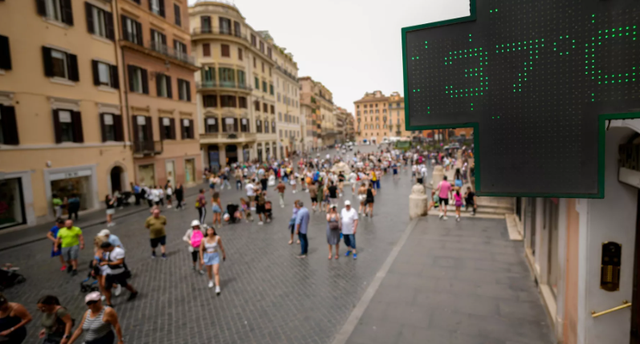
After the bad weather with heavy rains and storms, Italy will be "occupied" by high temperatures. Temperatures are expected to start rising from Thursday, with forecasters saying they will peak over the weekend.
Temperatures in parts of the center and south are expected to reach 34-36C. Sicily and Sardinia are expected to see up to 39C. While in the north of the country, daytime temperatures will range from 30 to 32 degrees Celsius.
The Ministry of Health has placed six major cities/areas – Rome, Florence, Trieste, Bari, Latina and Frosinone – under the highest level of red heat warning for Thursday 29 August. Five other cities, Verona, Rieti, Perugia, Brescia and Bologna, are under a medium warning.
When will the heat wave in Italy end?
This summer in Italy has been marked by record heat waves, fires and severe storms. A low-pressure weather system, known as an anticyclone, has drawn plumes of warm air from northern Africa and Spain, causing high temperatures across the region since July.
Although these plumes are not unusual in the summer, meteorologists say there is a tendency for them to be even hotter due to climate change.
Europe is also the world's fastest-warming continent with its temperatures rising at roughly twice the global average, according to a recent report by the World Meteorological Organization and the EU's climate monitor Copernicus.
Scientists say human-caused climate change has made heat waves more frequent and intense across Europe in recent years.
Forecasts indicate that this heat wave will ease by Tuesday September 3rd. However, it may not yet be the end of extremely high temperatures in Italy.
Although long-term weather forecasts can be uncertain, meteorologists say that, overall, trends show that these conditions are likely to continue, particularly across southern and southeastern Europe.

Happening now...











America may withdraw from Europe, but not from SPAK
Nga Gentian Gaba
ideas


top


Alfa recipes

TRENDING 




services
- POLICE129
- STREET POLICE126
- AMBULANCE112
- FIREFIGHTER128