


FLASH NEWS
How did Ahmed al-Sharaa lose control in southern Syria?

2025-07-18 22:55:51 / BOTA
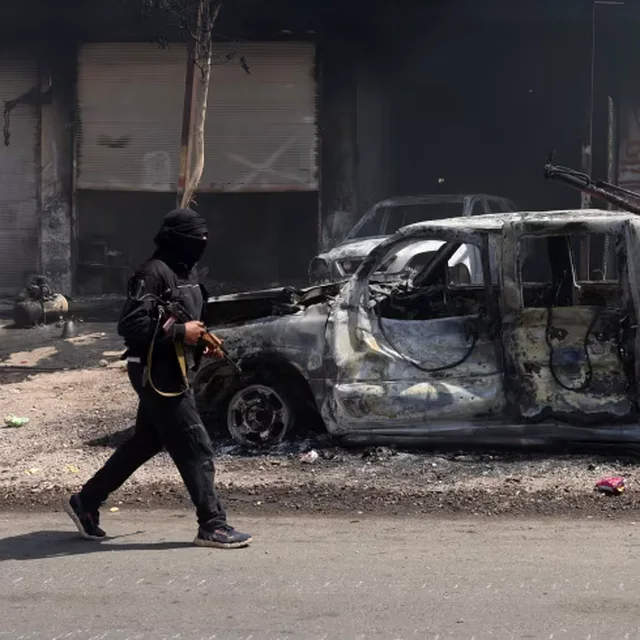
The Syrian government has warned that it will reposition its forces in the south of the country to regain control after days of sectarian violence in the province of Sweida, a crisis that risks becoming the most serious challenge to Ahmed al-Sharaa's newly inaugurated presidency, the Financial Times reports .
The clashes began last week when a robbery on the highway linking Damascus to Sweida sparked a wave of retaliatory violence between Sunni Bedouin clans and Druze militias. The situation escalated when government forces, sent to the province for the first time since the overthrow of Bashar al-Assad eight months ago, clashed with Druze militias. Human rights groups report hundreds of deaths, including civilians, and all sides have been accused of atrocities, including summary executions.
On the other hand, Israel intervened by carrying out a series of attacks on Syrian forces, even on the Ministry of Defense in Damascus, claiming to be protecting the Druze community and demanding the withdrawal of Sharaa forces from Sweida. The US has intervened to negotiate a deal to avoid further escalation.
After bloody clashes between Bedouins and Druze that continued until Friday, the Syrian government, which the day before had declared its withdrawal from Sweida, announced that it was preparing to return to restore order.
The crisis has exposed Syria's fragility just eight months after a rebel offensive that toppled Assad and ended a 14-year civil war. Mr. Sharra now faces a dilemma: either abandon his ambitions to unify the country, leaving the south in the hands of local groups, or risk a more severe confrontation with Israel.
For now, Israel has agreed to allow government forces into Sweida for 48 hours, "due to the ongoing instability," according to an Israeli official.
The Druze, an Arabic-speaking community of about 1 million spread across Lebanon, Syria, Jordan and Israel, have historically had a tense relationship with central governments. They maintained some autonomy under Assad's rule, keeping their own armed militias in exchange for not being involved in the fight against the regime.
Assad's fall was welcomed by some Druze, but the community remained divided over Sharaa, due to his past as the leader of an Islamist-linked rebel group accused of massacres of Druze during the civil war.
The Druze have not yet agreed to integrate into the new state institutions and have rejected the presence of security forces in Sweida. In April, there was a clash between Druze militias and security forces that ended with a fragile agreement to hand over weapons, but state authorities acted harshly, demanding more weapons than agreed and using sectarian rhetoric, which exacerbated the crisis.
This has pushed some Druze, who were previously reluctant to cooperate with Israel, to move closer to Tel Aviv. Israel has exploited the vacuum created after Assad's fall to seize territory along the border and strike Syrian military targets, while also demanding that southern Syria be completely disarmed.
Hikmat al-Hijri, an important Druze leader close to Israel, has added to calls for more autonomy for Sweida - ideas that were previously considered marginal but are now finding wider support.
The situation has further deteriorated after recent events, with documents showing houses burned, bodies lying dead in the streets, and acts of humiliation against Druze men, such as the forced shaving of their moustaches, a mark of honor in their culture. President Sharaa publicly acknowledged that abuses had been committed and promised investigations, but his credibility with the minority has been shaken.
This crisis comes after similar clashes on the coast in March, where government forces clashed with Assad supporters, also causing civilian casualties.
There are fears that events in the south could lead to further sectarian divisions. Some Syrian Sunni groups have already called for an economic boycott and blockade of Sweida.
Meanwhile, other communities, such as the Kurds in the northeast, are also reluctant to cooperate with the Sharaa government on the integration of autonomous regions.
“This is the most dangerous moment for the Syrian transition,” said Malik al-Abdeh, a Syria analyst in London. “How Sharaa manages this situation will determine the fate of his presidency.”
A Syrian official summed up the situation this way: This country was so close to success. Now everything is in danger of spinning out of control by this terrible episode.
-

-

Lapaj, Shabani, Qorri, Shehaj and a lecture by Peppe Grillo
July 18, 22:22
Happening now...








America may withdraw from Europe, but not from SPAK
Nga Gentian Gaba
ideas



top


Alfa recipes


TRENDING 




services
- POLICE129
- STREET POLICE126
- AMBULANCE112
- FIREFIGHTER128