


FLASH NEWS
Scientists' surprising discovery, a new species larger than the "Great White Shark"!

2025-12-06 16:15:31 / MISTERE&KURIOZITETE
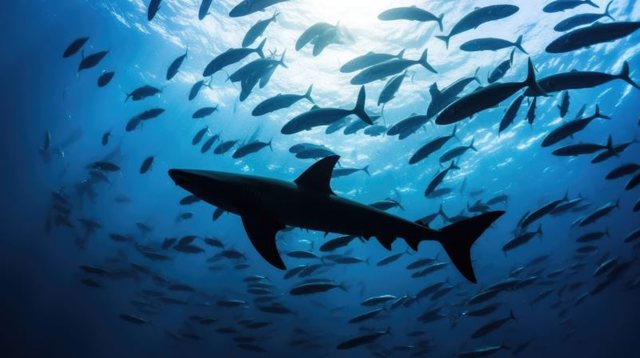
Sharks are not just another marine species.
Ever since humans first became familiar with them through images, stories, and films, their imposing form and abilities have never ceased to fascinate. For decades, they have been considered the ultimate symbols of strength, endurance, and dominance in the aquatic environment.
Fearsome and potentially dangerous predators to anyone unlucky enough to cross their path, sharks are etched in the collective imagination as the undisputed rulers of the oceans. That's why any new information the scientific community uncovers about them attracts so much attention - often more than any other discovery of marine life.
One such major discovery recently occurred in northern Australia.
Sharks older than dinosaurs
Sharks, ancient inhabitants of the seas, have a history that exceeds 400 million years. The ancestors of modern sharks appeared during the time of the dinosaurs, with the first fossils of today's genetic "lines" dating back about 135 million years.
Their earliest forms – lamnomorphs – were about 1 meter long, but they evolved into giant species, such as the Megalodon, which reached 17 meters, or the modern Great White Shark, which reaches 6 meters.
Fossils of these animals are found mainly in the form of teeth, as their skeletons are composed of cartilage and rarely fossilize. However, the teeth, which are constantly falling out, accumulate in old sediments and are found along with the remains of other prehistoric marine animals.
Impressive discovery in the ancient Tethys ocean
The rocky coastal area near Darwin, in northern Australia, was once part of the bed of the ancient Tethys Ocean — the “ancestor” of the Indian Ocean, which stretched from Gondwana to Laurasia. The area has yielded many remains of prehistoric marine life: plesiosaurs, ichthyosaurs, and large fish. Fossils of a previously unknown lamniform shark have also been found there.
Large beads reveal size
The discovery includes five partially fossilized vertebrae, preserved thanks to their composition. Their shape is reminiscent of the vertebrae of a modern great white shark. But the difference is striking: while adult white sharks have vertebrae that are 8 centimeters wide, those from Darwin exceed 12 – that is, they are 50% larger.
Their characteristics classify them as cardaviodontids, a group of large predators that lived 100 million years ago.
To estimate the animal's possible size, an international research team — including paleontologists, tomography experts and ichthyologists from Australia, the US, Sweden and South Africa — analyzed the vertebrae in depth. The study was published in Nature Portfolio Communications Biology.
Fossils of similar sharks from the Age of Dinosaurs are now on display at the Swedish Museum of Natural History, giving a rare glimpse into a world where the seas were dominated by giant predators.
Happening now...
















ideas

Një ftesë për bashkim me dhunë ndaj Lapajt
Nga Ergys Mërtiri


The great loneliness of the West and liberal democracy
Nga The Economist
top







TRENDING 




services
- POLICE129
- STREET POLICE126
- AMBULANCE112
- FIREFIGHTER128