


FLASH NEWS
Berisha's isolation and the DP's dilemma: why Basha remains indispensable

2026-01-29 19:35:05 / IDE
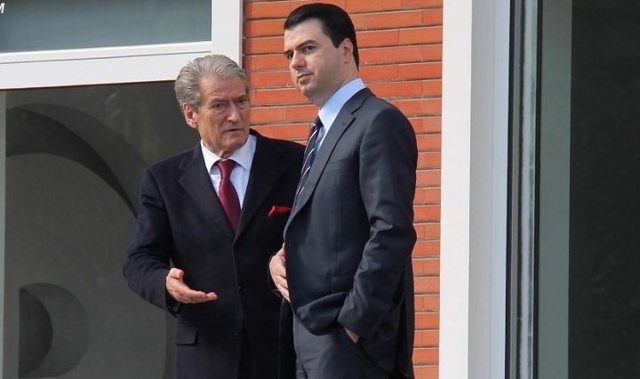
The decision to deny Sali Berisha the floor in Strasbourg is not a protocol incident. It is a clear political message. After being declared non grata by the United States, European institutions are now also setting their limits on a figure who has dominated Albanian politics for decades, but who today represents a capital consumed internationally.
In the European arena, it doesn't matter how many people gather in the square or how strongly the sovereignist rhetoric is articulated in Tirana. What counts there is institutional legitimacy and political credibility. It is here that Berisha is no longer an asset for the Democratic Party, but a heavy burden.
The removal of the word in Strasbourg is symbolic, it shows a figure that no longer complies with the political and moral standards of European institutions. It is the same logic that has isolated Berisha in relation to the US, even though it is known that Europe has traditionally been softer in its positions.
In this context, the contrast with Lulzim Basha is inevitable. Basha, despite the criticism, electoral failures or political traps that have been set for him, has no problems with international legitimacy. He has been accepted, listened to and accessible in Brussels, Washington and European capitals. No doors have been closed to him, he has not been denied the floor and he has not been treated as a protocol problem or reputational risk.
This is not about charisma or political folklore, but about something much more fundamental: is the DP a party that can return to power with Western support? Or an opposition isolated in its political abstraction?
Today, the DP finds itself in precisely this abstraction. A party that talks about democracy, but is led by a figure that the US and the West no longer recognize as a partner. A party that claims to be an alternative government, but that has no real access to the tables where the political fates of the region are decided.
In this situation, the need for a figure like Basha is not related to nostalgia or personal rehabilitation, but to the need for political normality. A leader who may not inflame the crowds, but who does not close the doors of the EU and the US. A figure with a concrete and functional political CV, recently reflected in the successful conclusion of the draft resolution on Russian assets which was monitored by the US.
Albanian politics has entered a phase where international legitimacy is as crucial as the domestic vote. Without it, any political project can function in the domestic discourse, but remains paralyzed in relation to allies, European integration, and real decision-making.
Berisha today is a symbol of internal resistance, but also of external isolation. Basha has represented and continues to represent a channel of communication with the US and the West.
This is not a matter of personal preference. It is a matter of political survival for the Democratic Party.
If the DP continues to defy international reality, it will remain in opposition not because of the opponent's manipulations, but because of the rejection of its allies.
As Henry Kissinger would say: "In foreign policy, it is not the one who speaks the loudest who wins, but the one who is considered credible."
This is precisely what the Democratic Party lacks today, in relation to its strategic allies.
Happening now...








ideas

Will the new justice system unite the SP and the DP?
Nga Arbër Hitaj

Sovereignty as a fig leaf
Nga Namir Lapardhaja

top





TRENDING 



services
- POLICE129
- STREET POLICE126
- AMBULANCE112
- FIREFIGHTER128