


FLASH NEWS
The Economy Committee recommends dividing tobacco excise revenue by product category

2026-03-06 18:52:59 / EKONOMI&SOCIALE
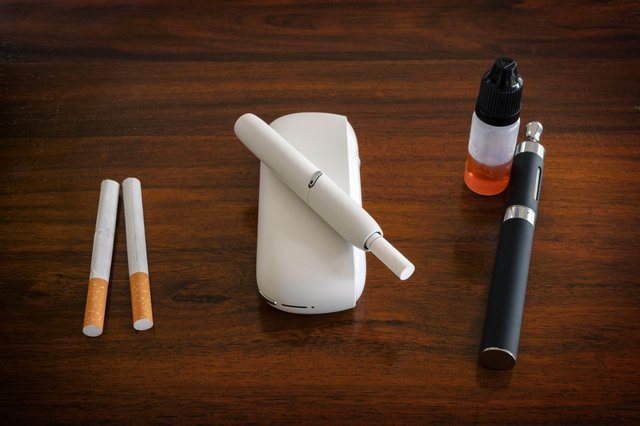
Total revenues from tobacco excise during the period 2012-2025 have reached around 226.3 billion lek, marking a steady increase over the years. The increase has become more pronounced after 2020, while in 2024 revenues from this sector have reached 24.9 billion lek, according to the draft parliamentary report of the post-legislative control for the excise law.
The report highlights that the main source of these revenues remains traditional cigarettes containing tobacco. This category has generated about 96% of total revenues, or 218 billion lekë. This difference is also large because alternative products have entered the Albanian market later. The document emphasizes that the contribution of alternative products is also gradually increasing. Heated tobacco has generated 996 million lekë since 2022, marking a rapid growth of 315% in three years, while products with nicotine in liquid have contributed about 212 million lekë.
According to the draft report, the share of tobacco excise in total excise revenue remains very important for the state budget. These revenues account for about 38-39% of total excise revenue, while in 2023 this share reached 49%, mainly due to the decline in revenue from other categories of excise products.
However, the draft report notes that budget planning for excise revenues is currently done in a single item for all tobacco products. This method, according to the document, does not allow for an accurate analysis of revenue realization by different market segments and makes it more difficult to monitor fiscal performance for each product.
In this context, the draft report recommends a series of measures to improve the planning and monitoring of excise revenues. In the short term, for the period 2026-2027, it is proposed that the Ministry of Finance change the budget planning method by dividing revenues by categories of tobacco products, such as traditional cigarettes, alternative products and nicotine in liquid form, starting from the draft budget for 2027. It is also suggested to establish a quarterly reporting system that compares the realization with the planning for each product category, in order to identify deviations and their causes.
The report also recommends the development of predictive econometric models for excise revenue, which should be based on historical trends, planned changes in excise tax levels, and macroeconomic factors such as economic growth, inflation, unemployment, and demographic changes.
In the medium term, for the period 2027-2030, the document suggests establishing a regular ex-post evaluation system of fiscal policies, which will compare realized revenues with initial forecasts and analyze the causes of deviations. Another recommendation is the integration of information systems of relevant institutions, including the General Directorate of Customs, the General Directorate of Taxes and the National Tobacco Control Agency, in order to enable real-time exchange of data on production, import, sales and excise collection. / ekofin.al
Happening now...















Germany, the "curse" of Rama and Berisha
Nga Bato Kosova
ideas
When crisis becomes a system: Dilemmas of the Republic of Kosovo
Nga Sokol Neçaj


The opposition must and will be bigger than an individual.
Nga Taulanda Jupi
top



Alfa recipes



TRENDING 




services
- POLICE129
- STREET POLICE126
- AMBULANCE112
- FIREFIGHTER128