


FLASH NEWS
War with Iran could shake the global oil economy

2026-03-01 22:19:38 / EKONOMI&SOCIALE
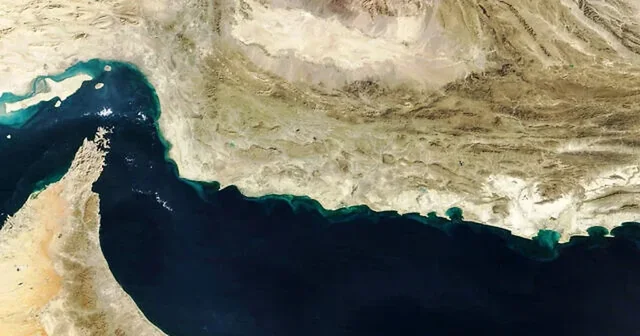
The global economy has shown strong resilience over the past year, despite President Donald Trump's trade war, attacks on US institutions like the Federal Reserve and tensions with allies. Inflation has continued to fall and European stock markets have hit record highs.
But now, with the US-Israeli conflict over Iran threatening to escalate, attention is shifting to the energy market. According to the Financial Times, oil is the key element that will determine whether this trend continues to be relatively stable or is interrupted.
The key question is whether the US and its partners can avoid a prolonged shutdown of energy shipments through the Strait of Hormuz, which runs along Iran's southern coast. If the traffic continues and increased production from OPEC+ (Organization of the Petroleum Exporting Countries) countries manages to keep prices down, the impact on global growth could remain limited.
But if not, a sharp rise in energy prices risks reigniting inflationary pressures in major economies, disrupting central banks' plans to cut interest rates and shaking business confidence.
Two scenarios for the energy market
According to Edward Fishman of the Council on Foreign Relations, there are two main scenarios. The first is a complete and prolonged disruption of traffic in the Strait of Hormuz, which he describes as the world's most important shipping lane for oil. With about 20% of global oil passing through it, a closure would be a major blow to prices.
Analysts predict that in this case oil could exceed $100 a barrel. Crude oil is currently near $73, the highest level in seven months, after a rise of nearly 12% over the past month.
The second scenario, the most likely one according to Fishman, is that there is no total shutdown, but only a halt to Iranian exports. In this case, the price of oil could rise to at least $80 per barrel.
On Sunday, OPEC+ announced it would increase production by 206,000 barrels per day in April in an effort to calm markets. However, the increase is lower than some analysts had expected.
Although the US today produces almost all the energy it needs and imports only 17%, the lowest level in 40 years, a sharp increase in the price of oil on world markets would be felt directly in the pockets of Americans.
According to ING, oil at $100 a barrel could push inflation from 2.4% to over 4%. That would make it harder for the Federal Reserve to cut interest rates this year.
Barclays warns that any sustained increase of $10 per barrel could reduce economic growth by 0.1 to 0.2 percentage points over 12 months. If oil reaches $120 and stays there, the hit to the US and global economies would be significant.
Another possible effect is a strengthening of the dollar. Historically, oil price increases and tensions in the Middle East have supported the US currency.
Europe and Asia at greatest risk
Asia is particularly exposed. About 84% of the oil and 83% of the liquefied gas that passed through Hormuz in 2024 went to Asian markets, including China, India, Japan and South Korea.
According to Capital Economics, a rise in crude oil to $100 a barrel could add 0.6 to 0.7 percentage points to global inflation. Europe would feel the hit not only from oil but also from rising liquefied gas costs.
For the European Central Bank, the immediate impact may be limited, as eurozone inflation is around 1.7%, below target. But for the Bank of England, where rate decisions are split, a sharp rise in oil prices would complicate matters.
The conflict comes at a delicate moment for global financial markets. U.S. banking stocks have fallen sharply, while the Nasdaq has lost more than 3% for the month.
A prolonged conflict in the Persian Gulf that destabilizes energy markets would further hit investor confidence, especially if it creates the perception that the Federal Reserve has less room to ease monetary policy.
However, some economists point out that, despite a series of geopolitical events, global growth and trade have remained surprisingly stable over the past year.
Ultimately, the analysis says, it all depends on how long the conflict lasts and whether the flow of energy through the Strait of Hormuz remains open. This will determine not only the price of oil, but also the direction of the global economy in the coming months.
Happening now...










Germany, the "curse" of Rama and Berisha
Nga Bato Kosova
ideas

Violent protests as group therapy
Nga Roland Lami

Those who mocked and attacked Basha
Nga Ermal Peçi

top



Alfa recipes



TRENDING 




services
- POLICE129
- STREET POLICE126
- AMBULANCE112
- FIREFIGHTER128