


FLASH NEWS
Violent protests as group therapy

2026-03-01 18:27:01 / IDE
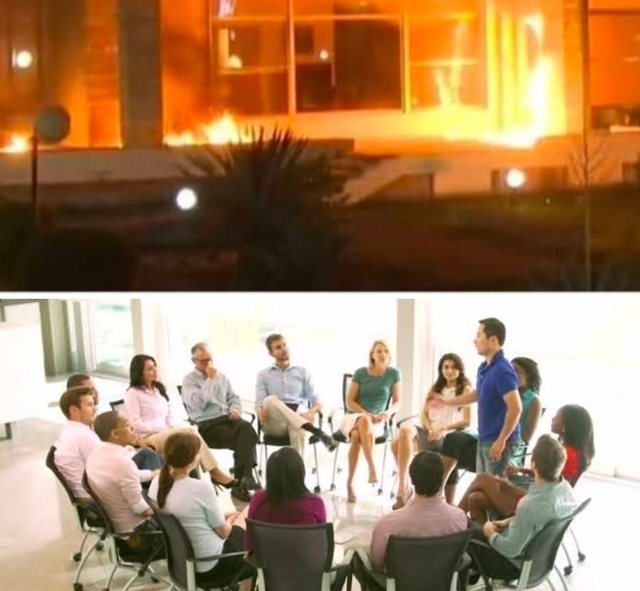
Protest is, in essence, a legitimate instrument of democracy. It serves to articulate discontent, to exert pressure on power, and to create collective energy around a cause. In its healthiest form, protest expands public space, mobilizes citizens, and builds a majority through participation.
But any political instrument can change function if it is misused.
Quite a few psychologists have dealt with the interpretation of protests. They agree on the idea that when protest fails to increase numbers, when mobilization shrinks, and expectations remain unfulfilled, it risks shifting from a means of pressure to a means of release or therapy for some people. In other words, repeated protests, instead of aiming to expand supporters or increase pressure on the government, begin to serve as an opportunity to release frustrations.
In their view, there is a significant correlation: the fewer people in the square, the higher the tendency for violence. In the case of the DP protests, the Molotov cocktail and the clash become forms of compensation, an attempt to replace the numerical weight of the people in the square. The noise aims to create the perception of strength where there is no supporting mass. The demonstration of violence in these cases is a predictable psychological reaction as the feeling of power weakens and an act is required to simulate it or replace it.
The interpretation of compensation and frustration can also help us understand the increase in the number of people speaking on the podium. If you monitor the protests, you will notice the fact that as the number of participants in the square decreases, the speakers on the podium increase. The people in front of the microphone multiply precisely when the crowd begins and decrease from one protest to the next. The need to speak in that party but also in other social environments has become more important than participation itself. The closed spaces in party structures and quite a few social environments where no one but one speaks make quite a few people compensate for the inability to speak in protests.
Last but not least is the growing need that some of them have for someone to listen and at the same time to believe that his or her word has weight. Thus, the protest begins to function as a space where individuals seek listeners, approval and identity confirmation. Unconsciously, it takes on the features of a collective therapy, emotional expression, validation from the group and release of tension.
The problem appears outside this circle. The general public, who sees this "therapy" through the cameras. Instead of an invitation to join, receives the signal of a closed group that communicates with itself. It loses the opportunity to expand since it is perceived as an instrument of dismissal and not as a political offer. However, the therapy that apparently not only the leader but also many supporters need can stabilize some emotional relationships within itself, but for the eyes of the general public produces fatigue, fear and indifference.
Happening now...


Denouncing Berishism is a prerequisite for denouncing the government
Nga Blendi Kajsiu
ideas

American Libra!
Nga Arian Galdini


The Hungarian lecture and 4 messages for the political establishment in Albania
Nga Kreshnik Spahiu
top


Alfa recipes







services
- POLICE129
- STREET POLICE126
- AMBULANCE112
- FIREFIGHTER128