


FLASH NEWS
Alexander the great gay? The Netflix film receives many criticisms, the Greek right debates with the Minister of Culture

2024-02-21 12:23:38 / JETË
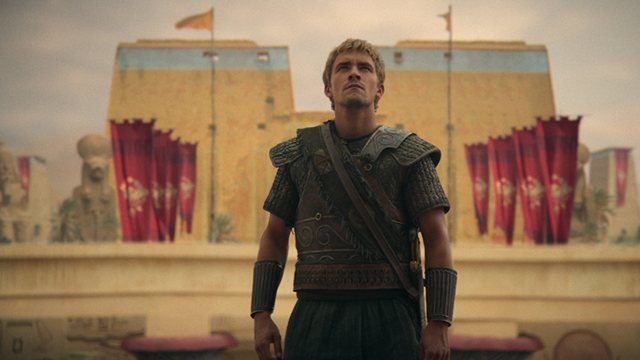
A Netflix film about Alexander the Great that depicts the relationship between the great Macedonian leader and his loyal general Hephaestion as a homosexual love has drawn criticism in Greece.
Lina Mendoni, Minister of Culture of the Government of Athens, described the TV series "Alexander, the Creation of a God" as "a hoax with extremely low and terrible content, full of historical inaccuracies", commenting on the description of the two protagonists as homosexuals: "There is no mention in the sources of the time of a relationship that goes beyond friendship, as Aristotle calls it."
In Athens, the issue ended in a debate in Parliament, where Dimitris Natsiou, president of Niki, a far-right Greek Orthodox Christian party, accused the series of being "deplorable, unacceptable, unhistorical", arguing that "the real target is to give an idea of homosexuality as perfectly acceptable in ancient times, an unfounded thesis.”
On this, as well as on the nature of the relationship between Alexander and his general, the opinions of specialists differ.
"Same-sex relationships were definitely the norm throughout the Greek world," says Professor Lloyd Llewellyn-Jones, professor of ancient history at Cardiff University, in the first episode of the documentary. "Of course, the Greeks had no word for homosexuality, because it did not exist in their vocabulary. It was all part of sexuality."
Thomas Martin, professor of Greco-Roman history at the College of the Holy Cross, a Jesuit university in Massachusetts, notes that, although Alexander and Hephaestion were identified with two characters from the Iliad, such as Achilles and Patroclus, who are now usually considered lovers, Homer never confessed them as such, and a similar interpretation spread later, though quoted by eminent authors such as Aeschylus and Plato.
While Professor Martin and Christopher Blackwell, a classicist at Furman University, argue that homosexual relationships were not widespread in the time of Alexander the Great, Robin Lane Fox, a professor of classics at Oxford, counters that love between two men "was not out of the norm". Other experts point out that Athens and Macedonia had different customs in this regard.
Certainly, the bond between Alexander and the general was very strong, described by their contemporaries as "two souls in one body", and evidenced by the immense grief of the leader after the death of Hephaestion, whom he would have liked to he honored them as those reserved for the gods.
"The concept of love in antiquity is wide and multidimensional", admits the Greek Minister of Culture, Mendoni, "but we cannot interpret the relationships and people that existed two thousand three hundred years ago, based on today's criteria". The minister, however, rejected the request to take measures against Netflix: "It is not the duty of the government to censor, everyone can have different opinions about art."
It is not the first controversy for a documentary broadcast by Netflix: last year the Egyptian Minister of Antiquities strongly criticized the decision of the American television company to cast Cleopatra as a black actress in the series "Queen Cleopatra".
Not to mention the controversy that arose around "The Crown", a series accused of distorting many aspects of the history of the English royal family.


Happening now...










83 mandates are not immunity for Rama's friends
Nga Gentian Gaba
ideas

"Preliminary sentence for Belinda Balluku", response to Baton Haxhiu
Nga Blendi Kajsiu

Teatri që fsheh prapaskenën
Nga Patrik Sadikaj

Berisha's red line and the black line of democracy in the DP
Besmir Semanaj
top



Alfa recipes




TRENDING 




services
- POLICE129
- STREET POLICE126
- AMBULANCE112
- FIREFIGHTER128