


FLASH NEWS
Balkans – Karadeniz – Illyrians: A common heritage hidden among myths, symbols and genes

2026-02-10 16:13:29 / JETË
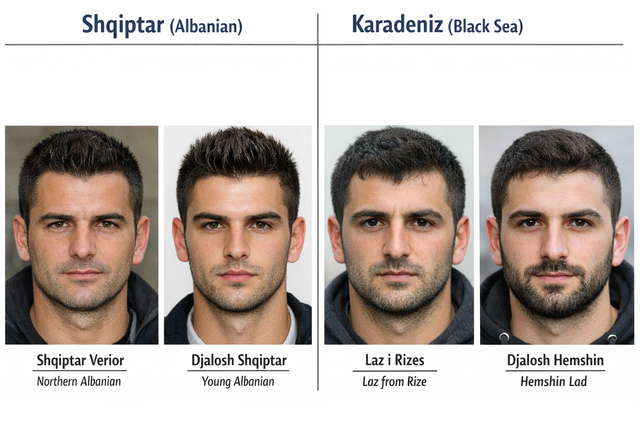
On the shores of the Black Sea, in the rugged mountains of Karadeniz and in the ancient lands of the Balkans, striking physical, cultural and spiritual similarities emerge between peoples who, according to official history, have followed different paths of development. In Rize, Trabzon, Artvin and further into Albania, Kosovo, Montenegro and North Macedonia, the faces, dances, songs, myths and symbols seem to speak the same ancient language.
Are these mere coincidences? Or evidence of a heritage much older than documented eras?
This investigation follows the traces of prehistoric migrations, shared mythology, archaic symbols, and genetic heritage, to build a new picture of the hidden connections between Karadeniz, the Balkans, and the Illyrian world.
Karadeniz – the crossroads of ancient civilizations
The Karadeniz region is one of the earliest inhabited areas in Eurasia. Since the Bronze Age, these shores have constituted a strategic junction through which Proto-Indo-European tribes, Caucasian peoples, Pelasgians, Thracians, Proto-Illyrians and Colchis passed.
In ancient mythology, Colchis, the legendary land of the Golden Fleece, lay right on the eastern shores of the Black Sea. Authors such as Herodotus and Strabo describe the Colchis as an ancient people, with distinctive physical features and customs that did not fully match the Hellenic or Oriental world.
This area was not peripheral, but a bridge between the Balkans, Anatolia, and the Caucasus, where people, ideas, symbols, and rituals moved.
Rize – the living memory of forgotten eras
Rize, in northeastern Turkey, remains one of the most conservative territories in preserving ancient traditions. Here we find ritual circular dances, polyphonic songs, symbolic textile motifs, and customs that bear clear pagan traces, camouflaged today within religious rituals.
The traditional Köçari/Horon dance, widespread throughout Karadeniz, has an almost identical structure to Illyrian and Albanian dances: circular movements, strong rhythm, earth dances and collective synchronization. This dance form is directly related to the cult of the sun, the cycle of life and the rituals of social unity, fundamental elements of the Pelasgian-Illyrian world.
The Illyrians and the axis of migrations towards the East
The Illyrians were not an isolated people in the Balkans. Numerous archaeological and anthropological studies suggest that they were part of a vast network of migrations and cultural exchanges that stretched from the Adriatic to the shores of the Black Sea and further towards the Caucasus.
This Balkan-Anatolian-Caucasus migration axis explains the physical similarities, mythological coincidences, similar symbols, and close social structures. In this context, Albanians and the Karadeniz peoples can be seen as branches of the same prehistoric tree.
Ngjashmëritë fizike – një dëshmi që flet pa fjalë
Në Shqipëri dhe në zonat e Karadenizit, vërehen tipare fizike pothuajse identike: struktura e fytyrës ovale-këndore, hunda e drejtë dhe e theksuar, sytë kafe, jeshilë apo gri, flokët e errët dhe skeleti mesatar, i fortë.
Këto ngjashmëri nuk janë rastësi, por gjurmë të një substrati të përbashkët paleo-ballkanik-kaukazian, të ruajtur ndër shekuj përmes izolimit malor dhe ruajtjes së komuniteteve tradicionale.
Mite të përbashkëta – kujtesa e koduar e qytetërimit
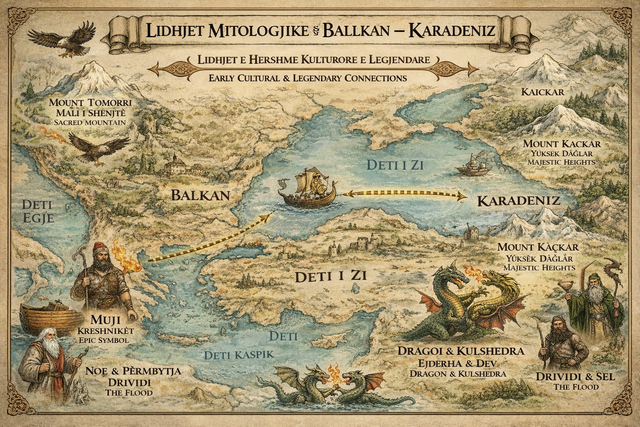
Miti i Argonautëve dhe Flokut të Artë, i vendosur në Kolkidë, nuk është thjesht një tregim aventurash, por një metaforë e thellë e kultit diellor dhe e pushtetit hyjnor. Floku i Artë simbolizon dritën, jetën, pjellorinë dhe sovranitetin, koncepte themelore edhe në mitologjinë ilire.
Një tjetër figurë universale është dragoi. Në Ballkan ai shfaqet si Kulshedra, ndërsa në Karadeniz dhe Kaukaz si Ejderha. Në të dy rastet, kemi të bëjmë me një qenie që ruan burimet ujore dhe përfaqëson kaosin, derisa mposhtet nga heroi diellor. Kjo strukturë mitologjike e njëjtë tregon për një trashëgimi narrative të përbashkët.
Simbolet – gjuha universale e lashtësisë
Simboli i diellit, rrethi me rreze, gjarpri mbrojtës, pema e jetës dhe spiralja janë të pranishme njëkohësisht në artin popullor shqiptar dhe atë të Karadenizit. Këto shenja përfaqësojnë ciklin e jetës, mbrojtjen, rigjenerimin dhe lidhjen me natyrën, themele të botëkuptimit parahistorik indo-evropian.
Në Shqipëri, gjarpri konsiderohet mbrojtës i shtëpisë; e njëjta bindje ekziston te lazët dhe popujt e Kaukazit. Kjo vazhdimësi simbolike dëshmon për një trashëgimi kulturore shumë më të vjetër se fetë e sotme.
Kodi i nderit – një etikë e përbashkët
Ngjashmëri të habitshme vërehen edhe në strukturën shoqërore. Kanuni shqiptar dhe kodi tradicional i malësorëve të Karadenizit ndajnë parime të njëjta: nderi mbi gjithçka, fjala e dhënë si ligj, mikpritja e shenjtë dhe mbrojtja e familjes me çdo kusht. Këto kode etike burojnë nga një botë arkaike ku mbijetesa varej nga solidariteti, besa dhe respekti i ndërsjellë.
Gojëdhëna e popullit të diellit
Një legjendë e përhapur në të dyja zonat flet për një popull të lashtë që erdhi nga perëndimi, ndoqi rrugën e diellit dhe u vendos aty ku mali prek detin. Në Ballkan kjo legjendë lidhet me brigjet e Adriatikut, ndërsa në Karadeniz me bregun e Detit të Zi. I njëjti mit, i njëjti simbol, dy brigje, një kujtesë e përbashkët.
Pse këto lidhje u harruan?
Historia zyrtare u ndërtua kryesisht nga perandoritë, të cilat privilegjuan rrëfimin politik mbi atë kulturor. Popujt autoktonë u asimiluan, identitetet u fragmentuan dhe kujtesa kolektive u zëvendësua nga narrativa të reja.
Megjithatë, mitet, vallet, simbolet dhe tiparet fizike mbetën si dëshmi të heshtura të një qytetërimi të përbashkët.
Dy brigje, një rrënjë
The Balkans and the Black Sea are not simply geographical spaces. They are two shores of the same ancient memory, two mirrors of a prehistoric civilization that stretched from the Adriatic to the Caucasus.
The Illyrians, the Colchis, the Laz, and the Pelasgians constitute branches of the same cultural tree, whose roots are lost in the depths of time.
The recovery of this memory is not a romantic act, but an attempt to reconstruct historical truth across political and ideological boundaries.
Happening now...







ideas



top



Alfa recipes


TRENDING 




services
- POLICE129
- STREET POLICE126
- AMBULANCE112
- FIREFIGHTER128