


FLASH NEWS
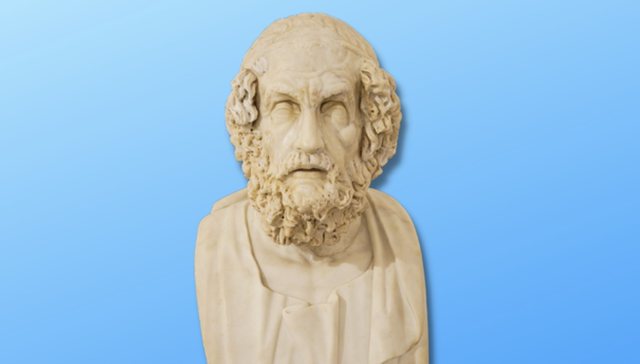
Who was Homer really?

2024-05-15 14:53:34 / JETË
By Alice Figini
Homer has always been a character that has sparked controversy among scholars. Did the author of the Iliad and the Odyssey really exist? This doubt has been raised since ancient times, and precisely in the 7th century BC when Callinus of Ephesus referred to the separate circulation of two poems, which could not have been written by the same person.
The debate deepened in the modern era, with the publication of the treatise "Prolegomena ad Homerum" by Friedrich Wolff in 1795, which marked the beginning of a series of analytical studies of criticism on the Homeric poems, especially on the Iliad, which was the most fragmented and asymmetrical text. . The "case" has continued to this day, and remains largely an unsolved puzzle.
The Homeric issue according to the Greeks
The Homeric question dates back to ancient times, in the 3rd century BC, when some grammarians began to study the Greek texts found in the Library of Alexandria in Egypt. Thus was born a brilliant discipline called philology, but also a great enigma.
Analyzing the texts, the Alexandrian scholars Xenon and Elanicus discovered major differences between the Iliad and the Odyssey, raising the hypothesis that they did not belong to the same author or that he never existed. According to scholars, only the Iliad was written by Homer.
Their thesis was strongly contested by Arstarchus of Samothrace, who claimed that the Iliad was written when the Greek poet was young, while the Odyssey was a work written by Homer at a more mature age.
The Homeric Question in the Modern Age
After many years of silence and intellectual effort, the Homeric question was vigorously revived in the 17th century. At the time, Abbe d'Obinjak wrote a passionate dissertation on the Iliad, in which he theorized that Homer had never existed, and that in reality his poem was a mishmash of various songs born of oral tradition composed in stages. different.
Meanwhile, Historian and philosopher Giambattista Vico hypothesized that the two poems were actually a collective work, created by the entire Greek people. According to him, under the name Homer, there were many bards, singers who entertained the public first with the exploits of Achilles and then with those of Odysseus.
Vico justified the internal contradictions of the Iliad and Odyssey by being originally oral accounts, elaborated by several anonymous authors. Moreover, according to the researcher, Homer never existed, he was a character born of a legend. In the 18th century, this hypothesis was supported by the German philologist Friedrich Wolff.
The Homeric Question in the Modern Age
Një kontribut interesant në studimet homerike u dha në vitin 1928 nga Milman Perri. Duke analizuar traditën epike sllave të kohës së tij, studiuesi amerikan gjeti disa pika të përbashkëta me poemat homerike. Prandaj sipas teorisë së tij, Iliada dhe Odisea ishin produkt i trashëgimisë orale, siç dëshmohet nga epitetet e ndryshme – formulat e përsëritura për të identifikuar personazhet (p.sh Perëndeshë me krahët e bardhë) – të përdorura për të lehtësuar memorizimin e këngëve.
Ndërkohë në vitet ’90 të shekullit XX, helenisti Vinçenco Di Benedeto deklaroi se Iliada është vepër e një autori të vetëm, të cilin ai e identifikon me emrin e Homerit. Sipas gjykimit të studiuesit, tek kjo vepër kemi një teknikë rrëfimtare unitare që nuk i atribuohet autorëve të ndryshëm anonimë.
Di Benedeto mendon se Odisea mund të jetë vepër e një poeti tjetër. Sot, studimet mbi veprën homerike janë shumë të polarizuara. Sipas analizës gjuhësore të studiuesit britanik Martin L.Uest, këngët e Iliadës dhe Odisesë paraqesin një strukturë të qartë unitare, dhe për këtë arsye arritën në një version përfundimtar përpara se të shpërbëheshin në traditën gojore.
Uest vë në pikëpyetje teorinë e Parrit, duke deklaruar se në bazë të poemave homerike ekziston një projekt i qartë origjinal, më pas i zgjeruar nga trashëgimia popullore orale, që dikur këndonte legjendat e traditës.
Atëherë kush ishte në të vërtetë Homeri?
Një nga dëshmitë historike për ekzistencën e tij na vjen nga Pindari, i cili pretendon se Homeri ka lindur në qytetin e Smirnës në Turqinë e sotme. Nga ana tjetër Herodoti e gjurmon ekzistencën e Homerit 400 vjet më parë para kohës së tij, dhe pohon se ai ka lindur në Melesigenes, në lumin Meleto.
Tregimi i Herodotit, i përfshirë në librin “Vita Herodotea”, thotë se Homeri nuk ishte emri i vërtetë i poetit, por një pseudonim që iu dha më vonë. Në fakt, Homeri rrjedh nga fjala ‘ho mḕ horṑn’ që do të thotë ‘ai që nuk sheh’. Në fakt edhe legjenda thotë se Homeri ishte i verbër .
Ndërkohë poeti Hesiod e konfirmon ekzistencën reale të Homerit, duke pretenduar se ai ishte një nga bashkëkohësit e tij, dhe pretendon se një ditë ata lexuan së bashku poezitë e tyre përkatëse gjatë një konkursi mbi poezinë. Por të gjitha këto rindërtime historike mbi figurën e Homerit janë në kontrast me njëra-tjetrën.
Nuk është ende e mundur t’i jepet një datë e caktuar figurës së tij, dhe as një gjeografi e saktë e përkatësisë etnike. Megjithatë, ka shumë statuja dhe vende të shenjta të ngritura për nder të tij, të cilat tregojnë se si grekët e lashtë e nderonin poetin si një figurë hyjnore, të frymëzuar drejtpërdrejt nga muzat. Prandaj është një personazh legjendar, i rrethuar nga një atmosferë e shenjtë hyjnore.
The Iliad and the Odyssey may be considered to the ancient Greeks what the Bible is to the Christian people today. It was not just a myth, but a narrative that gave values, thoughts, commandments, and could only be attributed to a legendary author, Homer, greater than his own name. / Solo Book – Bota.al
Happening now...
















America may withdraw from Europe, but not from SPAK
Nga Gentian Gaba
ideas



top



Alfa recipes




TRENDING 




services
- POLICE129
- STREET POLICE126
- AMBULANCE112
- FIREFIGHTER128