


FLASH NEWS
Today the clocks were changed, the hands went forward 60 minutes at 02:00 in the morning

2025-03-30 09:17:00 / JETË
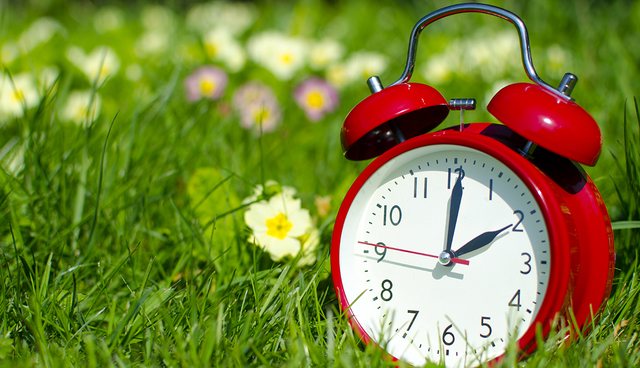
Today, in the early hours of Sunday (March 30), the clocks changed. At 02:00, the clocks went forward 60 minutes.
This will cause us to lose 1 hour of morning sleep, waking up earlier. The purpose of changing the clock is to take advantage of solar energy as well as save electricity.
Daylight saving time will last until the last Sunday of October, when the clocks will go back 1 hour.
How did the concept of daylight saving time come about?
It was 1907 when Englishman William Willett introduced the idea of "Daylight Saving Time" so that people wouldn't waste precious hours of daylight on summer mornings.
Willett came up with the idea to get people out of bed earlier by changing the clocks. He proposed that the clocks should be moved forward by 80 minutes in four progressive steps during the month of April and the same way during the month of September. Willett then spent the rest of his life trying to convince people that his scheme was the right one.
Unfortunately, he died of influenza in 1915, at the age of 58, a year before the Germans adopted his plan to change the clocks on April 30, 1916, but not by 80 minutes, but by 60, when the clocks went back to 11 p.m. Britain followed suit later, on May 21.
The "Summer Time" Act was passed by the British Parliament in 1916, and May 21, 1916 was the first day of the 'Summer Time' calculation.
But, it wasn't always changed for an hour.
Clocks today are almost always set one hour back or forward, but throughout history there have been some variations, such as half-adjustment by 30 minutes, or double-adjustment by two hours, and other adjustments by 20 and 40 minutes. A two-hour adjustment was used in several different countries during the 1940s.
A half-time adjustment was used in New Zealand in the first half of the 20th century. In Australia, meanwhile, the clock was once set back or forward by 30 minutes.
Since 1981, the time change has been implemented throughout Europe, with many countries moving the clocks forward 60 minutes. The European standard consistently sets the dates for the start of summer time, when the clocks move forward 60 minutes, and winter time, when the clocks move back 1 hour.
The changes take place on the last Sunday of March and the last Sunday of October. The aim of the clock change is to save electricity and make use of sunlight. After the spring equinox, the day begins to lengthen and reaches its peak on June 22, with 15 hours of daylight and only 9 hours of night./TAR
Happening now...
















83 mandates are not immunity for Rama's friends
Nga Gentian Gaba
ideas

"Preliminary sentence for Belinda Balluku", response to Baton Haxhiu
Nga Blendi Kajsiu

Teatri që fsheh prapaskenën
Nga Patrik Sadikaj

Berisha's red line and the black line of democracy in the DP
Besmir Semanaj
top



Alfa recipes




TRENDING 




services
- POLICE129
- STREET POLICE126
- AMBULANCE112
- FIREFIGHTER128