


FLASH NEWS
25 hour day? NASA: It's increasing by 1.4 milliseconds every 100 years

2022-10-27 10:45:44 / AKTUALITET
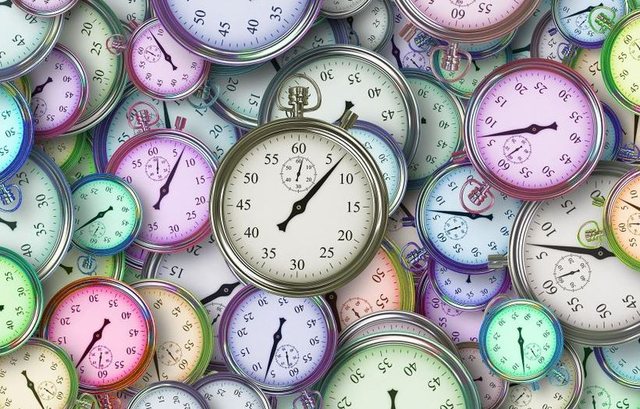
The day is getting a little longer every year and this is caused by the rotation of the earth being slowed down by the moon. Our eye does not perceive it yet, but according to Nasa, this is happening because our Moon receives energy from the Earth and slowly moves away from the Earth. This shift can only be observed and measured thanks to NASA's Laser Range Retroreflector, which sends laser signals back to satellites within the Earth's atmosphere. Each laser signal seems to take milliseconds longer to return to earth, indicating that the day is getting longer.
Time on Earth
Time itself is still something quite complex from a scientific point of view, and something we still struggle to compare on a more philosophical ground. Time is only a perception by the human mind, which tries to give meaning to life through a timeline as we like to call it.
Our Moon is held in orbit by Earth's gravitational force. The Moon also exerts its gravitational pull on the Earth, which affects its rotation forcing the oceans to form a tidal bulge. However, the Moon is absorbing a lot of the Earth's gravitational force, which affects our own gravity by a very small percentage, slowing the Earth's rotation, causing time on earth to be perceived as longer.
To be precise, based on NASA's calculations in the last 100 years due to the slowing down of the Earth's rotation, the day became 1.4 milliseconds longer (0.0014 seconds). If we average the deceleration of the Earth's rotation over the past 2,000 years based on the historical record of solar eclipses, we can average that the day lengthens by 2.5 milliseconds (0.002 seconds) every century.
This brings us to the big question.
How long until a day will be 25 hours?
First, let's put a few things into perspective. Based on calculations made by NASA it would take 50,000 years to add one second to the length of a day. Our day is counted by hours, each hour has 60 minutes and each minute has 60 seconds.
An hour is 3,600 seconds, so if we calculate that by 50,000 years, it will give us the answer we are looking for. To answer the question, it will take another 180 million years until the day lasts 25 hours instead of 24.
However, in those 180 million years other major cosmic events may occur that could significantly affect in the Earth's rotation, thus bringing about a 25-hour day much sooner than expected. Hopefully, no meteor large enough to destroy Earth will hit our planet until then.
Happening now...















83 mandates are not immunity for Rama's friends
Nga Gentian Gaba
ideas

"Preliminary sentence for Belinda Balluku", response to Baton Haxhiu
Nga Blendi Kajsiu

Teatri që fsheh prapaskenën
Nga Patrik Sadikaj

Berisha's red line and the black line of democracy in the DP
Besmir Semanaj
top



Alfa recipes




TRENDING 




services
- POLICE129
- STREET POLICE126
- AMBULANCE112
- FIREFIGHTER128