


FLASH NEWS
Six minutes of darkness in the middle of the day, here's when the Eclipse that will paralyze half the planet will happen

2025-06-30 13:20:23 / MISTERE&KURIOZITETE
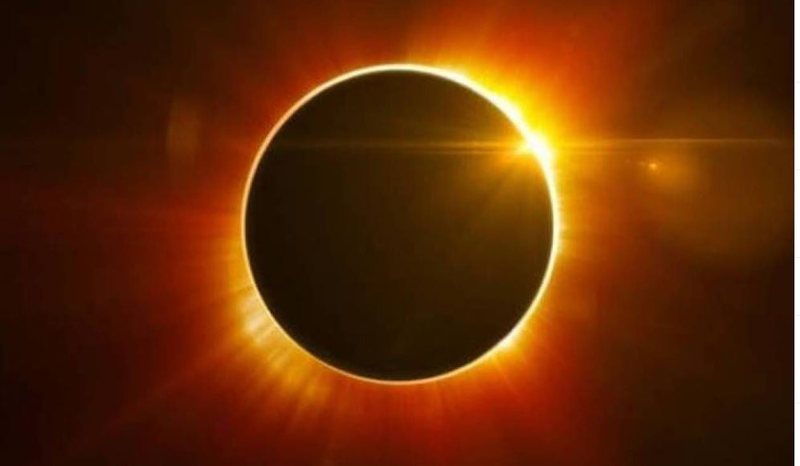
In just over two years, the sky will darken and millions of people will be left in silence under a six-minute twilight in the middle of the day.
This is not a science fiction scenario, but the largest total solar eclipse of the 21st century. And that moment comes on August 2, 2027. It is the phenomenon for which astronomers – professional and amateur – are anxiously preparing, knowing that it will not be repeated in such ideal conditions until the year 2114.
The eclipse of August 2, 2027 is not just a total eclipse. Thanks to a rare geometric alignment, the duration of the total solar eclipse will reach 6 minutes and 23 seconds – the longest over Earth since 1991.
The Moon's shadow will travel over 15,000 kilometers, starting in the Atlantic Ocean, crossing the Mediterranean, the Middle East and East Africa, before disappearing into the depths of the Indian Ocean.
Where will the phenomenon be visible?
The so-called "center line" of totality will offer impressive viewing conditions in many places:
Spain (Cadiz, Malaga) and Morocco (Tangier, Tetouan) will see more than 4 minutes of total eclipse.
Libya and Benghazi, with a duration of up to 5 minutes.
Egypt, where the phenomenon reaches its peak: in the desert, just 40 km southeast of Luxor, the eclipse reaches its maximum duration: 6 minutes and 23 seconds of complete darkness.
From there, the shadow will continue towards the Red Sea, Saudi Arabia (Jeddah, Mecca), Yemen, Somalia and finally over the waters of the Indian Ocean. Outside the zone of totality, a partial eclipse will be visible from almost all of Europe, North and East Africa and most of Western Asia.
Why does it take so long – The scientific explanation
The duration of the entire cycle is influenced by three determining factors: The distance of the Moon from the Earth (lunar perigee): The closer the Moon is, the longer its shadow is.
Distance of the Earth from the Sun (aphelion): The farther the Earth is from the Sun, the smaller its apparent diameter.
Orbital geometry: When the shadow crosses the equator, it moves more slowly over the Earth's surface.
In 2027, all three of these conditions combine almost ideally: The Moon is closer than usual, the Sun is farther away, and the shadow travels over the equatorial regions, offering the spectacle greater duration and stability.
A blockbuster astronomy film set against the backdrop of ancient monuments
Luxor, the city of pharaohs and temples, is set to become a global epicenter that day. Travel agencies have already started booking hotels near the temples of Ramses II and Hatshepsut, as the site is considered ideal for astrophotography.
At the same time, governments are organizing cultural and scientific activities: Egypt is planning a global television broadcast from the archaeological site of Karnak. The International Civil Aviation Organization (ICAO) is considering charter flights that would follow the shadow's path.
Saudi Arabia is planning a special astrotourism program in Al-Ula, an area of great archaeological and cultural interest. In an age where everything is watched on screens, total solar eclipses remain one of the few natural phenomena that gather millions of eyes in the sky, at the same time, with the same wonder.
From ancient prophecies to Eddington's 1919 experiment that confirmed Einstein's general theory of relativity, eclipses have always had a mysterious impact on human history.
The 2027 eclipse promises to be more than just a phenomenon. It will be a once-in-a-lifetime experience, a cosmic encounter with History, and – as always – a universal human ritual, in the shadow of our brightest star.
Happening now...















America may withdraw from Europe, but not from SPAK
Nga Gentian Gaba
ideas



top



Alfa recipes




TRENDING 




services
- POLICE129
- STREET POLICE126
- AMBULANCE112
- FIREFIGHTER128