


FLASH NEWS
Who was Pope John Paul II's spy in the Soviet Union?

2025-02-16 12:55:27 / MISTERE&KURIOZITETE
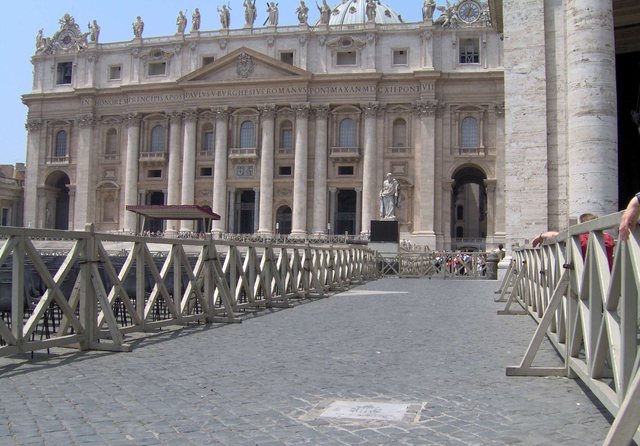
Students of the dark "arts" of the Cold War know very well that communist secret services penetrated deeply into the Vatican during the 1970s. Yet, very few people know that Pope John Paul II, who celebrated his 100th birthday on May 18, had his own secret agent in the Soviet Union during the 1980s.
This relationship led to an extraordinary personal encounter, which helps explain what made that Pope the man he was. Pope John Paul II's 007 agent was Irina Ilovajskaya Alberti, the Russian-born widow of an Italian diplomat.
A former personal assistant to the famous Russian writer Alexander Solzhenitsyn in Vermont, USA, she met the Pope quite by chance during a public papal audience in the early 1980s. A strong friendship soon developed between them. As Gorbachev's reforms made it easier to travel to the Soviet Union, Alberti went there several times a year.
“If I learned anything interesting,” she told me years later, “I would call the Pope, we would meet and tell him everything.” Vatican diplomats, who liked to keep matters very secret, did not appreciate this kind of information channel.
But Pope John Paul II, who was known for his tolerance of the press when he thought he could gain useful information, ignored traditional managers and maintained contact with his clandestine operatives. Alberti was also close friends with Yelena Bonner, the wife of the Soviet nuclear physicist and later human rights campaigner Andrei Sakharov.
Placed under house arrest in 1985, Sakharov began a hunger strike, demanding that Soviet officials allow his wife to go abroad to be treated for a serious illness. The authorities eventually agreed, but Sakharov was held hostage to Boner's good behavior abroad.
This meant no meetings with world leaders or the Western press. Alberti thought that Bonner should meet the Pope. When she arrived in Rome after her treatment, Alberti arranged for her to escape, so that while Italian journalists dealt with Bonner's children, she could sneak into Vatican City.
Emotionally hardened by decades of persecution by the KGB, Bonner was not very sentimental. She was not even religious. However, her two-hour one-on-one meeting with Pope John Paul II left a deep impression on her. She told Irina afterwards: “He is the most incredible man I have ever met. He is all light. He is a source of light!”
The Bonner-John Paul II relationship continued for years, and later led to a long private meeting between the Pope and Sakharov, who sought advice on playing a political role in the official collapse of the Soviet Union. It was that first meeting with Bonner, and her reaction to this Pole whom she had never met before, and at the same time the leader of a faith she did not share, invites further reflection on the 100th anniversary of the birth of Pope John Paul II.
How did Pope John Paul II touch the hearts and minds, even of non-believers, with his manner? Wojtyla was an intelligent man, an experienced cleric, a polyglot, and a shrewd actor on the world stage. His commitment to defending basic human rights, regardless of religious belief or lack thereof, had been demonstrated over time, during his years as Archbishop of Krakow in Poland, and later as Pope. He paid the price for this support with his own blood when he survived an assassination attempt, which he surely suspected was ordered by Moscow.
But this CV and his credibility do not fully explain why a non-believer should tearfully say: “He is all light. He is a source of light!” Or why in his final years, weakened by Parkinson’s disease, he still attracted large crowds and managed to lift the spirits of the suffering.
Pope John Paul II cannot be explained or understood unless he is taken for what he said he was: a Christian disciple, a radical convert. He believed that God had revealed himself to history, first to the Jews, and finally to Jesus of Nazareth.
He believed that the resurrection of the crucified Nazarene was the focal point of the human saga: an event within and beyond what we know as “history” that revealed that God’s passionate love for humanity was stronger than death itself. Believing this, he lived without fear. And by living without fear, he inspired courage in others. He was “a source of light,” having spent his life allowing what he had experienced as divine light to shine through him.
Note: George Weigel is a longtime member of the Center for Ethics and Public Policy, and a biographer of Pope John Paul II. / Bota.al
-

-
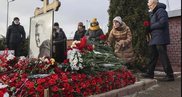
One year after Navalny's death, supporters defy Kremlin and visit his grave
February 16, 12:45
Happening now...


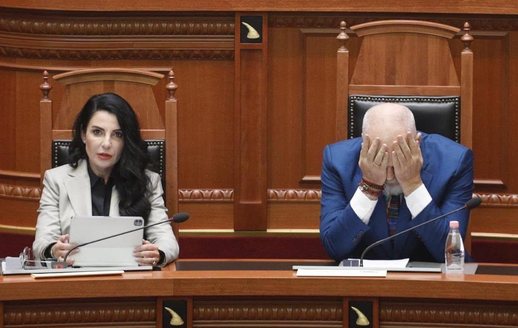

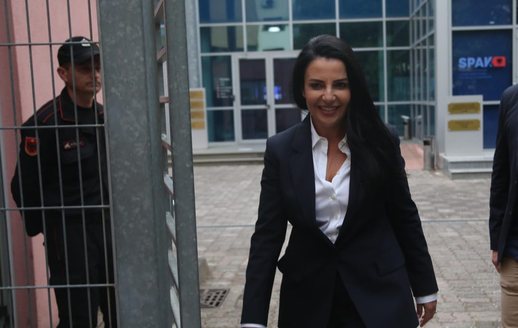


83 mandates are not immunity for Rama's friends
Nga Gentian Gaba
ideas

top
Alfa recipes




TRENDING 




services
- POLICE129
- STREET POLICE126
- AMBULANCE112
- FIREFIGHTER128