


FLASH NEWS
The DNA test disproves the theory that Rudolf Hesi escaped from prison using his disguise

2025-01-12 15:50:50 / MISTERE&KURIOZITETE
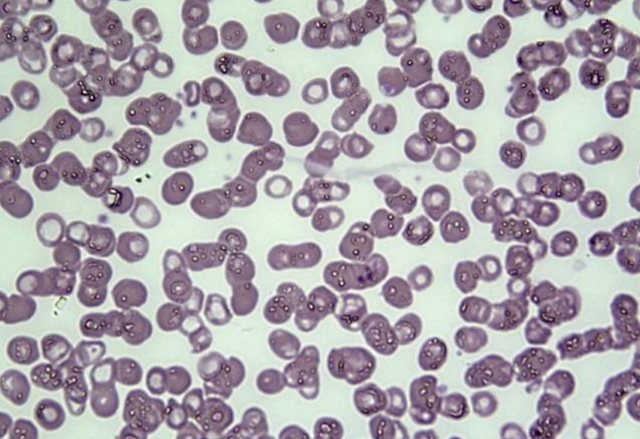
After more than 70 years, the conspiracy theory that Rudolf Hess was replaced by an accomplice in prison has finally been debunked by DNA tests, reports the well-known American magazine "New Scientist".
The theory that one of the main Nazi leaders and Hitler's deputy, Rudolf Hess, was replaced by one of his own, who was then tried in his place at Nuremberg and served his sentence in Spandau prison, attracted the attention of famous officials at the time , as was the American president Franklin D.Roosevelt.
But an Austrian doctor, analyzing a random blood sample, was able to put an end to these speculations. Rudolf Hess was captured by Allied forces in May 1941 when the Messerschmitt Bf 110 he was flying crashed in Scotland while on a secret mission to broker an unauthorized peace agreement.
He appeared at the Nuremberg Trials, and was sentenced to life imprisonment in Spandau Prison – a prison located in West Berlin, where high-profile Nazi war criminals were held.
But an English doctor working in the prison, W. Hugh Thomas, suspected that the Shpandau prisoner was not really Rudolf Hess. His theory was based on the fact that the convict in Shpandau did not resemble Hesi, that he refused to see his family, and that he showed signs of amnesia.
Based on these doubts, the British government authorized 4 investigations into Tomas' claims, but could not get an exhaustive answer. Without the existence of today's DNA tests, the conspiracy continued. Hess died in prison by suicide in 1987, aged 93.
His body was cremated by the German government in 2011, seemingly ending the last chance to uncover the truth about his identity - until recently. In the mid-1990s, fortuitous circumstances began to pave the way for a definitive answer to this doubt.
A pathologist, who was also employed at Shpandau when Hes stayed there, had preserved in a hermetically sealed sample a trace of the prisoner's blood from a medical check-up in 1982.
The pathologist, Rik Vahl, had used the sample of prisoner no. 7 in Shpandau, as a teaching tool during his time at the Walter Reed Medical Center for decades. But Vahl had no idea how useful that champion would be until it fell into the right hands.
"I became aware of the existence of a blood sample of Hess, from a routine check during my stay at Walter Reed" - said the American military doctor, Sherman Mekoll. "It was only a few years later that I became familiar with the historical controversies."
But getting the sample was the easy part of debunking the old conspiracy. "Demolishing it was something else entirely," he said. With the help of Austrian molecular biologist Jan Kemper-Kislih, DNA was extracted from the blood sample.
Then, this sample had to be compared with a relative of Hes, in order to confirm the match. The eager couple of scientists managed to find the phone number of Wolf Rydiger, the son of Rudolf Hess, but there was not much to communicate.
"He had died recently. The family is very private. His name is also quite common in Germany, so finding them was difficult," Mekoll said. However, the team continued to try, and were able to find a living relative with whom they could compare blood samples and DNA.
The results gave an incontrovertible conclusion: there was a 99.9 percent chance that the blood sample of prisoner No. 7 in Shpandau, and the blood sample of Hes's living relatives, had major biological matches.
Finally, the final report of the Kemper-Kisslich team stated that it "strongly supported the hypothesis that the Spandau prisoner was indeed Rudolf Hess, the deputy fuhrer of the Third Reich," he said.
Although the unidentified relative of Hes willingly cooperated and gave the scientists her blood, the Hes family was determined not to make any comment or any further reaction to the results. "It is already publicly known that Hesa's wife, Ilse, did not believe this story," says Mekoll.
In fact, Ilse Hess never believed in the sozi theory. When she met with the British director of the prison in Shpandau, during a routine visit to her husband, she said jokingly: "How is my husband today?". But in the end, the truth was there all along, hidden behind a woman's sarcastic comment./ bota.al
-

-

-
"I missed you..."/ Egli bursts into tears, surprised by her mother
January 12, 00:25 -

Happening now...










America may withdraw from Europe, but not from SPAK
Nga Gentian Gaba
ideas


top



Alfa recipes


TRENDING 




services
- POLICE129
- STREET POLICE126
- AMBULANCE112
- FIREFIGHTER128