


FLASH NEWS
Baton Haxhiu: There is neither an "entry ticket" nor "congratulations", but only a new European contract with Albania

2026-05-27 14:21:42 / POLITIKË
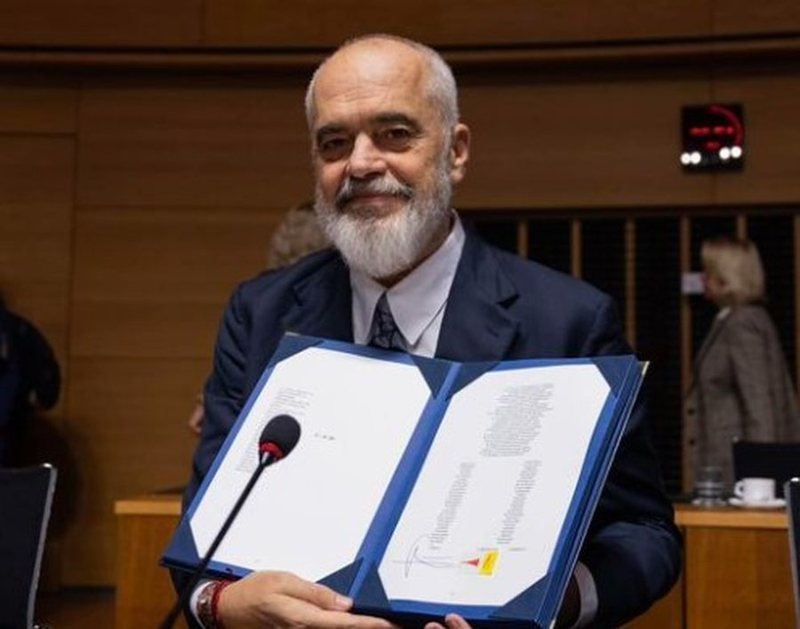
May 26 will remain one of those dates that Albanian politics will sell as a historic triumph, while European diplomacy is carefully trying to explain to Tirana that it is about something entirely different. Not the end of a road, but the beginning of its most difficult part.
The two most important statements following the EU-Albania Intergovernmental Conference did not come from countries that usually use enthusiastic language about enlargement, such as Italy or France, which continue to strongly support the Albanian process for strategic and geopolitical reasons. They came from Germany and the Netherlands, two countries that traditionally read enlargement through the filter of the rule of law and the real functioning of institutions.
And their language was cold, conditioned, and almost surgical.
European diplomatic sources close to the May 26 discussions told Albanian Post that the wording used by Berlin and The Hague should not be read as "congratulations", but as the first signal of a new phase of political and legal supervision over Albania.
In both statements, the same message is repeated: Albania has passed the “interim benchmarks” for Cluster 1 “Fundamentals”, but this is not considered a final victory. On the contrary. This is seen as a “starting point”, the starting point of a phase where the EU will now require “implementation in practice”, real implementation in practice, “solid track records”, provable traces of results, and “lasting results”, sustainable results. In European diplomacy, these formulas are not linguistic decorum. They are procedural warnings.
The Dutch statement was perhaps the most legal and clear. Ambassador Reinout Vos described the approval of the IBAR not as a political medal for Tirana, but as a “clear expectation” for the continuation of reforms, the strengthening of institutions and their consistent implementation. Then comes the sentence that in European diplomatic circles is read as the essence of the document: respect for the independence of the judiciary and the fight against corruption, including high-level cases, are “non-negotiable prerequisites” for Albania’s advancement in the EU.
In practice, this means that issues such as SPAK, investigations against senior officials, parliament's attitude towards requests for immunity, or the relationship between the government and the judiciary are no longer considered internal Albanian political topics. They have become a formal part of the European negotiating dossier.
Gjermania përdori pothuaj të njëjtin mesazh, por me një ton më politik dhe më mbikëqyrës. Në deklarimin gjerman përsëritet ideja e “resolute implementation in practice”, zbatim i vendosur në praktikë, dhe paralajmërimi se Berlini do të “follow developments very closely”, do t’i ndjekë zhvillimet shumë nga afër. Në gjuhën diplomatike gjermane kjo është shumë më tepër sesa formulë rutinë.
Burime diplomatike pranë vendeve anëtare i thanë Albanian Post se Berlini dhe Haga po tentojnë të shmangin atë që në BE konsiderohet “fenomeni i Ballkanit”, ku progresi matet me miratim ligjesh, ndërsa institucionet vazhdojnë të funksionojnë sipas kulturës së vjetër politike. Pikërisht për këtë arsye, në dokumentet evropiane të 26 majit, termat kyç nuk janë “negotiations”, negociata, por “rule of law”, sundimi i ligjit, “judicial independence”, pavarësia e gjyqësorit, “high-level corruption”, korrupsioni në nivele të larta, dhe “lifting of immunity according to Venice Commission standards”, vendimmarrja për heqjen e imunitetit sipas standardeve të Komisionit të Venecias.
Në thelb, Evropa po i thotë Tiranës diçka shumë të thjeshtë: faza romantike e integrimit ka mbaruar. Tani fillon testi i shtetit.
Dhe ky test nuk do të matet me konferenca, retorikë apo patriotizëm evropian në Tiranë. Do të matet me mënyrën si pushteti sillet me drejtësinë, si funksionon Parlamenti, si trajtohen institucionet kushtetuese dhe nëse korrupsioni në nivele të larta prek realisht elitën politike dhe ekonomike.
Një detaj me rëndësi në të dy deklaratat është referenca ndaj “Common Position”, pozicionit të përbashkët të BE-së, dokumentit formal mbi të cilin ndërtohet faza e re negociuese. Në këtë dokument, të siguruar nga Albanian Post, BE e thotë qartë se Shqipëria mund të nisë mbylljen e kapitujve vetëm pasi të përmbushë “closing benchmarks”, benchmark-et e mbylljes, dhe vetëm pasi vendet anëtare të bien dakord se rezultatet janë reale dhe të verifikueshme.
Pra, 26 maji nuk ishte mbyllje negociatash. Ishte hyrje në provimin më të vështirë të tyre.
Në qarqet evropiane ekziston bindja se Shqipëria ka bërë progres të rëndësishëm procedural dhe teknik. Për këtë arsye Franca dhe Italia mbështesin fuqishëm avancimin e negociatave, duke e parë integrimin shqiptar edhe si pjesë të stabilitetit strategjik të rajonit dhe të arkitekturës së re evropiane të sigurisë. Por Gjermania dhe Holanda po kujdesen që ky progres procedural të mos përkthehet automatikisht në lehtësim politik.
Dhe kjo është arsyeja pse gjuha e tyre tingëllon pothuaj si kontratë juridike.
Në Bruksel askush nuk po i thotë Shqipërisë “ndal”, por po i thonë diçka tjetër, se nga sot, çdo krizë politike, çdo sulm ndaj drejtësisë, çdo tension mbi SPAK-un, çdo votim parlamentar për imunitetin, çdo raport zgjedhor dhe çdo sjellje e pushtetit ndaj institucioneve do të lexohet si pjesë e dosjes evropiane të Shqipërisë.
This is why May 26th has historical significance, because Albania won Europe, but also because Europe decided to ask Albania to prove that it is ready for it.
Happening now...











ideas

Enver-Sali!
Nga Indrit Vokshi
Idolaters and idolatry have nothing to do with democracy!
Nga Ardi Stefa

top


Alfa recipes








services
- POLICE129
- STREET POLICE126
- AMBULANCE112
- FIREFIGHTER128