


FLASH NEWS
The GJK judge criticized the changes to the Criminal Code/ Lamallari: Do not publicly display your political beliefs

2026-02-14 21:44:35 / POLITIKË
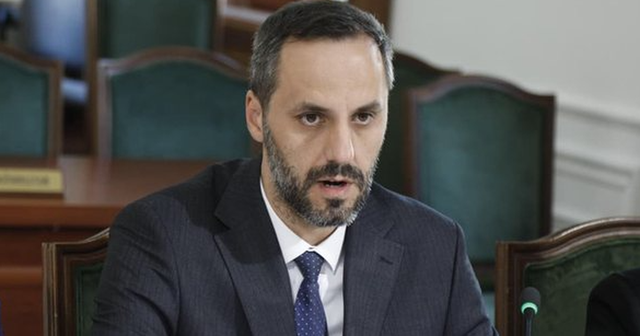
Minister of Justice, Besfort Lamallari, has reacted after the statement made by Judge Florjan Kalaja, who said that the process for the new Criminal Code is a facade. Through a post on Facebook, Lamallari has rejected the accusations, emphasizing that the process of amendments to the new Criminal Code has been open.
According to Lamallari, Judge Kalaja has violated the Code of Judicial Ethics approved by the Supreme Court of Justice and adds that magistrates have a duty to avoid displaying political beliefs in public.
"In Albania, there are many cases where judges and prosecutors have subsequently become actively involved in politics, with concrete examples found in Parliament. Also, unfortunately, we have seen public statements with clearly political undertones and unethical labeling by judges' associations! ", said Lamallari, among other things.
I fully respect the right of every magistrate, prosecutor and judge, of general or even special jurisdiction, to have a professional opinion on the law-making processes. However, when such a position is presented in the media, describing the consultative roundtables organized by the Ministry of Justice as a “facade”, an obligation arises for clarification and transparency towards the public.
The process of amendments to the new Criminal Code has been open, inclusive and documented, with the participation of experts, justice professionals and international partners. Specifically, a total of 25 consultative meetings were held during the period September–December 2025. A total of 488 representatives from justice institutions, public administration, international organizations and civil society participated in these roundtables. Their participation was documented in minutes, as were the opinions expressed in addition to those conveyed in writing, officially by various institutions, including justice institutions.
More than half of the provisions published earlier in July 2025 have already changed and the work continues, largely reflecting the comments and suggestions made by institutions and professionals engaged in the spirit of fair cooperation, without prejudice and unaffected by the presence or absence of media attention.
Professional debate is welcome, but it must be based on facts and avoid labeling or institutional influence, especially of another power, which does not serve impartiality or the perception of impartiality.
In Albania, restrictions on public opinions of magistrates (judges and prosecutors) stem from several main pillars of the legal and ethical framework. The essence is to maintain independence, impartiality and public trust in justice.
The importance of the judge's self-restraint, in public and private life, is also sanctioned in the Code of Judicial Ethics, approved by Decision No. 171, dated 22.04.2021 of the High Judicial Council, which, among other things, requires that the judge:
– always take care that his behavior, official or private, does not violate the individual or institutional independence of the judiciary nor the appearance of independence in the eyes of the public. The judge must avoid behavior that may create the impression in the public that he is politically engaged…” and;
– must show self-restraint in publicly supporting or expressing criticism of any kind towards other powers” and;
– should refrain from making comments on controversial political issues or public statements, which could create the impression that the judge is biased…' and;
– should show restraint in the use of the media and social networks”
The same ethical principles are also guided by the Advisory Committee of European Judges (Opinion No. 25 (2022) of the Council of Europe 'Freedom of Expression of Judges and the obligation of judges to be independent'):
• The magistrate should show restraint in public expression, especially towards other powers.
• Should avoid the display of political convictions in public.
The Strasbourg Court's standard also dictates the obligation of real and perceived impartiality, according to the classic axiom:
“Justice must not only be done; it must also appear (to be).”
In Albania, there are many cases where judges and prosecutors have subsequently become actively involved in politics, with concrete examples found in Parliament. We have also, unfortunately, seen public statements with clearly political undertones and unethical labeling by judges' associations!
Beyond debates of an ethical rather than legal nature, I firmly believe that the burden of exercising and being perceived as impartial and uninfluenced by the magistrate is particularly high, as is the responsibility entrusted to him for the investigation or trial of high-ranking officials and political entities! Justice reform and the improvement of criminal legislation are challenging processes that are continuously developed and improved, based on the contribution and responsibility of all professionals and above all on public trust — not labels.
Happening now...













Pastërtia kryeministrore mes kolerës qeverisëse!
Nga Roland Lami
ideas

Berisha, by attacking Basha, is helping Rama
Nga Ermal Peçi


When bandits are surrounded by fools!
Nga Irena Beqiraj
top



Alfa recipes








services
- POLICE129
- STREET POLICE126
- AMBULANCE112
- FIREFIGHTER128