


FLASH NEWS
Why the Cold War will never return

2026-02-14 23:08:43 / BOTA
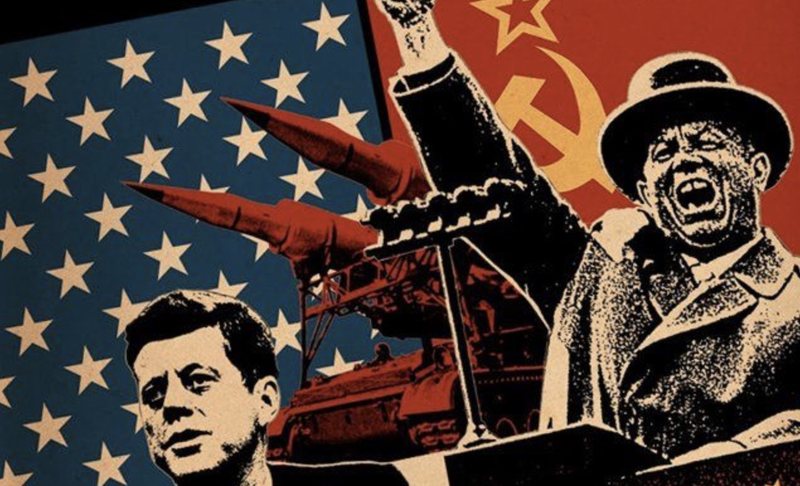
Is the world entering a Cold War again? It's a question that comes up often whenever tensions between major powers rise. From the annexation of Crimea in 2014, to the War in Ukraine and geopolitical clashes in Eastern Europe and Asia, many analysts speak of a "new Cold War."
But this idea is more metaphor than historical reality. The Cold War was not simply a period of tension between two powerful states. It was the result of a unique combination of historical, ideological, and military circumstances, conditions that no longer exist today and are unlikely to be recreated.
Relations between the United States and the Russian Federation have been tense over the past decade. However, these developments belong to a different historical era.
The Cold War was much more than a rivalry between two powers. It was shaped by three fundamental characteristics.
First, global bipolarization. As a result of World War II, most of the great powers were destroyed or severely weakened. Only two superpowers remained on the international stage: the United States and the Soviet Union.
Washington and Moscow built extensive systems of alliances, institutionalized especially in NATO and the Warsaw Pact. The world was organized into two clear and rival blocs.
The second fundamental feature was ideology. Soviet Marxism-Leninism directly confronted liberal capitalism and Western anti-communism.
These belief systems were not simply political theories. They functioned as mobilizing forces that held their respective alliances together and made sustainable cooperation between them almost impossible.
For the Soviet leadership, socialism was the foundation of the system's legitimacy. It consolidated control over Eastern Europe and inspired leftist movements in Europe and the post-colonial world.
The third feature was the arms race, especially the massive development of nuclear weapons.
The presence of arsenals capable of destroying the world made a direct conflict on the scale of World War II unthinkable. War existed, but it did not take place on classic fronts. It took place through ideological pressure, strategic rivalry, and indirect conflicts.
That's why it was called the "Cold War".
The collapse of the Soviet Union radically changed all three of these dimensions.
First, the bipolar structure disintegrated. The Eastern Bloc and the Soviet alliance system disappeared. The Russian Federation today does not have a network of ideological allies or clients comparable to that of the Soviet era.
At the same time, even the US, without a global ideological rival, often faces limited and selective support from its partners.
Marxism-Leninism is no longer an internationally mobilizing ideology.
Russia occasionally promotes anti-liberal narratives or concepts like “Eurasianism,” but these do not have the capacity to create a global movement, as happened with communism in the 20th century.
The world today is not divided by universal ideological systems that seek global domination.
Nuclear arsenals still exist, and the US and Russia continue to possess the majority of them.
However, these weapons no longer play the same structural role in international relations. Russia, with a much smaller population and limited conventional capabilities compared to the US, does not represent a systemic global rival like the Soviet Union.
Great powers will continue to compete. Rivalry is a constant of international politics.
But the Cold War was the product of a unique historical moment, the Russian Revolution of 1917 and the world order that emerged from World War II. It was built on global bipolarity, universal ideological clash, and total nuclear equilibrium.
This combination no longer exists. The Cold War ended as a historical era. And as such, it is unlikely to ever return. / bota.al
Happening now...


Pastërtia kryeministrore mes kolerës qeverisëse!
Nga Roland Lami
ideas

Berisha, by attacking Basha, is helping Rama
Nga Ermal Peçi


When bandits are surrounded by fools!
Nga Irena Beqiraj
top



Alfa recipes






services
- POLICE129
- STREET POLICE126
- AMBULANCE112
- FIREFIGHTER128