


FLASH NEWS
Theft scandal/ Albania without IPARD for 2 years, agriculture awaiting funds

2025-11-15 15:45:52 / POLITIKË
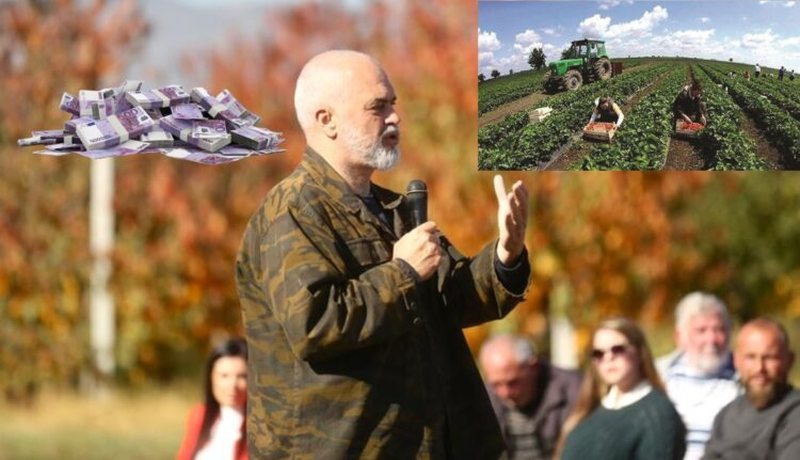
For more than two years, Albania has been without the financial support of IPARD funds, the most important program that the European Union offers for rural development in candidate countries.
In August 2023, the European Commission suspended funding due to misuse and irregularities found by the European Anti-Fraud Office (OLAF), following investigations that revealed cases of corruption, favoritism and political interference in the IPARD II scheme.
Even the European Commission's 2025 Pogres Report clearly states that Albania is not prepared to start implementing IPARD III.
The document states that: "It is necessary to increase capacity and oversight to enable the efficient delivery and implementation of IPARD III, in full compliance with the principles of sound financial management."
The Commission also notes that no progress has been made in aligning the legislation on quality policy with the EU acquis.
According to the assessment, Albania needs to strengthen the institutions that manage rural development funds, ensuring transparency, oversight and accountability in the implementation process.
However, despite this situation, the Minister of Finance, Petrit Malaj, spoke in optimistic tones during discussions on the draft budget in the Parliamentary Committee on Economy, promising that IPARD III funds will be opened during 2026.
"Due to some irregularities that were identified in the second phase, the European Commission left some measures that the Albanian government had to fulfill. Measures that we are fulfilling and I am very optimistic that IPARD III will open during 2026," said Malaj.
Blocked funds, unsupported farmers
For more than 26 months, the lack of IPARD funds has left a significant gap in Albanian agriculture. These funds were intended to modernize farms, increase competitiveness and develop rural areas. The government claims to have compensated for this shortfall with funds from the state budget, but sector experts see this as insufficient support.
For agricultural expert Alban Çakalli, this sector has been in a state of "coma" for 30 years and needs attention and support in order to contribute to the country's economic development.
"250 million euros in direct subsidies per year are needed, just for basic functioning. As well as financial support for investments in laboratories, modern irrigation systems, drainage, dam reconstruction and rural roads."
Çakalli sees the situation with a broad regional approach, emphasizing that IPARD's problems are not isolated to Albania: "IPARD in the Balkan countries has had significant problems because Brussels based the scheme on the example of developed countries. But the Balkans are a different reality, where farmers, processors and collectors are small and have not had the opportunity to absorb funds."
Albania, at the top of the list of abuses with IPARD funds
The abuse scandal came to light after a European Commission report found that 47 million euros in IPARD funds had been misused by 7 Western Balkan countries. Albania identified 33.5 million euros in irregularities, much more than countries like Serbia, North Macedonia or Montenegro.
The abuses included unidentifiable projects on the ground, funds that ended up in hotels, hostels that are not at all in function of agriculture or livestock in the country. Even before, the Albanian Center for Quality Journalism contacted small and medium-sized farmers throughout Albania in an attempt to find a success story, but most of them have not had any access to the IPARD program or other programs that the government has set up to fill the significant vacuum left by the suspension of the EU scheme.
In IPARD funds, around 146 million euros were programmed to be disbursed in Albania for the period from 2021 to 2027. According to AZHBR, the IPARD II program totaled 94 million euros, of which 71 million euros were EU funding. During its implementation from 2014 to 2020, it was possible to disburse 54.3 million euros. In the 4 calls of the program, 510 applicants benefited, 82 of them were found in violation and 17 of them were required to return the funds.
IPARD III, the program that Albanian farmers are still anxiously awaiting, provides around 112 million euros in support for nine key sectors: from rural infrastructure and market construction, to agro-processing, agro-tourism, forestry, as well as technical assistance and professional advice.
According to the agricultural expert, adapting the funding scheme to the reality of Albanian farming will be crucial: "I believe that IPARD III will open in January 2026. The funds that will come will go to real farmers in a simplified and bureaucratic manner because there will be stricter controls."
The blocking of IPARD funds has highlighted the structural failures of Albanian agriculture, weak capacities, lack of transparency, bureaucracy and lack of long-term vision. While the government makes optimistic promises and aims for 2026 for unblocking, Brussels demands concrete evidence, while the Albanian farmer continues to face only increasing costs and lack of support./ Ida Ismalaj – ACQJ – Albanian Center for Quality Journalism
Happening now...




ideas

Rama-Berisha, from statesmen to Chameleons!
Nga Ermal Peçi
The DP, as a Pyramid Firm!
Nga Indrit Vokshi
top

Alfa recipes
TRENDING 



services
- POLICE129
- STREET POLICE126
- AMBULANCE112
- FIREFIGHTER128