


FLASH NEWS
"Everyone has cocaine"/ In Europe, Albania, Belgium, Spain and Italy hold the main weight of drug trafficking organizations

2025-12-27 23:34:02 / AKTUALITET
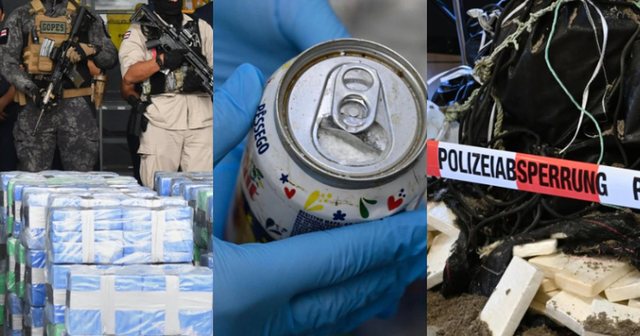
Never before has so much cocaine been produced and consumed in the world as today.
There are at least 25 million users, according to the United Nations Office on Drugs and Crime.
Of these, about six million live in Europe, almost double the number 20 years ago.
The latest annual World Drug Report , published in 2025 and based on data from 2023, also documents an unprecedented increase in drug production, which has exceeded 3,700 tons, four times more than 10 years ago. Cocaine is now “the fastest-growing illicit drug on the market,” the UN agency claims.
Juan, 46, sits at the kitchen table, opens a can of beer and shows the last message the drug dealer sent him on WhatsApp: a few seconds of video of the package of cocaine that has just arrived, which can only be viewed once before it is automatically deleted.
He sells it for 50 euros per gram. If you buy three, there's a special price: 100 euros. You don't even have to leave the house.
If he decides to buy, the seller will be at his door within an hour at most, or even faster if he is nearby.
"It's very easy to secure," explains the man who has lived in Brussels for more than a decade.
"Everyone has cocaine, it's the most common thing"
Although drug dealing is an "open secret" on the streets of Brussels, today there are more opportunities than ever to obtain drugs: from traditional methods to dark web sites and private conversations on messaging apps, which offer "menu of the day" with home delivery and promotional offers to buy cocaine and other substances.
Never so much cocaine as today
As Elías Camhaji analyzes for the Spanish newspaper El País, never before has so much cocaine been produced and consumed in the world as today.
There are at least 25 million users, according to the United Nations Office on Drugs and Crime. Of these, about six million live in Europe, almost double the number twenty years ago.
The latest annual report, the World Drug Report, published in 2025 and based on 2023 data, also documents an unprecedented increase in narcotics production, which has exceeded 3,700 tons, four times more than ten years ago.
From the Americas to Europe
Since the beginning of the war on drugs in the 1970s, the global epicenter of cocaine has been in the Americas.
Colombia, Bolivia, and Peru have concentrated coca leaf production; powerful Mexican and Colombian cartels have controlled trafficking routes, and insatiable demand has made the United States the main consumer market. But that picture is changing.
The tightening of controls in the Americas, the fragmentation of large cartels, and the saturation of the American market have forced traffickers to adapt.
The increase in consumption in the Old Continent is partly related to what is happening on the other side of the Atlantic and to the economic attractiveness of the European market.
According to the UN, while in Colombia a kilogram of cocaine costs around $1,400, in Central and Western Europe the average wholesale price is around $39,000.
A market worth billions
In a global expansion, cocaine seizures in Europe have broken records for the seventh consecutive year, with 419 tonnes seized. Cocaine generates over €11.6 billion in Europe each year.
Between 2019 and 2024, Belgium seized more than 500 tons of cocaine, more than any other European country.
Almost 90% was intercepted at the port of Antwerp, the main gateway for drugs into Europe, about 45 kilometers from Brussels.
The two main routes cross the Atlantic directly from Central and South America or via West Africa.
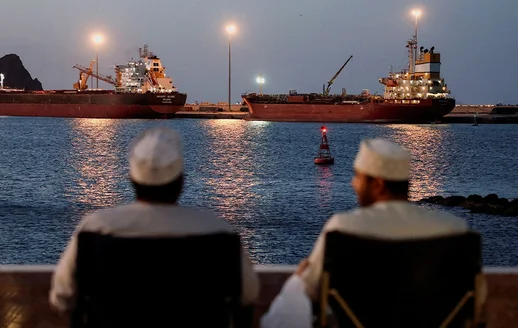
Over 90% of the cocaine that arrives in Europe travels by sea.
Traffickers see the port of Antwerp as an ideal location thanks to its modern infrastructure, connections to over 800 destinations, and proximity to the Netherlands, Germany, France, and the United Kingdom.
The list of trafficking methods goes as far as the imagination of criminals can reach.
Drugs enter European ports hidden in all kinds of products, camouflaged in the structure of containers or ships, or transported by speedboats, dinghies or semi-submersibles.
Over 440 organizations involved in drug trafficking operate within the borders of the European Union alone, according to Europol.
The groups with the greatest weight in cocaine trafficking come from Albania, Belgium, the Netherlands, Italy and Spain. / Taken from LaRepubblica
Happening now...







ideas

Pse tifozeria e Kosovës ishte aq e vdekur dhe mungonin simbolet kuqezi?
Nga Kreshnik Spahiu


Rama-Berisha, from statesmen to Chameleons!
Nga Ermal Peçi
top


Alfa recipes



TRENDING 




services
- POLICE129
- STREET POLICE126
- AMBULANCE112
- FIREFIGHTER128