


FLASH NEWS
From origin to cutting shape, facts you didn't know about holiday baklava

2025-12-24 13:29:11 / RECETA ALFA
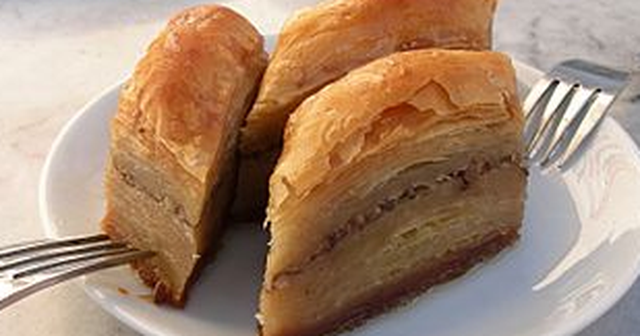
December can be safely called the month of holidays and family joys. Every year, decorations are put up in our homes and discussions begin about the recipes that will be prepared for the New Year's dinner.
What is never missing is the delicious baklava full of sherbet and nuts. This dessert has been part of our country's culinary tradition for hundreds of years, but despite becoming experts in its preparation and enjoyment, there are some facts we haven't heard before.
Did you know that baklava is the ancestor of the delicious apple and walnut strudel? Both of these delicacies are created by Turkish confectioners using crispy pastry, layers filled with crushed nuts, and rich syrup.
Those who have prepared this dessert know the importance of the thickness of the pastry. One piece of advice you hear whenever pastry is discussed is that it should be transparent enough to read a newspaper through.
Greek grandmothers deserve credit for this fact, as they would roll them 'as thin as a leaf.' From the very meaning of the word for noodles in ancient Greek, "leaf," comes this tradition that continues to be followed in many countries.
In many countries of the Western Balkans and the Middle East, the day of this dessert is celebrated on November 17th.
Every city organizes a fair where participants compete for the best taste of baklava by preparing the recipe inherited from the family.
Although in many historical documents the name of this dessert is thought to be of Turkish origin, there is evidence that it is of Mongolian origin.
The word 'baklava' comes from the Mongolian word 'to wrap' which is related to the ancient process of preparing this delicacy.
Baklava cutting shape
As we know, cutting this dessert is another skill. Data shows that its shape, like a star or a flower with rhombuses, comes from Lebanon.
Photos of old baklava recipes from this country clearly show the diamond-shaped cut, which was also used by Turkish confectioners.
Varieties of baklava in cities
In Greece, baklava is supposed to be prepared with 33 layers, as they refer to the years of Christ's life, and is therefore prepared for Christmas.
In the Balkans, unlike other countries, baklava is prepared with nuts and sugar syrup. In these same countries, this dessert is also prepared for the Ramadan holiday.
Meanwhile, in Israel, the classic dessert takes on a different form as it is prepared with pistachios, hazelnuts, almonds, sugared butter, cinnamon and syrup combined with orange or lemon peel./AgroWeb.org
Happening now...









ideas



top



Alfa recipes


TRENDING 




services
- POLICE129
- STREET POLICE126
- AMBULANCE112
- FIREFIGHTER128