


FLASH NEWS
Gaza attacks/EU prepares punitive measures against Israel

2025-07-05 21:31:45 / BOTA
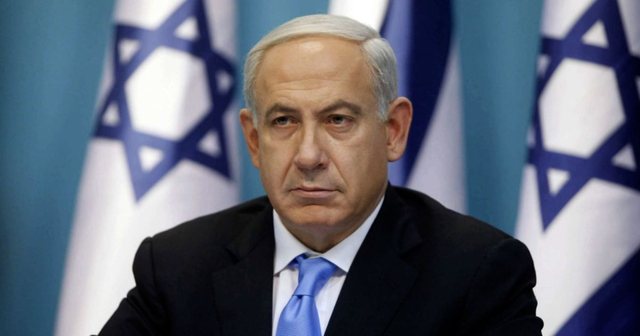
The European Union is expected to present a series of possible punitive measures against Israel next week in response to its actions in Gaza, although divisions among member states make their adoption unlikely. An internal EU review of Israel’s trade deal with the bloc, obtained by Euractiv last month, found “indications of a breach” of human rights commitments set out in the agreement.
In response, the European External Action Service (EEAS), the EU's diplomatic arm, is preparing to present an official document with options to ambassadors next Wednesday, according to officials familiar with the discussions.
The document outlines five possible measures, including a full or partial suspension of the EU-Israel association agreement, targeted sanctions against Israeli government ministers, military personnel or extremist settlers, trade restrictions, an arms embargo and the suspension of scientific cooperation.
While many of these options have been discussed informally in recent months, this marks the first time they will be formally presented in writing. EU foreign ministers will discuss the document at their meeting in Brussels on July 15, their last before the summer break. This date also serves as an unofficial deadline for Israel to demonstrate improvements in the humanitarian situation in Gaza.
"The first goal is to change behavior on the ground. If the situation does not improve, then we can discuss further measures," EU foreign policy chief Kaja Kallas said last month.
An EU technical delegation, led by Middle East envoy Christophe Bigot, recently visited Israel for talks, although EU officials expressed skepticism about achieving concrete results.
Israel has sharply criticized the EU review, calling it “wild” and “full of methodological shortcomings.” While Brussels says the process aims to help alleviate the suffering of civilians in Gaza, deep divisions among member states persist.
Suspending the EU-Israel association agreement would require unanimous approval by all 27 member states, an outcome seen as unlikely due to opposition from Germany, the Czech Republic and Hungary. The European Commission, which oversees trade policy, is also believed to oppose broad economic measures.
An arms embargo is similarly seen as unlikely, especially given Germany’s role as Israel’s largest European arms supplier. However, targeted sanctions on individuals are seen as the most politically feasible option. EU diplomats note that countries such as the United Kingdom, Australia, Canada, New Zealand and Norway have already imposed similar measures.


Happening now...














America may withdraw from Europe, but not from SPAK
Nga Gentian Gaba
ideas



top



Alfa recipes




TRENDING 




services
- POLICE129
- STREET POLICE126
- AMBULANCE112
- FIREFIGHTER128