


FLASH NEWS
Warning/ Visit to China, Xi mentioned the "Thucydides Trap" to Trump! The message behind the famous geopolitical concept

2026-05-14 11:56:58 / BOTA
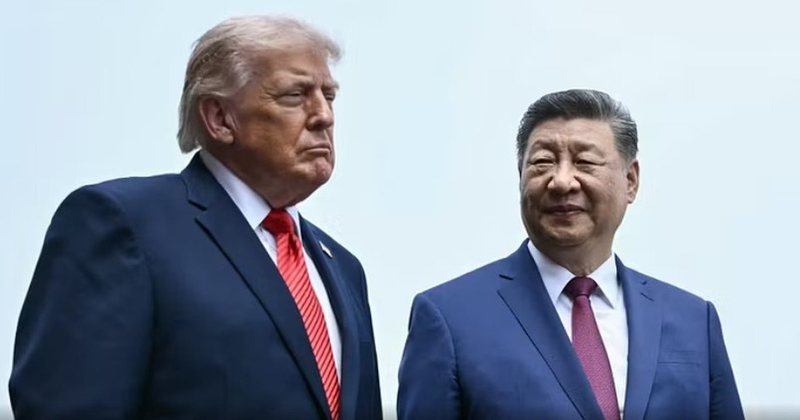
Chinese President Xi Jinping once again used the language of history to describe the present. During a summit with his US counterpart Donald Trump in the Chinese capital, Jinping invoked the so-called “Thucydides Trap”, one of the most quoted phrases in recent years in the international strategic debate, to send a clear message to the United States: the rivalry between Washington and Beijing must not escalate into open conflict.
The Chinese president urged the US to consider China "a partner, not a rival," at a time when relations between the two superpowers are experiencing increasingly deep tensions as trade, semiconductors, artificial intelligence, Taiwan and global security are now permanent fronts of competition.
What is the "Thucydides Trap"?
The phrase was made famous by American political scientist Graham Allison, a Harvard professor and author of the essay "Destined for War: Can America and China Escape Thucydides' Trap?" The theory is inspired by the Peloponnesian War recounted by the Greek historian Thucydides: the conflict between Sparta and Athens arose from the rise of Athenian power and the fear this rise caused in the dominant Sparta.
Applied to the 21st century, the formula describes the risk of a clash between China, a rising power, and a consolidated power, the United States. Not because war is inevitable, but because mutual distrust, miscalculations, internal political pressure, and strategic competition could make the confrontation increasingly difficult to control. Xi reiterated this concept to Trump, transforming a geopolitical theory into a diplomatic message: prevent the escalation of rivalry.
Taiwan remains the most dangerous issue In his meeting with the US president, Xi Jinping highlighted Taiwan as the most sensitive issue in bilateral relations. According to the Chinese leader, the management of the island will determine the future of the entire Sino-American relationship. Beijing considers Taiwan a rebel province destined for reunification, while Washington continues to support Taipei militarily and politically. Here the “Thucydides Trap” takes on a concrete dimension: a military crisis in the Strait could draw the two powers into direct confrontation. Xi warned that mishandling the issue could push both countries “towards confrontation or even conflict”, with destabilizing consequences for the entire international balance.
The new Cold War involves chips and artificial intelligence. The competition between Washington and Beijing is no longer limited to military matters. The technological challenge is now central. The United States is seeking to slow China’s development in advanced semiconductors and artificial intelligence through trade restrictions and export controls. China, for its part, is accelerating strategic investments to reduce its technological dependence on the West. At stake is not only the market, but also the leadership of the future world order. Economic rivalry is thus intertwined with geopolitical rivalry, fueling a growing distrust that makes any crisis potentially explosive.
Xi's political message to the United States
Behind the reference to Thucydides lies a precise narrative strategy. Beijing wants to present its rise as a natural and inevitable process, urging the United States to embrace a more multipolar world without trying to contain China's rise. Washington, on the other hand, sees China as an industrial, military, technological and ideological challenge. It is this clash of perceptions that fuels the danger posed by Allison's theory. For Xi, the trap is not the fate of history, but the product of mutual fear. The message sent to Trump is therefore twofold: to recognize China's weight and to prevent the competition between the two superpowers from falling into an irreversible crisis.
A summit that looks beyond diplomacy
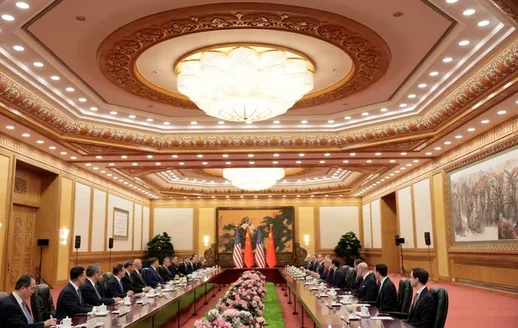
The Beijing summit comes at a time of intense international instability, amid energy crises, tensions in the Middle East, and new technological arms races. In this context, the reference to the “Thucydides Trap” takes on a meaning that goes beyond a simple educational quote./Tgcom24
Happening now...













ideas

Does Albania have a foreign policy?
Nga Ditmir Bushati

Republic of Thieves!
Nga Gjergji Nika

Albania, this ship stuck in the business of theft!
Nga Edison Ypi
top



Alfa recipes








services
- POLICE129
- STREET POLICE126
- AMBULANCE112
- FIREFIGHTER128